
Why Cross-Training is Becoming the New Retention Strategy
According to Deloitte’s 2025 India survey, 94% of Gen Z value on-the-job learning, highlighting the need for restaurants to offer clearer career paths and stronger development opportunities.

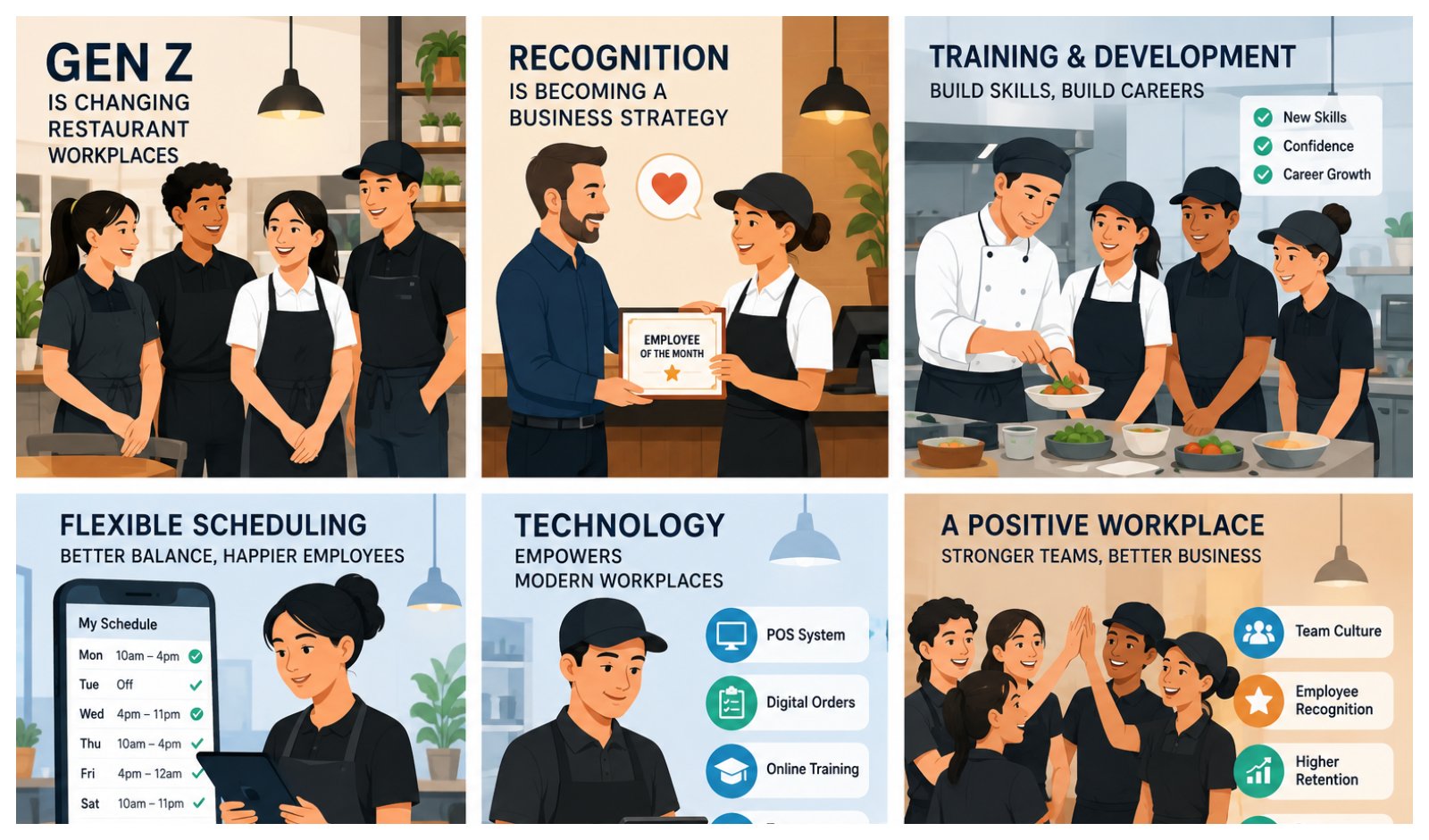
As restaurants move beyond competing on price, promotions and convenience, the next battleground is increasingly the people behind the operation. With Gen Z entering the restaurant workforce in greater numbers, leading QSR brands are rethinking how they hire, train and retain young talent—placing greater emphasis on technology, learning, career growth, flexibility and a stronger workplace experience.
According to Deloitte’s 2025 India survey, 94% of Gen Z value on-the-job learning, highlighting the need for restaurants to offer clearer career paths and stronger development opportunities.
Gen Z is Redefining Restaurant Careers
Globally, McDonald’s is putting workforce development at the centre of its next phase of growth, with plans to retrain more than 2 million restaurant crew members, corporate employees and supplier partners beginning October 5, focusing on gold-standard taste, quality and hospitality. Similarly, Wendy’s is taking a similar approach, investing in enhanced employee training, a new learning management system, expanded field teams to coach franchisees and technology designed to make day-to-day execution easier for restaurant crews. And many other restaurants are joining the race.
The traditional restaurant career ladder is giving way to faster learning, cross-functional exposure and visible growth across service, kitchen, technology and operations. Experts believed that beyond pay, Gen Z values recognition, new responsibilities and career opportunities. With 62% seeking more managerial guidance but only 44% receiving it, regular feedback and clear progression are becoming essential.
“By listening to young associates, recognising performance, encouraging ideas, providing cross-training and creating clear growth opportunities, we can build a more engaged and accountable team,” shared Pradeep Shinde, Operation Manager at Sayaji Hotel, Pune.
Commenting on the same, Roshan Thakkar, Co-Founder of Berlin Brew, mentioned, “The new generation of hospitality professionals understands today’s customers in many ways as they belong to same generation, creating a major transformation in restaurant workplaces.
Malaya Nagpal, Co-Founder, Scarlett House who feels that for Gen Z, a restaurant career is no longer limited to one role; cross-training gives them the chance to learn different skills, understand the business better and grow faster. "The industry is becoming more focused on retaining talent through meaningful growth and flexibility, but keeping Gen Z engaged remains a challenge as they have more options and are less likely to stay where they don’t see a clear path forward."
Cross-Training is Becoming a Retention Tool
Cross-training is not just as talent strategy but staffing solution. Gen Z values learning across service, kitchen, technology and operations.
Adding to this, Surya Prakash, Founder, Nayra said, “Cross-training is also becoming important. Young employees want to learn beyond their individual roles. This gives them more skills and helps them see a clear path for growth.”
For restaurants, multi-skilled teams offer greater flexibility, lower hiring dependence and smoother operations. As skilled talent remains scarce, employee capabilities are increasingly becoming a strategic business asset.
“Younger employees want to contribute ideas, take ownership and, importantly, feel recognised for their contribution. Recognition is therefore becoming increasingly important,” shared Payal Thakkar, Chef and Founder, Munchbox & The MunchBox Thali.
Work-Life Balance Enters the Equation
Restaurants need to make career paths more visible, from entry-level roles to multi-skilled positions, leadership and management. Clear growth opportunities can help attract and retain younger talent.
“Work-life balance is another key expectation. Hospitality will always involve long and demanding hours, but reasonable schedules and respecting employees’ time can help reduce burnout,” pointed Shinde.
And it’s clear that “The idea of a "restaurant career" has also shifted. Only a few young workers want to master one station for a decade,, but the majority want breadth. Also, if we look at digitally, these tools are increasingly supporting recruitment, scheduling, training, performance, recognition and career growth. With 85% of Indian Gen Z already using GenAI at work, restaurants have an opportunity to use technology not just to improve guest experience, but also to build and retain talent.
The future of restaurant workplace will be built on clear career paths with Gen-Z paving the way for the betterment, continuous learning, flexible scheduling, recognition and employee-focused technology.
Vijetha Iyer
Content Editor
Working as a Content Editor with Restaurant India. I have worked in various sectors like food and beverage sector, chemicals, pharma, nutraceuticals, now specially focusing on restaurant side. But my core knowledge was always on content. Be it writing poems to verses, I always loved writing and have been exploring my career on the same. In Restaurant India, I deliver insightful stories, take interviews of various brands and update the audiences about the newest happenings in the restaurant industry.









































