
Why Broths Are Moving From Supporting Course to Main Attraction
The broth was never just the supporting course. Restaurants are simply starting to treat it that way.

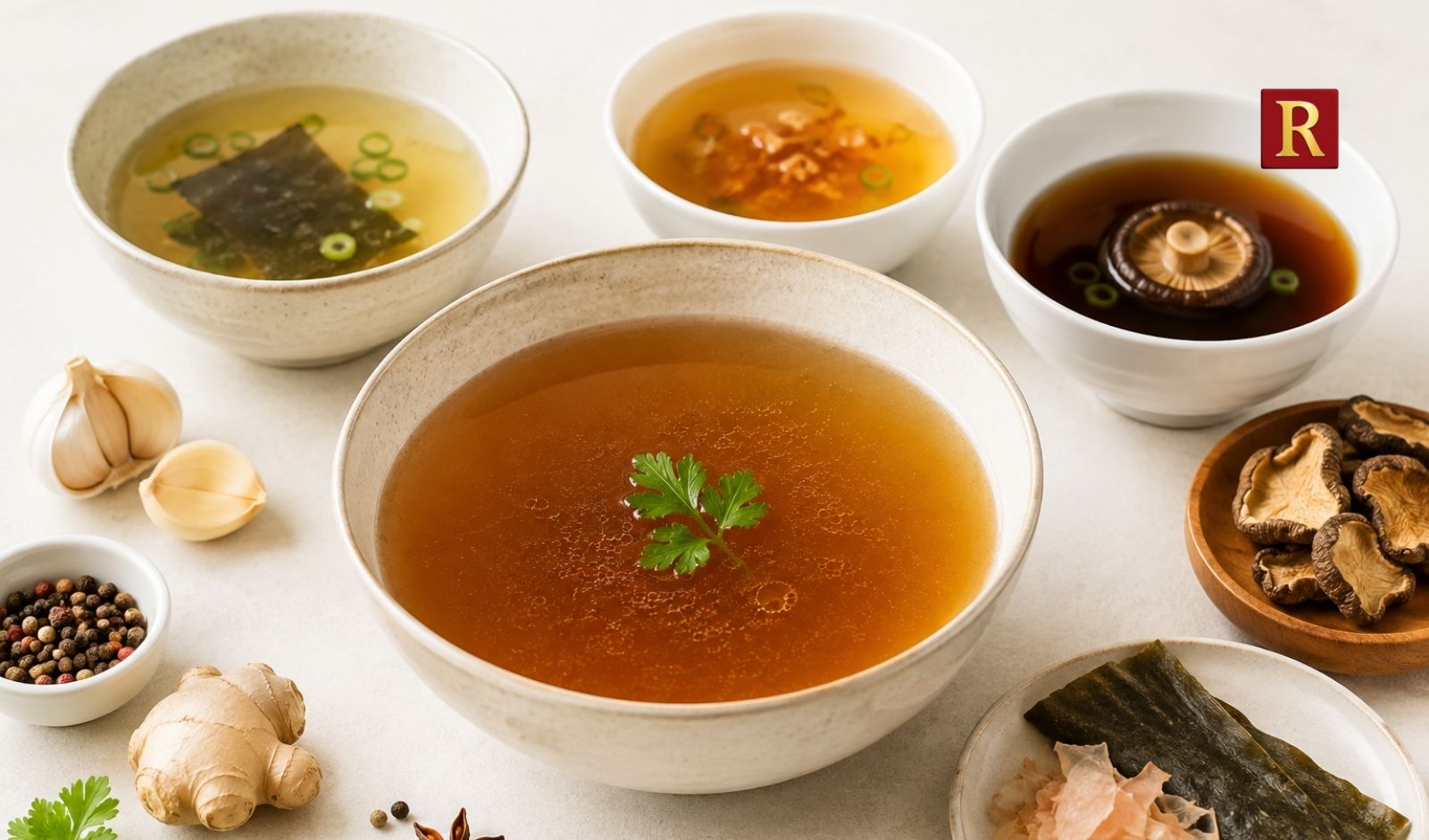
Broth has traditionally played a supporting role in restaurant dishes. It carries noodles, cooks vegetables, surrounds meat and forms the base of soups and sauces. But some chefs are now treating the broth itself as the main event.
A clear example is Bon Broth, chef André Chiang’s hotpot concept in Singapore. Opened in February 2025, the restaurant offers eight specialty broths and asks diners to taste the broth before adding meat, seafood or vegetables. Its broths are designed to be flavourful from the first sip. Some are brewed for 14 to 16 hours using beef, pork and chicken bones before being finished with spices and flavour pastes. This does not mean broth is suddenly new. It means restaurants are changing how they position it.
Broth Was Never Just a Starter
Across food cultures, broth has always carried history and technique. Japan has dashi. Vietnam has pho broth. Korea has long-simmered soups. France has consommé. India has rasam, yakhni and shorba. A study published in the Journal of Ethnic Foods traces yakhni and shurba through the historical development of Indian cuisine. It describes yakhni as a spiced meat broth and shurba as soup, showing that broth-based cooking has long been part of India's culinary story. The change today is not about discovering broth. It is about making the liquid the hero.
From Base Ingredient to Main Attraction
In a traditional hotpot, the broth often starts mild. As meat, seafood, mushrooms and vegetables cook in it, the flavour becomes deeper. Bon Broth takes the opposite approach. The broth is already developed before the ingredients enter the pot. Diners can taste different broths at a dedicated counter and select one before their meal begins. The restaurant even uses a “broth sommelier” to guide the choice. This changes the role of every other ingredient. The meat is no longer responsible for creating the main flavour of the dish. The vegetables do not need to carry the entire plate either. They become partners to the broth. That is a useful idea for modern menu development because it gives chefs another way to build a dish around flavour architecture rather than just a headline ingredient.
What Makes a Broth Strong Enough to Stand Alone?
A good broth needs more than long cooking. The first layer is extraction. Bones, meat, vegetables, mushrooms, seafood and aromatics release flavour into water during cooking. The second is concentration. Reduction can increase flavour, but it must be controlled. Too much reduction can make a broth salty or heavy. The third is balance.
A restaurant-quality broth may need:
- Umami
- Salt
- Acidity
- Sweetness
- Aroma
- Texture
- Heat
- Fat
This is where modern broth development becomes more technical. Chef André Chiang's broths, for example, use French techniques such as sautéing aromatics and deglazing before long simmering. The resulting bases are then layered with herbs and spices. The lesson is important. A broth does not become interesting simply because it has been cooked for many hours. Technique determines what those hours actually achieve.
Umami Is Changing the Way Chefs Think About Broth
Dashi provides one of the clearest examples. Kombu is naturally rich in glutamate. Other traditional dashi ingredients contribute additional compounds associated with umami. This gives chefs a way to create depth without relying entirely on heavy fats or large quantities of meat. That principle can be applied much more widely. Mushrooms, fermented pastes, dried seafood, roasted vegetables, meat and sea vegetables can all contribute layers of savoury flavour. Fermentation adds another tool. Miso, fermented chilli, fermented garlic, koji and other fermented ingredients can introduce acidity, salinity and complexity. This gives chefs more control over the final flavour. Instead of simply making a “chicken broth,” they can build a broth with a defined identity.
- For example: Roasted chicken + fermented chilli + black pepper + citrus or Mushroom + kombu + miso + smoked garlic
The ingredients may be simple. The construction does not have to be.
India Already Has the Ingredients for a Broth-First Menu
This is where the opportunity becomes particularly interesting for Indian restaurants. India does not need to borrow the idea of broth from another cuisine. It already has a wide vocabulary of broth-based preparations.
- Rasam can provide acidity, spice and aroma.
- Yakhni can provide a delicate spiced meat broth.
- Shorba offers a broad platform for meat, vegetables and spices.
- Paya demonstrates how long cooking can create a rich, gelatinous texture.
There is also the historical story of mulligatawny, whose name is linked to the Tamil expression for pepper water or pepper broth. Its development shows how Indian and British culinary traditions influenced one another. The modern opportunity is to take these preparations seriously as restaurant signatures. A chef could build a contemporary menu around a pepper-rich rasam. Another could develop a mushroom and kokum broth. A fine-dining kitchen could serve a clarified yakhni as a tasting-menu course. The point is not to turn traditional broths into luxury food simply for presentation. The point is to use modern technique while preserving the identity of the preparation.
Broth Can Create a More Interesting Dining Experience
Broth also has an advantage that many other dishes do not. It can engage several senses at once.
- A hot broth releases aroma as soon as it reaches the table.
- A tableside pour creates movement.
- A clear broth allows ingredients to remain visible.
- A concentrated broth can be served in a small portion as part of a tasting menu.
This makes it useful for restaurants looking to create memorable experiences without adding unnecessary complexity to the plate. Bon Broth demonstrates this particularly well. Diners first sample two of its eight broths before selecting one. The process turns broth selection into part of the meal rather than a hidden kitchen decision.
Broth Can Also Be a Standalone Product
The opportunity is not limited to dine-in restaurants. New York chef Marco Canora's Brodo is an important example. The business began in 2014 by serving bone broth from a window at his restaurant Hearth. By 2025, Forbes reported that Brodo had sold 5 million cups. That figure matters because it shows that broth can move beyond the traditional soup bowl.
It can become:
- A takeaway cup
- A quick lunch
- A tasting portion
- A hotpot base
- A noodle bowl
- A premium starter
- A tasting-menu course
For restaurant operators, this flexibility can make broth useful across multiple formats.
The Business Case Is About More Than Cost
Broth can also support ingredient utilisation. Bones, vegetable trimmings, herbs and other suitable kitchen ingredients can contribute to stocks and broths when handled correctly. A chicken preparation, for example, can generate a broth that later supports a soup, noodle dish or sauce. But restaurants should not treat this as a reason to make broth from whatever is left over. Food safety, storage, temperature control and ingredient quality remain essential. Consistency is another challenge. A broth made for 12 hours today and one made for 12 hours tomorrow may not taste identical if the ingredients, heat, water ratio or reduction are different. For a broth-led restaurant, recipe control becomes as important as cooking time.
The Health Story Needs More Precision
The popularity of bone broth has also been supported by wellness marketing. There is some useful nutritional information, but restaurants should avoid turning broth into a miracle food. Brodo states that its bone broth provides about 10 grams of protein per cup, while Harvard Health notes that bone broth can contain roughly 8–10 grams of protein per cup, depending on the preparation. But nutritional value varies considerably between recipes. Sodium is another consideration. A broth can become heavily salted when reductions, seasoning sauces and fermented ingredients are combined.
- For restaurant menus, the stronger proposition is therefore not: “This broth will fix your health.”
- It is: “This broth delivers flavour, craft and comfort in a format that can be both simple and sophisticated.”
What the Next Broth Menu Could Look Like
The most interesting development may be the move away from generic soup categories.
Instead of: Soups
- Tomato Soup
- Sweet Corn Soup
- Manchow Soup
a restaurant could create: Broths
- Charred Tomato and Black Pepper Broth
- Smoked Mushroom and Kokum Broth
- Kashmiri Yakhni with Seasonal Vegetables
- Fermented Chilli Chicken Broth
- Roasted Garlic and Kombu Broth
- Tamarind Rasam with Crispy Lentils
This gives the liquid a clear flavour identity. It also gives the chef more room to tell a story about ingredients, region and technique.
How Restaurants Think About Liquid
Broth is not replacing soup. It is not replacing noodles, meat or vegetables. The more important shift is that chefs are beginning to ask whether the liquid surrounding a dish can deserve the same attention as everything else on the plate. That opens an interesting path for restaurants. A broth can carry regional identity. It can showcase fermentation. It can demonstrate extraction and reduction. It can create aroma at the table. It can support different price points and formats. And for Indian restaurants, the opportunity is especially strong. The next interesting broth concept may not be imported from abroad. It may come from taking rasam, yakhni, shorba and other regional preparations, refining their technique and giving them the centre of the menu. The broth was never just the supporting course. Restaurants are simply starting to treat it that way.
Saptopriya Ghosal
Feature Writer
I am a dedicated media professional with a bachelor's degree in mass communication from the State University of Calcutta and a postgraduate degree from Amity University. My academic journey has equipped me with a profound understanding of storytelling and communication. Passionate about the dynamic world of media, I continually strive to explore new ways to engage and inform through compelling narratives.



































































































































































