
What an 18-Month ‘Survival Window’ Means for India’s Café Market
Industry estimates peg the standalone coffee shops market at USD 424–440 million in 2025, with high double-digit growth forecasts over the next decade

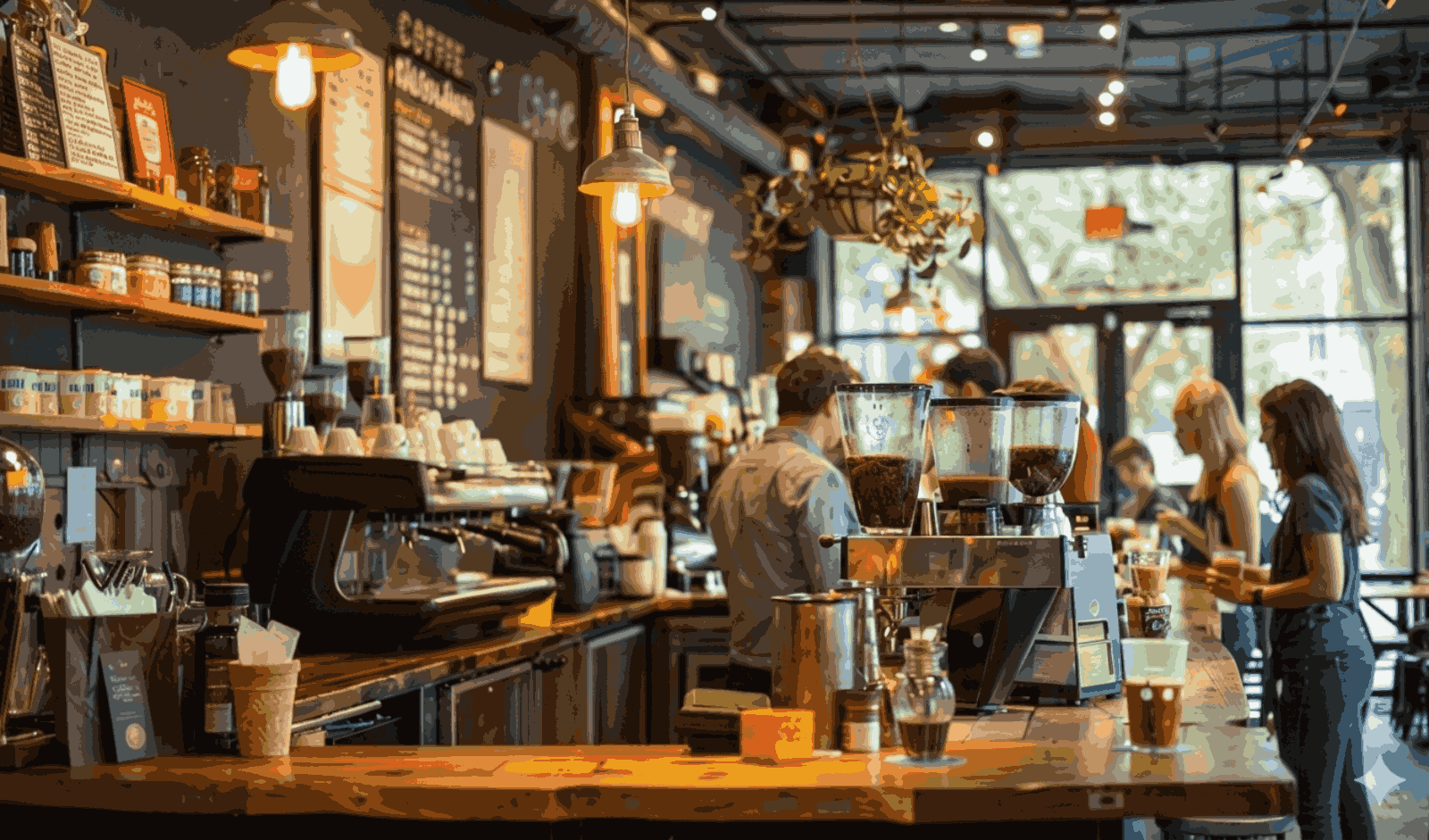
India’s café market is expanding at pace. The branded coffee shop segment reached 5,339 outlets in 2025, growing roughly 12.7 per cent year-on-year as chains and independents deepen their presence across metros and Tier-II cities.
Industry estimates peg the standalone coffee shops market at USD 424–440 million in 2025, with high double-digit growth forecasts over the next decade.
The opportunity is large. But operators say survival is rarely guaranteed. Behind the expansion headlines lies what many call the 18-month “survival window”, the period that determines whether a café stabilises its unit economics or quietly runs out of runway.
When Launch Buzz Fades
Urbanisation, rising disposable incomes, millennial tastes, and the rise of socializing driven by young Indians drive frequency. With one market study noting 24 per cent visit cafés daily and 57 per cent weekly. There’s also a sdden rise in premium coffee space often priced above Rs 200, with projections of 20–25 per cent CAGR through 2028. Yet founders say the real test begins after the Instagram-friendly launch weeks.
Monica Kapoor, Co-Founder and Creative Director of KEFI Cafe, recalls the emotional shift after opening. “The launch buzz disappears faster than you expect. After that, it’s just you, the team, and daily reality. What really surprised me was how long it takes for a café to become part of a neighbourhood’s routine. Growth didn’t come from big ideas, it came from showing up every day and getting the basics right,” she added.
Abhinav Jindal, Founder & CEO of Kimaya Himalayan Beverage and BeeYoung Brewgarden, echoed this pattern of phased evolution. “What stood out was how clearly the business moved through phases. The initial months were driven by curiosity and excitement but excitement is temporary. Stability came only when consistency took over.”
From Optimism to Structure
The café market’s growth narrative is also backed by aggressive expansion from large players. Chains like Tata Starbucks, Barista and Cafe Coffee Day with over 500 outlets continue to anchor the segment, while independent cafes are also gaining popularity.
But expansion is not linear. Even Starbucks has reportedly slowed its rollout in India amid tighter consumer spending and softer footfall.
For first-time founders, break-even expectations are often shaped by optimism. something both operators acknowledge.
Kapoor puts it simply, “The first outlet teaches you humility. Break-even takes time and is usually longer than planned.” With subsequent outlets, she said, the approach became more practical: tighter capex, more realistic timelines, and planning for real-world delays rather than chasing ideal projections.
Jindal echoed that early optimism. Break-even, he shared, was initially an estimate shaped by ambition but once the outlet went live, real cost and operational complexities surfaced. Over time, that approach evolved into a more structured framework: breaking break-even into fixed costs, contribution margins, realistic footfall, and ramp-up timelines, with a clear shift in mindset from scaling fast to building a format that can be repeated sustainably.
What Decides Survival?
With premiumisation on the rise and younger consumers visiting frequently, footfall may appear strong. But operators insist that what matters is not a packed weekend, it is weekday discipline.
Kapoor added, “I focus on daily sales consistency, food and staff costs, wastage, and repeat customers. One busy weekend doesn’t mean much steady weekdays do. If operations are tight, the numbers eventually follow.”
Jindal tracked a similarly focused set of indicators. “Financially, contribution margins across food and beverages, labour costs, and fixed cost coverage are tracked closely. These indicators tell us whether the business is structurally healthy.”
What Cafe Owners Underestimate
India’s café sector may be expanding at double-digit growth rates, but founders warn that the glamour fades quickly, especially in year two. Kapoor is candid about the strain that follows the first-year excitement. “The excitement is gone, but the costs don’t stop. A lot of founders don’t plan for heavy opex for at least a year, and that’s where things get tough,” she added by pointing that many cafés don’t fail because the concept is weak but because exhaustion sets in and funds dry up before stability kicks in.
Saumyangi Yadav
Senior Correspondent
Saumyangi is a Senior Reporter with over three years of experience in journalism and a strong passion for writing and storytelling. She covers D2C and consumer brands for Entrepreneur India and contributes to Restaurant India, where she writes about restaurants, cafés, and whatever is new and exciting in the F&B world. She has previously covered education, social, and civic issues, and continues to enjoy exploring new stories in Bengaluru and beyond.









































