
Turning Inflation into Opportunity
The focus is shifting from driving footfalls to increasing spend per customer, making premiumization an effective strategy to navigate inflation.

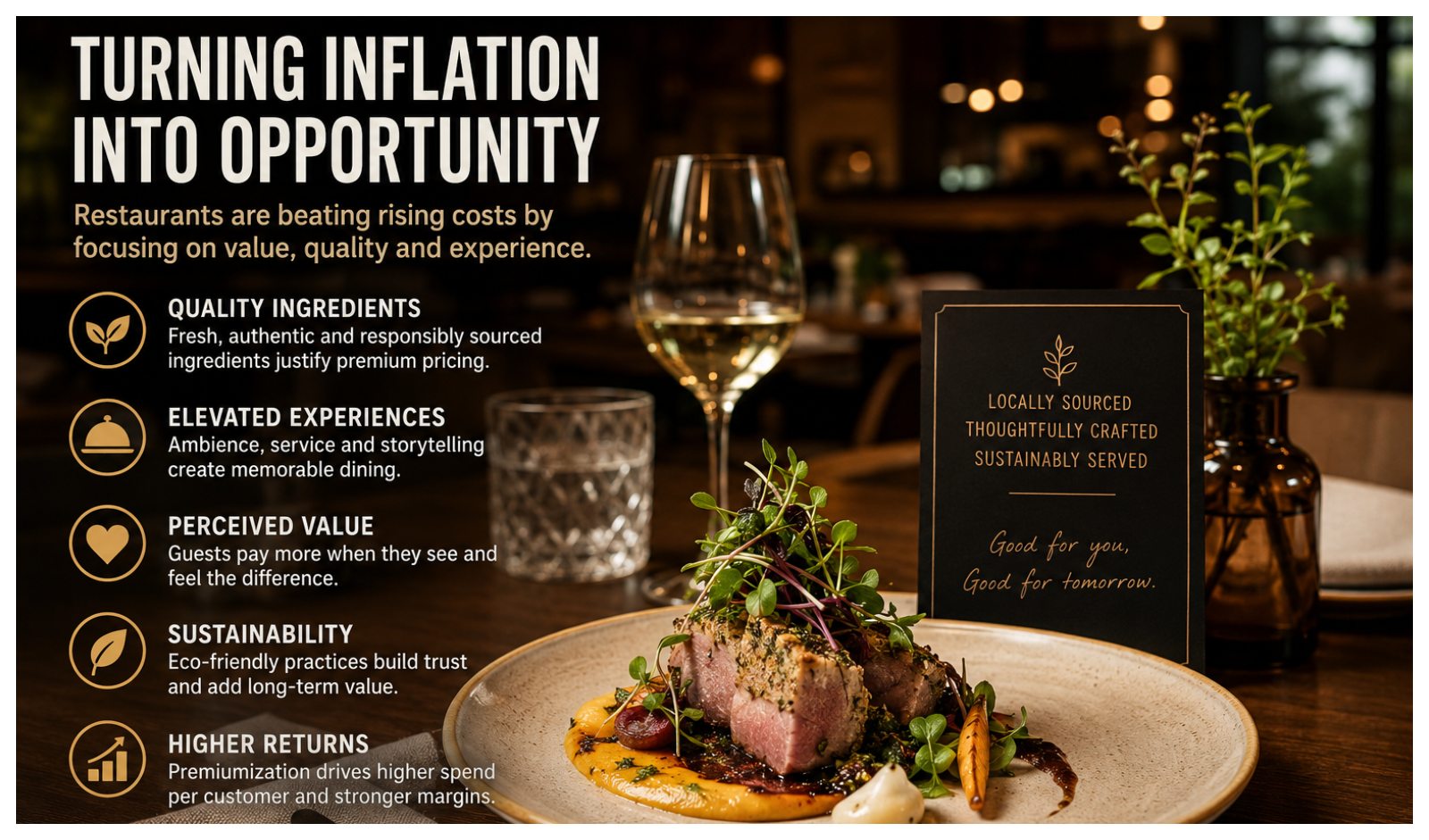
Rising food costs, higher wages, expensive rentals and mounting operating expenses have put restaurant margins under pressure. Instead of competing on price, many restaurants are turning to premiumization, capitalising on consumers' willingness to pay more for quality ingredients, elevated dining experiences and superior service. The focus is shifting from driving footfalls to increasing spend per customer, making premiumization an effective strategy to navigate inflation.
From Cost Recovery to Value Creation
With food and labour often accounting for over half of a restaurant's operating costs, indiscriminate price hikes risk driving customers away. Instead, many operators are using premiumization to justify higher spending through better ingredients, elevated experiences and stronger value perception.
“Premiumization is helping restaurants beat inflation because it allows establishments to command higher prices for the quality ingredients they use,” said Prasanna Pandarinathan, Co-founder, Katana, Bengaluru.
Adding to this, Ruhani Singh, Partner, KIMIKAI, said premiumization isn’t about charging more—it’s about creating a better experience, from the food and service to the story behind it. “Restaurants can’t keep increasing prices every few months. They need menus that deliver value while giving guests enough reason to return.”
Quality ingredients have emerged as a key pillar of this strategy. From farm-fresh produce and free-range poultry to artisanal cheeses and sustainably sourced seafood, diners are increasingly willing to pay a premium for authenticity, freshness and transparency.
“While many restaurants are exploring premium ingredients as a way to differentiate themselves, I've always believed that what truly matters is using quality ingredients that stay true to the original flavours. While curating our menu, I spent time travelling across Delhi and Amritsar to understand what made certain dishes so memorable,” said Esha Gogia, Founder, Pincode Delhi.
For Pandarinathan, premiumization extends beyond sourcing better ingredients to effectively communicating their value Highlighting ingredient provenance, craftsmanship and the story behind a dish—whether on the menu, in the restaurant or through social media—helps guests appreciate what they are paying for. As a result, restaurants are able to command higher prices based on quality and experience rather than portion size alone. According to him, this approach has contributed to a 30 percent annual increase in sales.
Sustainability Adds Value
Sustainability has evolved from a compliance requirement into a competitive advantage. Consumers increasingly favour restaurants that source locally, minimise food waste, use eco-friendly packaging and adopt responsible sourcing practices, making sustainability a key driver of perceived value.
“For us, planning our inventory carefully, preparing food fresh, avoiding unnecessary overproduction and keeping wastage to a minimum rather than storing excess food goes a long way. These practices not only help us operate more responsibly but also ensure that every dish served is fresh and consistent in quality,” added Gogia.
The trend is backed by consumer sentiment. According to the Capgemini Research Institute's Sustainable Product and Packaging report, nearly 79 percent of consumers are changing their purchasing preferences based on sustainability, making responsible practices a strong premium differentiator.
“When sustainability is built into the restaurant naturally, guests see it as a sign of quality rather than a marketing message,” added Singh.
Today, premiumization is no longer confined to fine dining. Quick-service restaurants are introducing gourmet offerings, cafés are showcasing single-origin coffees and artisanal bakes, while cloud kitchens are focusing on healthy, regional and chef-curated meals. When executed well, premiumization drives higher average order values, stronger margins and greater customer loyalty while reducing reliance on discounts. The key, however, lies in delivering consistent quality, dependable sourcing, skilled service and authentic storytelling—ensuring that the premium experience feels genuine rather than merely expensive.
Vijetha Iyer
Content Editor
Working as a Content Editor with Restaurant India. I have worked in various sectors like food and beverage sector, chemicals, pharma, nutraceuticals, now specially focusing on restaurant side. But my core knowledge was always on content. Be it writing poems to verses, I always loved writing and have been exploring my career on the same. In Restaurant India, I deliver insightful stories, take interviews of various brands and update the audiences about the newest happenings in the restaurant industry.









































