
The New Royal Table: How Indian Fine Dining Claimed Its Place in Global Luxury
Indian fine dining is building its own standards of luxury—where memory, migration, precision, and heritage matter as much as silver service and Michelin stars.

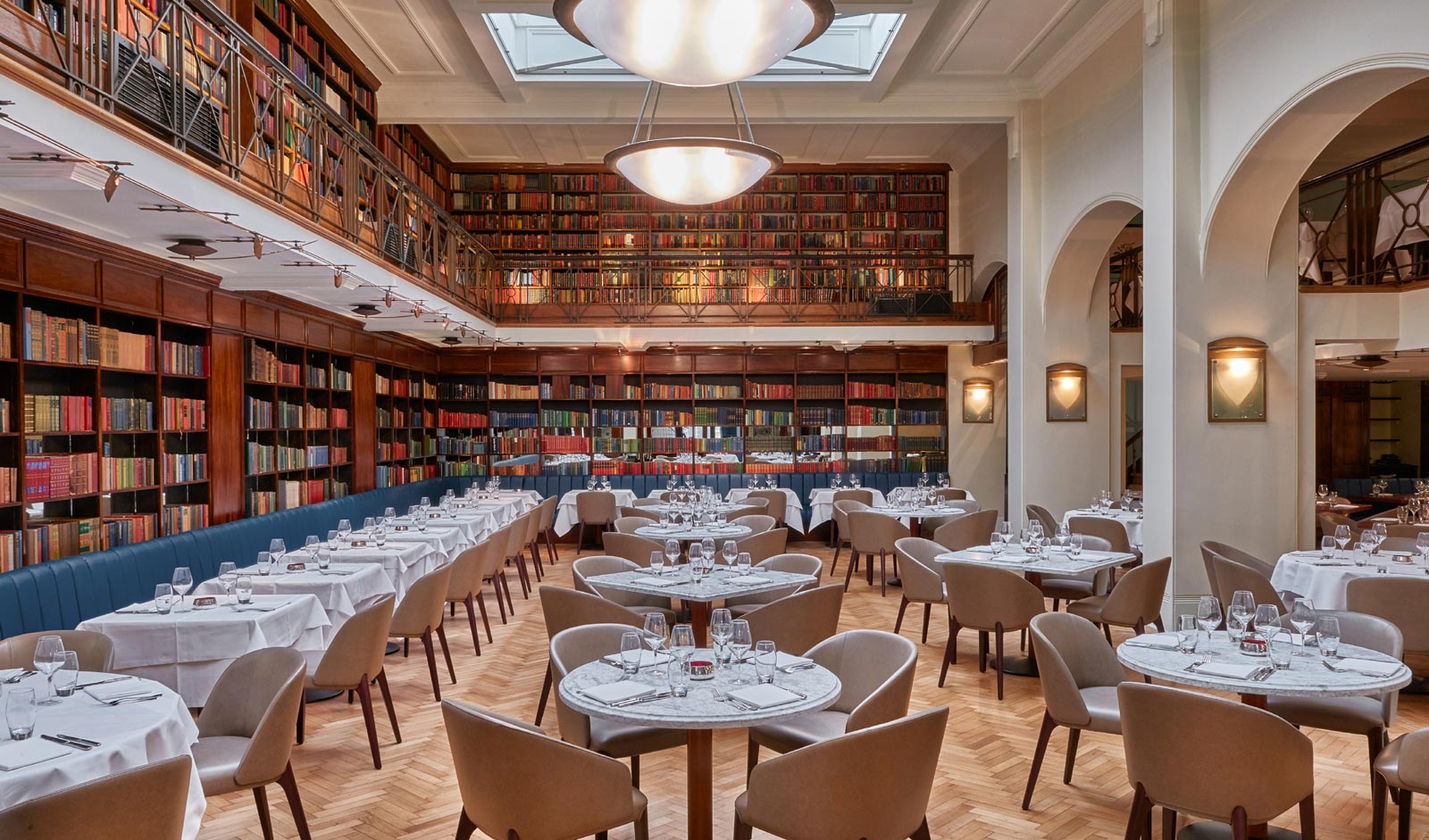
For decades, Indian cuisine in global markets was boxed into one familiar image, comfort food, curry houses, and casual dining. It was beloved, but rarely placed in the same conversation as French haute cuisine or Japanese omakase. Today, that perception is changing. From Michelin-starred tasting menus in London to destination dining experiences in Dubai and other Asian countries, Indian cuisine is being redefined as one of the world’s most sophisticated luxury culinary experiences. Diners are no longer simply ordering butter chicken and naan, they are exploring coastal Kerala tasting journeys, Awadhi degustation menus, Kashmiri heritage plates, and chef’s tables built around forgotten regional stories.
The rise of Indian fine dining is not accidental. It is the result of years of persistence, reinvention, and a new generation of chefs and restaurateurs who refused to let Indian cuisine be seen as anything less than world-class.
“Indian cuisine has always had depth, complexity and refinement. What has changed is the way it is now being presented, experienced and understood globally,” shares Bhupender Nath, Founder & Managing Director, Passion F&B that operates award winning restaurant Tresind and Avatara amongst others.
That shift, he says, came through stronger storytelling, refined service, progressive techniques, elegant plating, and a greater focus on regionality. “Indian restaurants today are not only serving familiar flavours, but are presenting them with the same precision, discipline and luxury experience associated with French or Japanese fine dining.”
From Curry House to Culinary Capital
Few cities tell this story better than London. For years, “Indian food” in Britain was largely understood through the lens of the curry house, often run by Bangladeshi and Pakistani operators serving what legendary chef Cyrus Todiwala calls “British Indian food.”
“Indian cuisine by and large is still seen as casual dining, cheap and cheerful and it is known in Britain as ‘curry’ and not as Indian cuisine,” says Todiwala who runs the finest Parsi-cuisine restaurant Café Spice Namaste in London.
He points out that what became popular was often a pseudo cuisine adapted for British palates rather than traditional Indian food. Yet those early operators played an important role. “They put spice on the British palate and converted a rather bland food-eating public.” Terms like Madras, Vindaloo, Tindaloo, and Phal became shorthand not for geography, but for heat levels. Then came the turning point.
“The Taj Hotels Bombay Brasserie launched in 1983 was the first restaurant that put Indian food on the culinary map. Chutney Mary followed and then I came in 1991 and we rocked everything.” What followed was not glamour, it was grind. “A lot of hard work. A lot of effort. A lot of abuse. A lot of resistance,” he remembers as that resistance slowly gave way to recognition.
Today, Michelin stars, Bib Gourmands, chef’s counters, and tasting menus are helping Indian cuisine occupy a very different place.
The Michelin Effect
Fine dining is often as much about perception as cuisine. Tasting menus, wine pairings, chef’s tables, and Michelin recognition have played a major role in changing how diners value Indian food.
According to Nath, “Tasting menus and chef’s tables allow Indian cuisine to be experienced as a journey rather than just a meal.” Wine pairings and curated beverage programs, he says, help place Indian cuisine within “a global fine dining language.”
Recognition from Michelin adds validation. “It confirms the craft, consistency and ambition behind Indian fine dining.”
Samyukta Nair agrees as her acclaimed restaurant Jamavar has become one of the strongest examples of Indian luxury dining done right. “Tasting menus, chef’s tables, wine pairings and Michelin recognition have helped international diners understand Indian cuisine within a recognisable framework,” she says.
But luxury pricing, she points, depends on much more than the plate. “Luxury goes far beyond the plate. It is in the ambience, guest journey, service, emotional connection and ultimately perceived value.” And yes, diners are willing to pay.
“Today, diners are absolutely willing to pay luxury pricing for Indian food when the experience feels complete,” she proudly expresses as today pricing remains uneven.
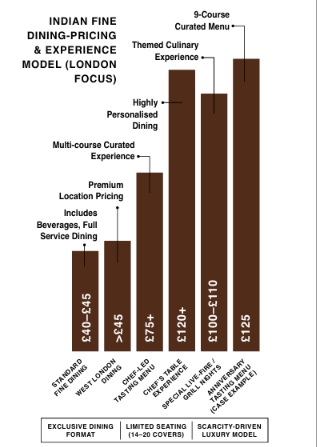
However, for Todiwala, location still dictates acceptance. “At our establishment, the average cheque is between £40–45 including beverages. Our tasting menu is £75. In West London, much higher.”
His restaurant has held the Michelin Bib Gourmand for an extraordinary 23 years. “But our location is East London and that does not help.”
Japanese restaurants, he observes, can command extraordinary luxury pricing with less resistance. “Indian restaurants? Not so. Though, that gap is narrowing but slowly.
The Real Future: Regional India
If Indian fine dining is entering a golden age, its next frontier may not be pan-Indian restaurants at all. It may be regional storytelling.
“India is not one cuisine; it is many cuisines, cultures, climates and traditions. Kerala, Awadh, Kashmir, Bengal, Rajasthan, the Konkan coast, and the North East all offer extraordinary culinary individuality,” adds Nath as for him the future of serious Indian fine dining will be more focused, more researched and more rooted in specific stories.
Nair shares a similar view, though with nuance. She does not believe pan-Indian restaurants will disappear. “India’s greatest culinary strength is its diversity,” she says. Instead, the future lies in restaurants with a strong point of view. At Jamavar, that means celebrating both breadth and specificity. As the restaurant marks 10 years, it is bringing Leelamma’s Onam Sadhya—first showcased in Dubai and inspired by her grandmother’s memories—to London for the first time.
Each year, they also celebrate Alphonso mango season and game during the British winter months. This allows guests to experience Indian cuisine as “dynamic, seasonal and culturally connected.”
“The future is less about choosing between regional or pan-Indian dining, and more about creating restaurants with authenticity and a genuine sense of story and place.” Todiwala is even more direct. “That is the future. I have said it for years.”
The Cost of Luxury
Behind every polished fine dining experience lies a brutal financial reality. London remains one of the world’s most exciting and most difficult hospitality markets.
Prime location rents have risen close to 10% in recent years. Many operators face business rate increases of 15–30%, while labour costs continue climbing by 5–7% annually. Restaurants can no longer rely purely on volume or even a £100+ average cheque.
“The bigger pressure lies elsewhere. Business rates. Salaries. National Insurance. Pension. Heat. Light. Power. Water. WiFi. Everything,” points Todiwala by adding that the greatest threat to hospitality is VAT.
As Indian fine dining continues to rise across global markets, another layer of the conversation is becoming increasingly important, the chef behind the plate. Diners today are not simply choosing restaurants based on cuisine alone, they are also choosing stories, personalities, and the people shaping the experience. In many ways, the modern chef has become both culinary artist and cultural ambassador.
Chef Romy Gill, celebrated chef, author and broadcaster, believes today’s diners are deeply invested in both the food and the individual creating it. While cuisine remains at the heart of the experience, the chef’s personal voice often creates a stronger emotional connection.
“I think today’s diners are interested in both,” she explains. “Of course, the food remains the most important part of the experience, but people are also increasingly interested in the story, personality, and values behind a restaurant.”
This shift has been accelerated by television, publishing, and especially social media, where chefs are no longer hidden behind kitchen doors but visible, accessible public figures. Diners want to know where the food comes from, what inspires it, and what the restaurant stands for. A chef’s philosophy has become part of the dining experience itself.
Yet Gill is careful to draw a line between visibility and value. “A strong personal brand can only go so far if the food and hospitality do not deliver. Ultimately, people return because of the overall experience and the genuine connection they feel.”
Chef Surjan Singh Jolly, Culinary Director & CEO, Jolly Good Hospitality Limited UK, sees this evolution as part of a much larger industry shift. For him, the transformation began when chefs moved from being back-of-house professionals to becoming public-facing personalities. Media changed everything.
“The evolution of food media and globalisation reshaped the role of chefs,” he explains. “Television cooking shows, social media platforms like Instagram and YouTube, food blogging, and streaming services gave chefs direct access to millions worldwide.”
That visibility turned chefs into entrepreneurs. “Branding and business savvy became as crucial as culinary expertise.” He points to figures like Julia Child, Gordon Ramsay, Anthony Bourdain, Rick Stein, James Martin, and Sanjeev Kapoor as examples of how chefs became household names and eventually cultural icons far beyond restaurants.
But visibility alone is never enough. A personal brand may attract diners once, but consistency, hospitality, and emotional connection are what bring them back. In luxury dining today, the chef’s identity has become part of the experience—but it must always be supported by excellence on the plate.
Commercial Scaling
As chefs expand into books, television, consulting, product lines, and international restaurant ventures, protecting authenticity becomes both harder and more necessary. The challenge is no longer simply creating great food, it is preserving culinary integrity while growing commercially across multiple platforms.
For Romy Gill, the answer lies in clarity of purpose. “It comes down to staying true to your values and being very clear about what you stand for as a chef. As opportunities grow, it can be tempting to say yes to everything, but not every collaboration or project is the right fit.”
She believes culinary integrity is rooted in honesty and consistency. “For me, culinary integrity means making sure there is still honesty, care, and genuine passion behind everything you do, whether it’s a restaurant, a cookbook, television, or a product line. People can sense when something feels forced or disconnected from who you really are.”
Growth, she says, should never come at the cost of trust. “Long-term success comes from maintaining trust, consistency, and a strong connection to your craft and identity.”
Chef Jolly echoes that belief and stresses that authenticity must be protected through active involvement. Whether it is recipe development, restaurant management, or choosing collaborators, chefs must remain personally invested in every extension of their brand.
“Chefs maintain authenticity by staying true to their culinary values and ensuring quality control across all products and ventures,” he says. “Balancing innovation with respect for tradition ensures the brand remains credible despite commercial growth.”
His own business reflects that philosophy. With restaurants spanning London, Singapore, Doha, the Maldives, and beyond, including projects like Rivaaj, Shikar, and The Great Indian, the focus remains on bespoke, experience-led dining.
Chef-led tasting menus, he explains, often begin around £75 and move upward depending on the occasion and curation, while chef’s table experiences typically begin around £120 because they are designed to feel highly personalised.
“Chef’s table premium pricing starts higher because it is all crafted to make it bespoke.”
Chef Vivek Singh, Executive Chef and CEO, The Cinnamon Club, one of London’s most influential modern Indian restaurants, offers a similar model of exclusivity through carefully limited experiences rather than traditional chef’s table formats.
“We don’t have a chef’s table,” he explains. “But we have a 25th anniversary tasting menu—nine courses, £125. It’s only booked in advance, and we only offer 20 of those menus on any given night.” “Nowadays, diners are increasingly looking for experiences—curated experiences—not just restaurants offering the same menu 365 days a year with a hundred items on it. That is no longer enough. People want to see something new, they want to experience something memorable and personal. The real challenge for restaurants today is understanding how we create those moments—how do we give guests something beyond just a meal? That is what we are constantly looking at,” he adds.
He also curates intimate live-fire dining experiences around his tandoor and grill kitchen.
“I might do an evening of just kebabs and grills, and that would be around £100 to £110 per person. There are only 14 spaces.”
Scarcity itself becomes part of the luxury proposition. These experiences feel personal, memorable, and emotionally resonant rather than transactional.
This is where Indian fine dining has found one of its strongest luxury languages, not simply in expensive menus, but in intimacy, storytelling, and trust. The chef is no longer just preparing the meal. They are curating the emotion around it.
And as Indian cuisine continues to claim its place in global luxury, that emotional connection may prove just as valuable as Michelin stars or tasting menus.
Protecting the Soul
As Indian fine dining expands globally, one question becomes unavoidable; How do you modernise without losing authenticity? For Nath, the answer is simple. “Restaurants must protect the soul of the cuisine.” Innovation matters, but not at the cost of identity.
Flavours, techniques, ingredients, and cultural context must remain respected. “The balance lies in refinement without dilution,” he explains. Nair echoes that thought. “Luxury today is not about making a cuisine feel more polished. It is about confidence and attention to detail.” Diners, she says, are increasingly rejecting performance in favour of sincerity. “They are looking for experiences that feel genuine rather than performative.”
Todiwala believes the biggest challenge is internal, training. “Training, training, training.” He argues that Indian hospitality must invest far more deeply in education, young talent, better pay, and stronger professional systems. “Research more. Keep researching. Keep digging. Improve—but don’t ignore roots.” His words carry the weight of decades.
“We have the greatest culinary history on the planet. We have very deep cuisine cultures. “For me, I need a life of five thousand years to create a little hole of knowledge of the varied cuisines and cultures of India.”
Indian fine dining is no longer seeking validation from Western institutions. It is building its own standards of luxury—where memory, migration, precision, and heritage matter as much as silver service and Michelin stars. What was once dismissed as comfort food is now commanding the world’s finest tables—not because it changed, but because the world finally learned how to see it.
Nusra
Consultant Associate Editor
A seasoned journalist with more than a decade experience in restaurant and retail business. I eat, drink, breathe and sense food as a source of my living and lifestyle. A foodie by birth and a journalist by choice. I started my career with Hindustan Times doing hard news, moving into features and finally landing myself in a food coma. Love to talk, hear and publish all food stories that makes anyone happy and hearty for more than a decade now. Apart from food, I love reading fiction, helping others and finding joy in little things...









































