The Hidden Revenue Leaks in India’s Catering and Hotel Menus
For caterers and hotels, revenue leakage is no longer limited to a single operational gap — it is gradually impacting procurement, kitchen production, menu design, workforce management, and on-ground execution.

India’s catering and hospitality sector is facing mounting pressure on profitability as rising food costs, labour shortages, high logistics expenses, fluctuating LPG rates, and inconsistent event demand continue to strain operations. For caterers and hotels, revenue leakage is no longer limited to a single operational gap — it is gradually impacting procurement, kitchen production, menu design, workforce management, and on-ground execution.
Finding Hidden Profits in Catering Menus
In today’s time, catering businesses can unlock stronger revenue by looking closely at what is already working within their menus and operations.
Chef Harsh Shodhan, Co-Founder, The Gourmet Kitchen Studio mentioned that small changes like using the same ingredients across multiple dishes, creating flexible menu formats, and understanding customer preferences can create better margins without increasing costs.
“In catering, revenue rarely leaks from one big mistake, it slips away quietly through small everyday decisions. Sometimes it’s preparing for 1,000 guests when only 800 arrive, overloading buffets because we fear food running short, or designing menus that look impressive but are expensive and difficult to execute,” said Mayank Prasad, Founder, Curated Catering By Design
Reduce overproduction and Minimize food wastage
Reducing overproduction starts with better planning. Caterers typically prepare 10–25 percent additional food to avoid shortages at weddings, conferences, and banquet events, where running out of dishes is viewed as a major operational lapse.
Hemant Surve, FnB Manager at The Sayaji Hotel Wakad, Pune said, “Overproduction and food wastage are primarily addressed through tighter demand forecasting, structured production planning, and better alignment between event requirements and kitchen execution. Many operations are shifting towards batch cooking, where food is prepared in controlled quantities based on real-time consumption patterns rather than bulk pre-preparation.”
Wedding catering and corporate catering, in particular, remains challenging as guest turnout often differs from confirmed attendance numbers.
Shodhan pointed that studying guest consumption patterns, preparing in smarter batches, and designing menus that allow ingredient reuse help minimise food waste while maintaining quality and abundance.
While hotels globally lose around 12–18 percent of food purchases to waste. Improved coordination between banquet, kitchen, and service teams ensures better portion control and reduces excess output. In addition, centralized procurement and inventory monitoring systems help track ingredient usage more accurately, enabling teams to minimise wastage while maintaining service quality.
Menu Engineering Destroys Margins
Menu engineering is a critical lever that directly influences profitability. Poor menu engineering hurts margins when low-profit dishes sell more or when menus are too large. In many premium corporate events, production and execution expenses now consume nearly 30–40 percent of the overall event budget, significantly impacting profitability.
Vijay Gupta, Assistant F&B manager, The Orchid Hotel, Pune added that they review items quarterly for margin vs. popularity and design menus to push high-margin dishes.
“Many operators prioritise extensive menu variety to enhance guest experience, often without a clear evaluation of dish-wise contribution margins or consumption trends. This approach increases procurement costs, complicates kitchen operations, and leads to higher wastage due to low-moving or inefficient dishes,” highlighted Surve.
In contrast, a strategically curated menu focused on high-performing, cost-efficient dishes with well-calibrated pricing helps optimize food costs, streamline operations, and significantly improve overall margins while still ensuring strong guest satisfaction.
Rise of Labour & Logistics Costs
Labour is more expensive, skilled staff are harder to retain, logistics costs keep increasing and event operations have become far more demanding. Technology helps, but experience and practical judgment matter equally.
Prasad added, “Customers expect flawless experiences, faster service and greater personalization, but delivering that consistently comes with rising pressure on teams and margins. The answer is not cutting corners; it is becoming smarter. Better forecasting, simpler but well-curated menus, tighter inventory planning and understanding guest behaviour can make a huge difference.”
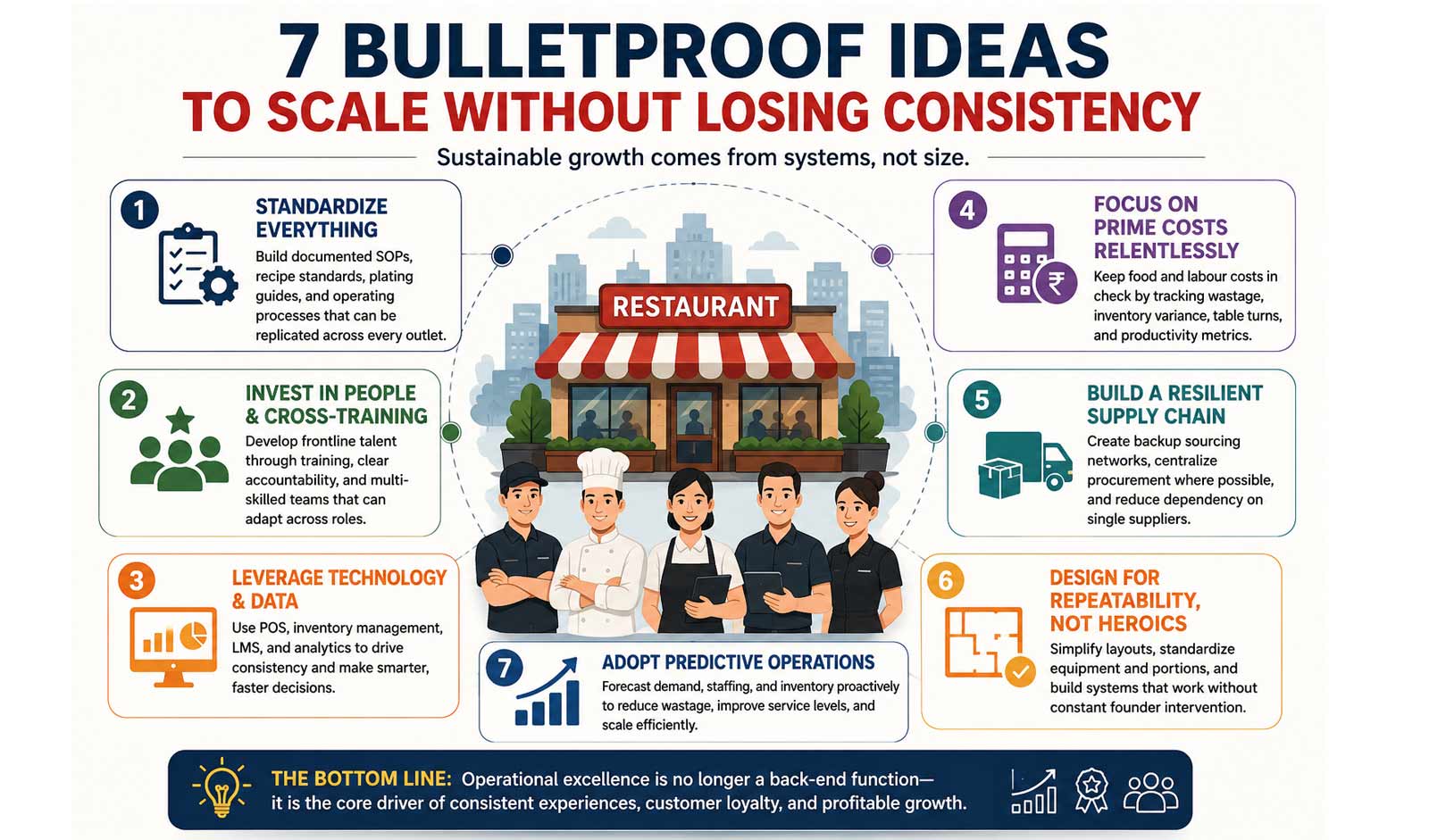
To address these challenges, hospitality businesses are increasingly adopting demand forecasting, batch cooking models, centralized procurement systems, and technology-driven inventory management. However, Surve noted that cross-training staff for multi-functional roles and streamlining menus further enhances operational efficiency and flexibility during high-pressure events.
“The long-term impact of these strategic solutions is substantial. Businesses that operate with discipline and agility are better equipped to protect margins, scale sustainably, and maintain consistent quality,” added Shodhan.
Hotels in several Indian cities have increased menu prices by nearly 20–30 percent as rising fuel, logistics, and utility expenses continue to push operational costs higher.
While Gupta shared that labour, logistics, and event costs in Pune are up 18-20% yearly due to staff shortages and fuel costs. “We handle this with cross-trained teams, fixed vendor contracts, and detailed event planning. If ignored, we lose 5-7% of catering revenue. If managed, we protect the GOP and maintain luxury service standards without inflating guest pricing.”
In a dynamic industry like catering and hotel, efficiency is no longer just about managing costs, it is what enables creativity, consistency, and long-term growth. For India’s catering and hospitality sector, competitive strength today is driven less by scale and more by operational efficiency and precision.
Vijetha Iyer
Content Editor
Working as a Content Editor with Restaurant India. I have worked in various sectors like food and beverage sector, chemicals, pharma, nutraceuticals, now specially focusing on restaurant side. But my core knowledge was always on content. Be it writing poems to verses, I always loved writing and have been exploring my career on the same. In Restaurant India, I deliver insightful stories, take interviews of various brands and update the audiences about the newest happenings in the restaurant industry.