The Energy Drink Fight Is Bigger Than a Label
India's energy drink dispute shows how closely regulation and commercial strategy are linked. A product description can influence consumer recognition, retail visibility and the way a brand competes in a crowded market.

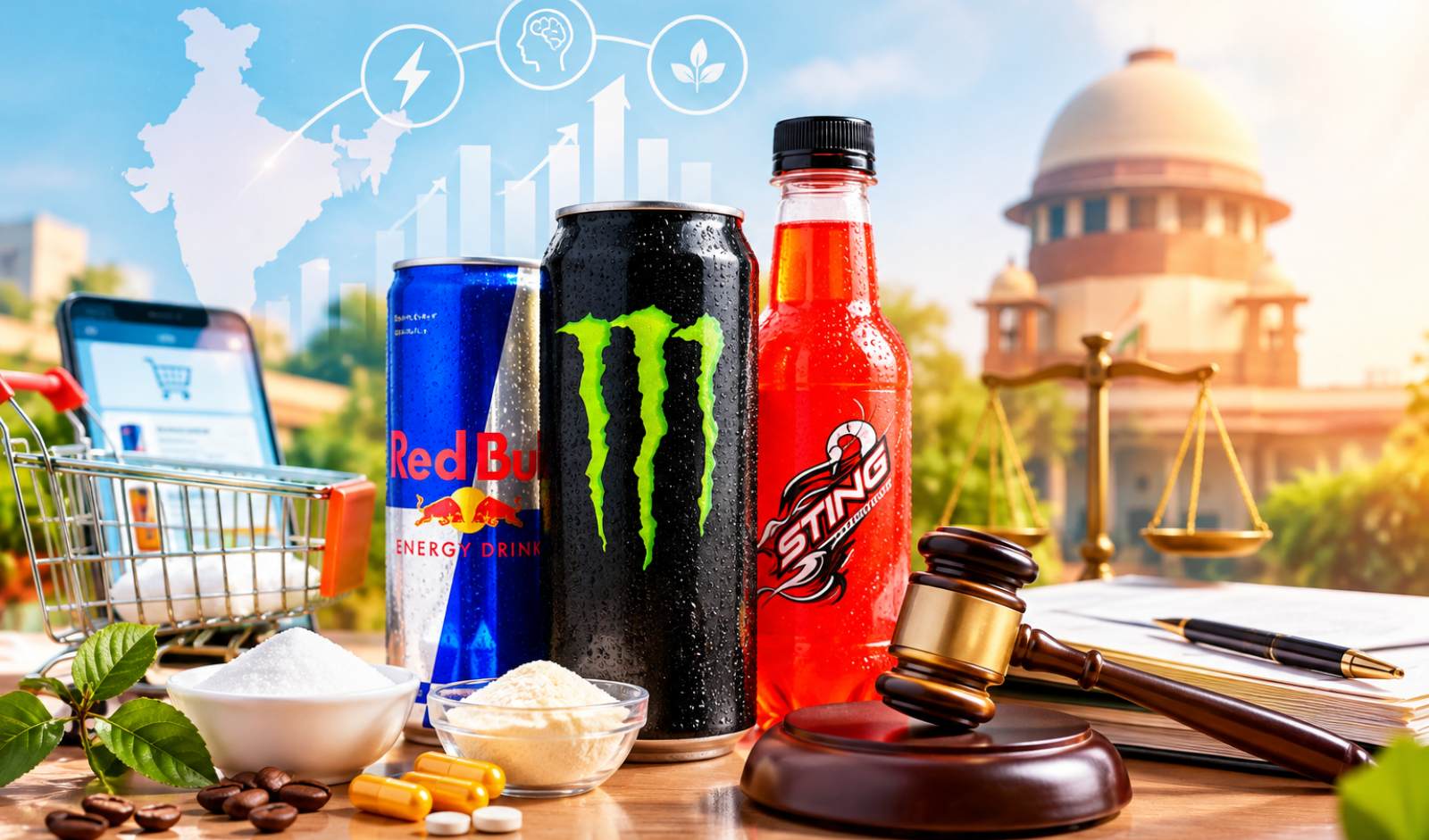
India's energy drink market is facing a battle that goes beyond caffeine, flavour and price. The fight is over three words that help consumers identify a product and help brands sell it. In June 2026, the Food Safety and Standards Authority of India (FSSAI) directed manufacturers of certain high-caffeine beverages to stop using the term “energy drink”. The move triggered legal challenges from major beverage companies, including PepsiCo, Monster Beverage and Reliance Consumer Products.
On October 6, the Delhi High Court granted interim relief to these companies, allowing them to continue using the description under specific conditions. PepsiCo and Monster were permitted to sell existing labelled stock, but the order did not allow them to manufacture new products carrying the same label. Similar relief had been granted to Reliance Consumer Products and Red Bull in their respective proceedings. The legal dispute remains ongoing. The dispute raises a bigger question for India's beverage industry. What happens when a product's familiar identity becomes a regulatory concern? For companies competing for shelf space and consumer attention, changing a label could affect much more than packaging.
Why the Energy Drink Label Matters
A consumer standing in front of a supermarket refrigerator may have only a few seconds to choose a drink. The colour of the can, the brand name, the price and the words on the packaging can all influence that decision. The term “energy drink” immediately signals what the product is designed to offer. It helps distinguish the beverage from regular soft drinks, fruit-based drinks and flavoured water. It also connects the product with occasions such as long working hours, gaming, travel and sports-related activities. For brands, this recognition has commercial value. A familiar product description can help customers find a beverage in a store or search for it online.
Removing or changing that description could require companies to rethink their packaging, product listings and communication with retailers. Consumers may still recognise a familiar brand, but a change in the wording could create confusion for some buyers. The issue is particularly important in a market where companies compete across different price points. A product's name can help it stand apart even when several beverages occupy the same refrigerator.
India's Beverage Market Is Becoming More Competitive
The timing of the dispute matters. India's energy drink category is attracting major beverage companies as consumption patterns and price competition change. According to market data cited by Reuters from Euromonitor International, India's energy drink retail sales were growing at an annual rate of 12.6 percent. The market was forecast to reach US$1.6 billion by 2028. These are reported estimates and forecasts, rather than confirmed current market totals.
The competition is visible across different price segments. Red Bull and Monster have established identities in the category, while PepsiCo's Sting has helped build a presence in the more affordable segment. Reliance Consumer Products has also entered the race with Campa Energy. This creates an important commercial distinction. Premium brands may rely on brand image, product positioning and established consumer loyalty. Affordable products can compete through price, availability and repeat purchases. A change in labelling requirements could therefore affect businesses in different ways. A well-known brand may retain some recognition even if its packaging changes. A newer product may depend more heavily on a clear description to explain what it offers. The dispute is not proof that any particular brand will lose sales. However, it shows why beverage companies have a strong interest in protecting the language used to describe their products.
What Is Actually Inside an Energy Drink?
The label debate also brings attention to a more important consumer question: what does an energy drink contain, and what does its name mean? Caffeine is one of the main ingredients used in these beverages. It acts as a stimulant and can temporarily increase alertness. Depending on the formulation, energy drinks may also contain sugar, taurine, B vitamins, sweeteners and other ingredients. However, these ingredients do not all serve the same purpose. Caffeine stimulates the central nervous system. Sugar provides calories. B vitamins support normal bodily functions, but their presence does not automatically mean a drink provides extra energy to someone who already gets enough of these nutrients. Indian food standards specify a total caffeine concentration of 145 to 300 milligrams per litre for regulated caffeinated beverages. The applicable rules also include labelling requirements, including a declaration to consume no more than 500 ml per day under the specified standard. The amount of caffeine in a serving is important. For example, a beverage containing 32 milligrams of caffeine per 100 ml would provide 80 milligrams in a 250 ml can.
This is why consumers should compare the actual caffeine content and serving size instead of relying only on the product name. Sugar content and other ingredients also vary between brands and formulations. The regulatory debate is about product classification and the permitted use of a description. It should not be confused with a finding that every beverage sold under the energy drink label has the same ingredients or presents the same level of risk.
The Hidden Cost of Changing a Beverage's Identity
A label change may appear simple to consumers. For a beverage company, however, it can affect several stages of the supply chain. Packaging has to be designed, printed and supplied in advance. Companies also need to coordinate with bottlers, distributors, retailers and online platforms. If a regulatory direction changes the permitted product description, existing packaging may no longer be suitable for newly manufactured stock. The dispute has already raised concerns about business disruption. Reuters reported that Reliance and PepsiCo said hundreds of millions of their labelled beverage products had been taken out of circulation following the regulator's action. These figures represent company claims reported in the legal dispute, not independently verified estimates of total industry losses. The impact can extend beyond the can itself. Product photographs, catalogue descriptions, search tags and retailer databases may also need updates. Companies could have to coordinate changes across thousands of retail outlets and digital listings.
There is also a timing challenge. Packaging changes must be managed alongside manufacturing schedules and distribution commitments. A delay in updating product information can create confusion for retailers and consumers. The actual financial impact will depend on each company's inventory, supply agreements and ability to adapt. Still, the dispute demonstrates how a seemingly small change in wording can create operational work across a large consumer goods business.
Why Retail Shelves and Online Searches Matter
The battle over the energy drink label does not end at the supermarket. It also affects how consumers discover products online. In April 2024, FSSAI asked e-commerce food businesses to correct the classification of certain products listed under categories such as “Health Drinks” and “Energy Drinks”. The regulator clarified that the term “Energy Drink” could be used only for products licensed under the specified caffeinated beverage categories.
This distinction matters because online shopping depends heavily on product categories and search terms. A consumer searching for an energy drink may not find a product if its listing appears under an unrelated category. Retailers also need accurate product information to manage their catalogues and help customers compare products. Incorrect classification can make it harder for consumers to understand what they are buying. For beverage companies, the challenge is to maintain product visibility while complying with the applicable rules. That may require changes to product descriptions, search tags and packaging, depending on the final regulatory position. The dispute also highlights the growing importance of consistency between a product's physical packaging and its digital listing. If the two communicate different information, consumers may struggle to identify the product or understand its intended use.
Can Beverage Brands Sell the Same Promise Without the Same Name?
The next phase of the dispute could influence how beverage companies present their products. Any long-term changes will depend on the legal outcome and the applicable regulatory requirements. Brands may need to review their packaging language, ingredient communication and digital listings. They could also place greater emphasis on flavour, caffeine content, sugar levels and serving size when explaining their products to consumers. However, changing a label does not automatically change the beverage itself. The formulation, taste, price and distribution network may remain the same even when the description changes. This creates a challenge for marketing teams. They must find ways to explain the product clearly without making claims that are not supported by its composition or permitted under food regulations.
It also presents an opportunity to improve transparency. Clearer information about caffeine per serving, sugar content and recommended consumption can help customers make better-informed choices. For the industry, the larger lesson is that product identity is not built by branding alone. It also depends on how regulators classify a product, how retailers present it and how consumers understand its purpose.
The Real Battle Is Over Consumer Trust
India's energy drink dispute shows how closely regulation and commercial strategy are linked. A product description can influence consumer recognition, retail visibility and the way a brand competes in a crowded market. For manufacturers, the challenge is to protect brand identity while meeting regulatory requirements. For retailers, it is to maintain accurate product information. For consumers, the priority should be understanding what a beverage contains rather than judging it only by its name.
The final legal outcome will determine how the affected companies can use the disputed description. Until then, the case remains a reminder that even a familiar phrase on a can can carry significant commercial weight. Ultimately, the energy drink fight is bigger than a label because it raises a fundamental question for the beverage industry: who gets to define what a product is—the brand that sells it, the regulator that classifies it, or the consumer who decides whether to buy it?
Saptopriya Ghosal
Feature Writer
I am a dedicated media professional with a bachelor's degree in mass communication from the State University of Calcutta and a postgraduate degree from Amity University. My academic journey has equipped me with a profound understanding of storytelling and communication. Passionate about the dynamic world of media, I continually strive to explore new ways to engage and inform through compelling narratives.