Subscription-Based Alcohol Clubs: Are They Sustainable or Just Premium Hype?
While the first delivery attracts attention, it is the quality of experience, personalization, and engagement that determines whether customers stay.

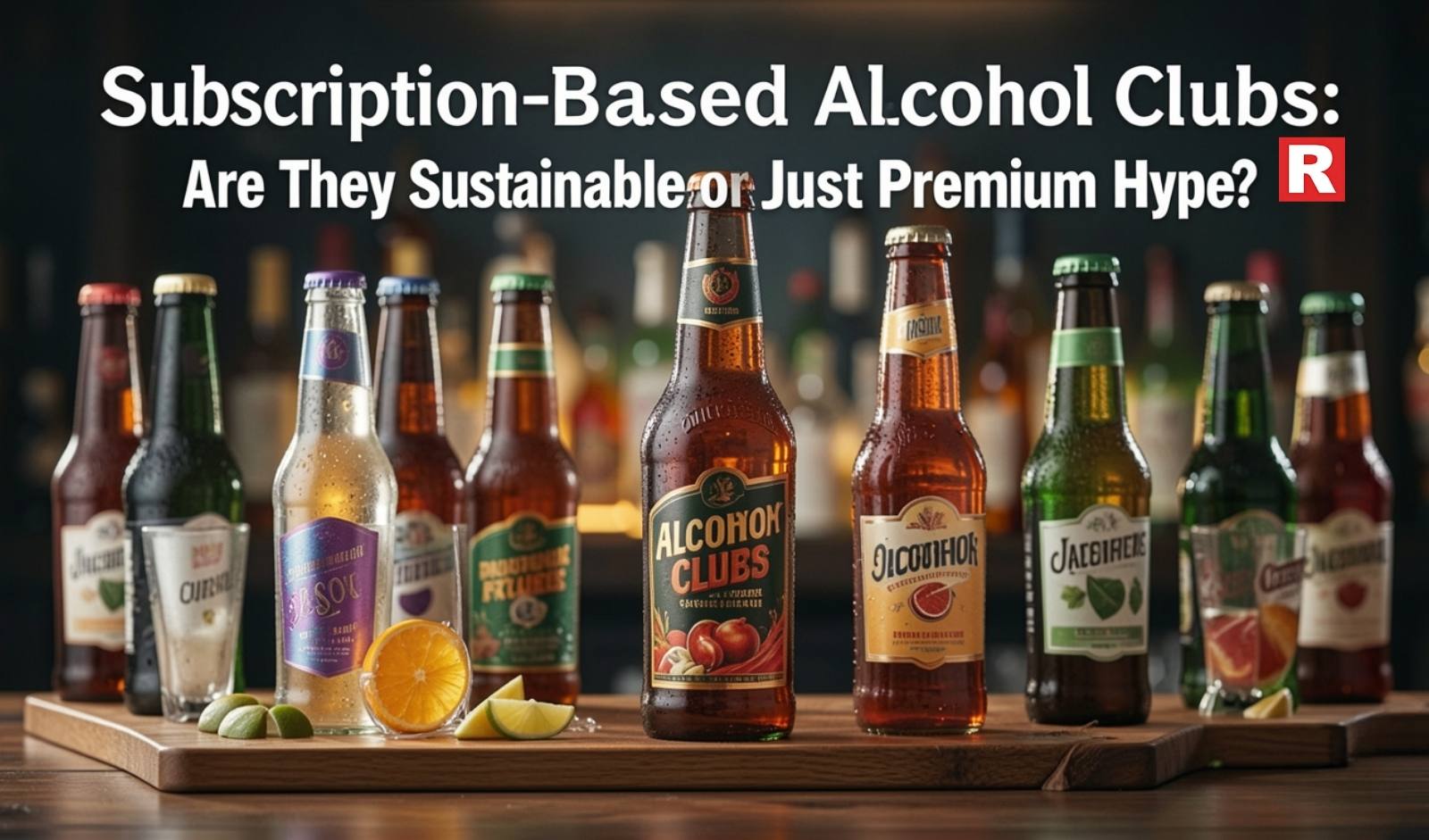
The idea sounds simple. Pay a monthly fee. Get a curated bottle of wine, whisky, or craft spirit delivered home. Discover something new every time. But behind the premium packaging and tasting notes lies a more complex reality. Subscription-based alcohol clubs sit at the intersection of D2C commerce, experiential retail, and shifting drinking habits. The big question is not whether they are growing. It is whether they can last.
Why Alcohol Subscription Clubs Are Booming
The rise of alcohol subscriptions is not random. It is tied to three structural shifts.
First is premiumisation. Consumers today are drinking less but choosing better. They want craft spirits, small-batch wines, and unique flavours rather than mass-market options. This makes curated subscriptions feel valuable.
Second is the experience economy. People are no longer just buying alcohol. They are buying discovery. The story behind the bottle matters as much as the drink itself. This is why wine and whisky clubs position themselves as “memberships,” not just deliveries.
Third is the rise of digital-first buying behaviour. Millennials and Gen Z are comfortable subscribing to products if it saves effort or adds novelty. In fact, younger consumers show a strong interest in curated beverage services and experimentation-driven consumption.
Put together, alcohol subscriptions are less about convenience and more about identity and lifestyle.
How the Model Actually Works
At a basic level, alcohol subscription clubs follow three models.
Volume model: Low-cost wines or beers delivered monthly. This is driven by affordability but struggles with differentiation.
Curation model: The most popular format. It focuses on storytelling, rare finds, and expert recommendations. The perceived value is in discovery, not quantity.
Prestige model: High-end memberships offering rare or aged spirits. These target niche, high-spending consumers.
Across all three, the pricing is not just about the liquid. It includes logistics, packaging, and a “discovery premium.” The customer is paying for access and experience, not just alcohol.
The Real Economics Behind Subscription Clubs
On paper, subscriptions look attractive. Recurring revenue. Predictable demand. Strong margins. In reality, the economics are more fragile. Most alcohol subscription businesses rely on retention, not acquisition, to become profitable. Initial customer acquisition often runs at a loss. Brands recover costs only after multiple billing cycles.
And that is where the challenge begins. Churn is high. Alcohol subscription programs can see 30–50% churn when engagement is weak. Across subscription boxes, 60–70% of users drop off between the first and third order.
This creates a clear reality: The business does not fail because people do not sign up. It fails because they do not stay.
The Sustainability Question
1. Economic Sustainability
This is the biggest challenge. Subscription businesses are expensive to run. Packaging, shipping, compliance, and sourcing all add cost. In many cases, the first box is sold at minimal or negative margin. Retention becomes critical. But consumers today are facing subscription fatigue, with over 40% cancelling at least one subscription in a year. Alcohol subscriptions also suffer from novelty decay. Many users join to explore, not to commit. Once curiosity fades, so does the subscription. Even strong categories like wine clubs show a split. Top performers keep churn as low as 3–4%, but weaker ones hit 15–20%. This gap shows one thing clearly. Sustainability depends entirely on experience quality and engagement depth.
2. Environmental Sustainability
This is often overlooked but increasingly important. Alcohol subscriptions rely heavily on glass bottles, protective packaging, and long-distance logistics. Shipping fragile products increases carbon footprint. Cold-chain requirements for certain beverages add further environmental cost. As consumers become more climate-conscious, this creates pressure. Brands now need to rethink packaging, reduce waste, and justify the environmental cost of monthly deliveries. Without this shift, the sustainability narrative becomes weak.
3. Behavioral Sustainability
This is where the biggest contradiction lies. Global drinking habits are changing. The rise of moderation and the “sober curious” movement is reshaping alcohol consumption. Non-alcoholic and low-alcohol alternatives are growing rapidly, driven by health and lifestyle concerns. Even within subscription models, many users join for short-term goals like reducing alcohol intake or experimenting with new formats. Average subscription lifecycles can be as short as 4–6 months. This means the model is not always aligned with long-term consumption behaviour.
Where Subscription Clubs Actually Deliver Value
Despite these challenges, alcohol subscriptions are not failing. They work well in specific conditions.
They deliver value when they combine four key elements:
- Discovery: Access to products not easily available in retail
- Education: Tasting notes, pairing guides, storytelling
- Convenience: Home delivery and curated selection
- Experience: Ritual, exclusivity, and community
The strongest clubs are not product businesses. They are experience platforms. This is why wine clubs often outperform other subscription categories. Members are not just buying bottles. They are buying a sense of belonging and access.
The India Challenge: Can This Model Scale Locally?
In India, the opportunity exists—but the barriers are significant. The alcohol industry is highly regulated, with state-wise laws, licensing restrictions, and delivery limitations. This makes D2C subscription models difficult to execute at scale. At the same time, Indian consumers are becoming more premium-focused. The industry is seeing strong value growth driven by higher spending per bottle rather than volume increase. This creates a unique scenario.
Pure subscription models may struggle. But hybrid formats could work better:
- Membership-based tasting clubs
- Offline + online community experiences
- Event-driven subscriptions
In India, the future of alcohol subscriptions is likely to be experience-led, not delivery-led.
Trends to Watch
The next phase of alcohol subscriptions will not look like the current one.
- Low and no-alcohol subscriptions: Driven by wellness trends and moderation behaviour
- AI-driven personalization: Taste profiling and smarter recommendations
- Community-led experiences: Events, tastings, and social engagement tied to subscriptions
- Premium niche categories: Craft, functional, and experimental beverages
At the same time, competition will intensify. Large beverage brands and platforms are entering the space, increasing customer acquisition costs and raising expectations.
Final Take
Alcohol subscription clubs are clearly gaining traction, but they are not an easy or guaranteed business model. They operate in a complex space where experience and commerce overlap. On one hand, they rely heavily on curated storytelling, exclusivity, and discovery, which are difficult to scale consistently across a large audience. On the other hand, they are still transactional, requiring customers to renew every month, which makes loyalty fragile. Industry data shows that many subscription services face high churn within the first few cycles, often because the initial excitement fades. This makes long-term retention the real challenge. The success of these clubs depends less on how many users sign up and more on how many continue to see value over time. While the first delivery attracts attention, it is the quality of experience, personalization, and engagement that determines whether customers stay.
Saptopriya Ghosal
Feature Writer
I am a dedicated media professional with a bachelor's degree in mass communication from the State University of Calcutta and a postgraduate degree from Amity University. My academic journey has equipped me with a profound understanding of storytelling and communication. Passionate about the dynamic world of media, I continually strive to explore new ways to engage and inform through compelling narratives.