
Scotch vs Indian Whisky: What Really Makes Them Different?
Scotch vs Indian Whisky: From strict Scottish laws to tropical ageing in India, discover what truly sets these two whisky styles apart.

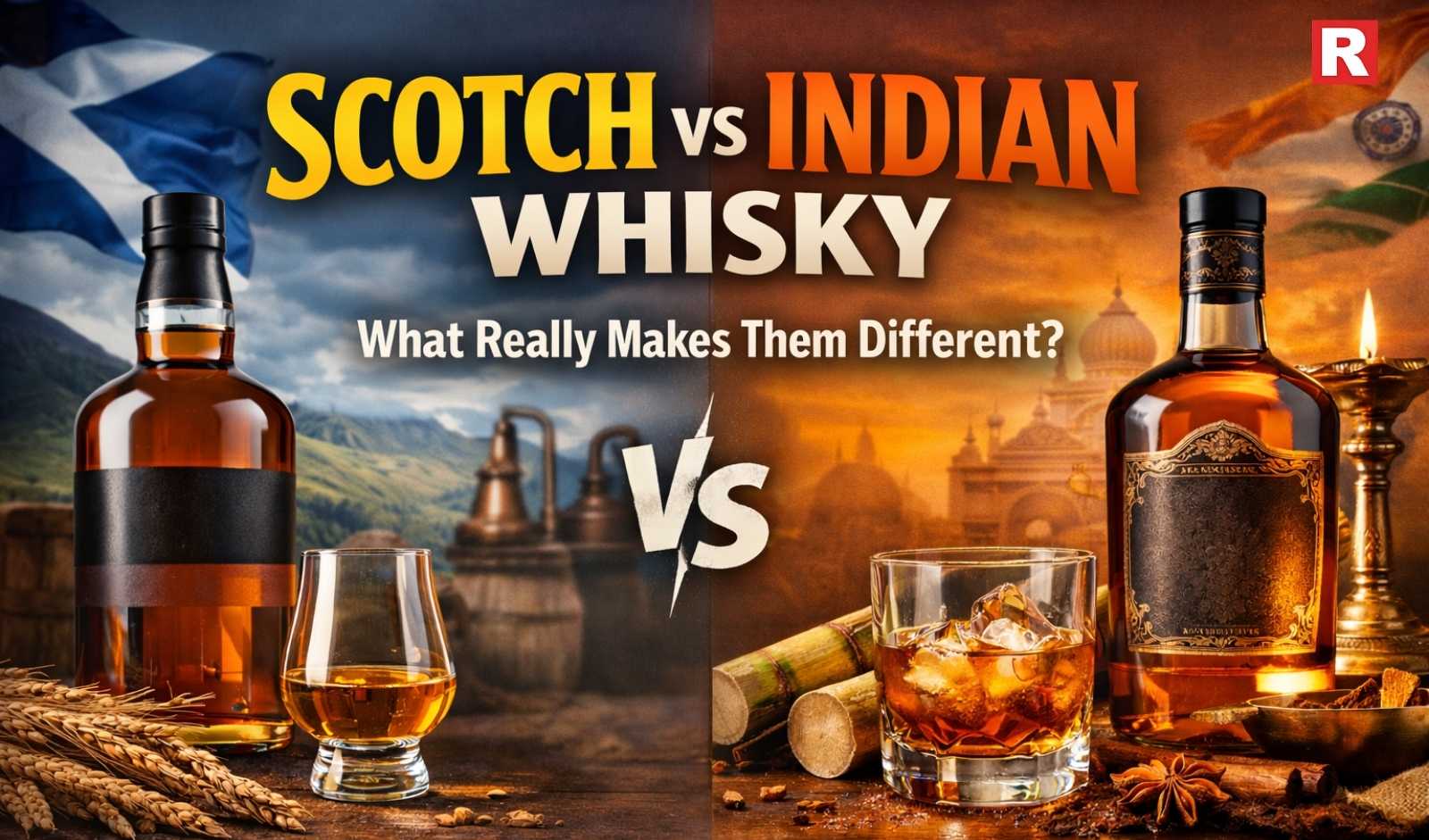
India is the world’s largest whisky market. From casual house parties to premium cocktail bars, whisky dominates drinking culture. But one debate keeps coming back: What is the real difference between Scotch and Indian whisky?
The answer is not simple. It involves law, climate, raw material, ageing science, and market perception. Many Indian consumers assume Scotch is superior because it comes from Scotland. Others believe Indian single malts are now matching global standards. The truth sits somewhere in between.
The Legal Definition Changes Everything
The biggest difference starts with law. Scotch whisky is protected by strict regulations. It must be produced in Scotland. It must use water and malted barley. Other cereals are allowed only in grain Scotch. It must be distilled below 94.8% alcohol by volume. It must mature in oak barrels at least three years. No additives are allowed except caramel colouring for consistency. These rules are enforced by the Scotch Whisky Association under the Scotch Whisky Regulations 2009.
Indian whisky follows standards set by the Food Safety and Standards Authority of India. However, the definition is broader. In India, whisky can be made from grain spirit or from Extra Neutral Alcohol derived from molasses. It can also be blended with imported Scotch. This is why the term “Indian whisky” can mean very different things depending on the product category.
Raw Materials: Barley vs Molasses
Scotch single malt is made from 100% malted barley. The barley is mashed, fermented, and distilled. In some regions, peat is used to dry the barley, which gives smoky flavours. For example, whiskies from Islay are known for their strong peat smoke character. Indian whisky has two main categories.
The first is mass-market whisky made from molasses-based spirit. This spirit comes from sugarcane by-products. It is neutral in taste and then blended with flavouring components or small amounts of aged malt spirit.
The second category is Indian single malt. These are made from 100% malted barley, similar to Scotch. Brands like Amrut, Paul John, and Rampur produce barley-based single malts that compete globally.
It is important not to confuse molasses-based blends with Indian single malts. They are technically and structurally different products.
Climate: The Silent Force Behind Flavour
Climate is one of the biggest technical differences.
Scotland has a cold and stable climate. Maturation happens slowly. The interaction between spirit and oak is gradual. The average angel’s share, which is the alcohol lost through evaporation, is about 2% per year. A 12-year-old Scotch has matured gently over 12 full years in Scottish warehouses.
India has a tropical climate. In cities like Bangalore and Goa, temperatures can rise significantly. Heat increases the interaction between spirit and wood. Extraction of compounds like vanillin, tannins, and lignin happens faster.
The angel’s share in India can range from 10% to 12% per year. This means a four-year-old Indian single malt can show intensity similar to a much older Scotch. However, faster ageing also means producers must carefully manage cask influence to avoid over-oaking. Climate does not make one better than the other. It makes them different.
Read more: Best Imported Whisky Brands in India: A Detailed Guide for Every Whisky
Top Scotch Whisky Brands in India: The Ultimate Guide for Whisky Lovers
Distillation and Production Methods
Traditional Scotch single malts use copper pot stills. Copper plays a crucial role. It removes sulphur compounds during distillation. This results in a cleaner spirit. Grain Scotch is made using column stills. This method produces lighter spirit, often used in blends. Indian premium single malts also use copper pot stills. Many follow Scottish production techniques. However, fermentation times and yeast strains may differ due to climate conditions. Mass-market Indian whiskies often use column still distillation for molasses-based spirit. The spirit is highly neutral. It does not carry strong grain character unless blended with malt whisky. Production philosophy differs based on the target audience and price segment.
Flavour Profile Differences
Scotch typically offers layered flavours. Depending on the region, you may find honey, heather, orchard fruits, dried fruits, vanilla, or peat smoke. Whiskies from Speyside are often fruity and elegant. Those from Highlands can be bold and diverse in style.
Indian single malts often show tropical fruit notes. You may taste mango, banana, spice, and strong oak influence. The warm climate enhances ester formation during fermentation, contributing to fruit-forward aromas. Molasses-based Indian blends can taste sweeter or softer on the palate. This appeals to a large domestic audience that prefers smooth and easy drinking styles. Taste preference is personal. Some prefer the subtle complexity of Scotch. Others enjoy the bold intensity of Indian single malts.
Know more: 7 Types of Whiskies Everyone Should Try Once
Age Statement and Perception
In Scotland, age statements are strictly regulated. If a bottle says 12 years, the youngest whisky in that bottle is at least 12 years old. In India, age statements on single malts follow similar transparency standards. However, many mass-market whiskies may not highlight age clearly because they are blends of different components.
Perception plays a big role. Scotch carries centuries of heritage. Indian single malt is relatively young in comparison. But awards and global recognition are changing perception rapidly. Indian single malts have won medals in international competitions in the UK and the United States. This signals quality improvement and growing credibility.
Also check: Why You Should Avoid These Alcohol Brands While Dieting: Hidden Calories
Top European Whisky Brands to Try: A New World of Old-World Craft
The Bottom Line!
Scotch whisky is defined by strict geography and regulation. Its identity is rooted in Scottish climate and long maturation. Indian whisky is defined by diversity. It ranges from molasses-based blends to world-class single malts. Its character is shaped by tropical ageing and innovation. If you are exploring whisky seriously, it helps to read labels carefully. Check whether it is a blended whisky, a single malt, or a molasses-based spirit. Understand where it is distilled. Look at maturation details. As Indian consumers become more informed, the conversation is shifting from “Which is better?” to “Which style suits my palate?” Scotch and Indian whisky are both authentic within their frameworks. They follow different rules. They respond to different climates. They serve different consumer segments. That is what truly makes them different.
Saptopriya Ghosal
Feature Writer
I am a dedicated media professional with a bachelor's degree in mass communication from the State University of Calcutta and a postgraduate degree from Amity University. My academic journey has equipped me with a profound understanding of storytelling and communication. Passionate about the dynamic world of media, I continually strive to explore new ways to engage and inform through compelling narratives.






















































































































































