
Redefining Nightlife Economy: Creativity Powering India After-Dark Culture
As per the reports, India sees a huge untapped potential, with projections suggesting a market value of around $4.64 billion by 2030.

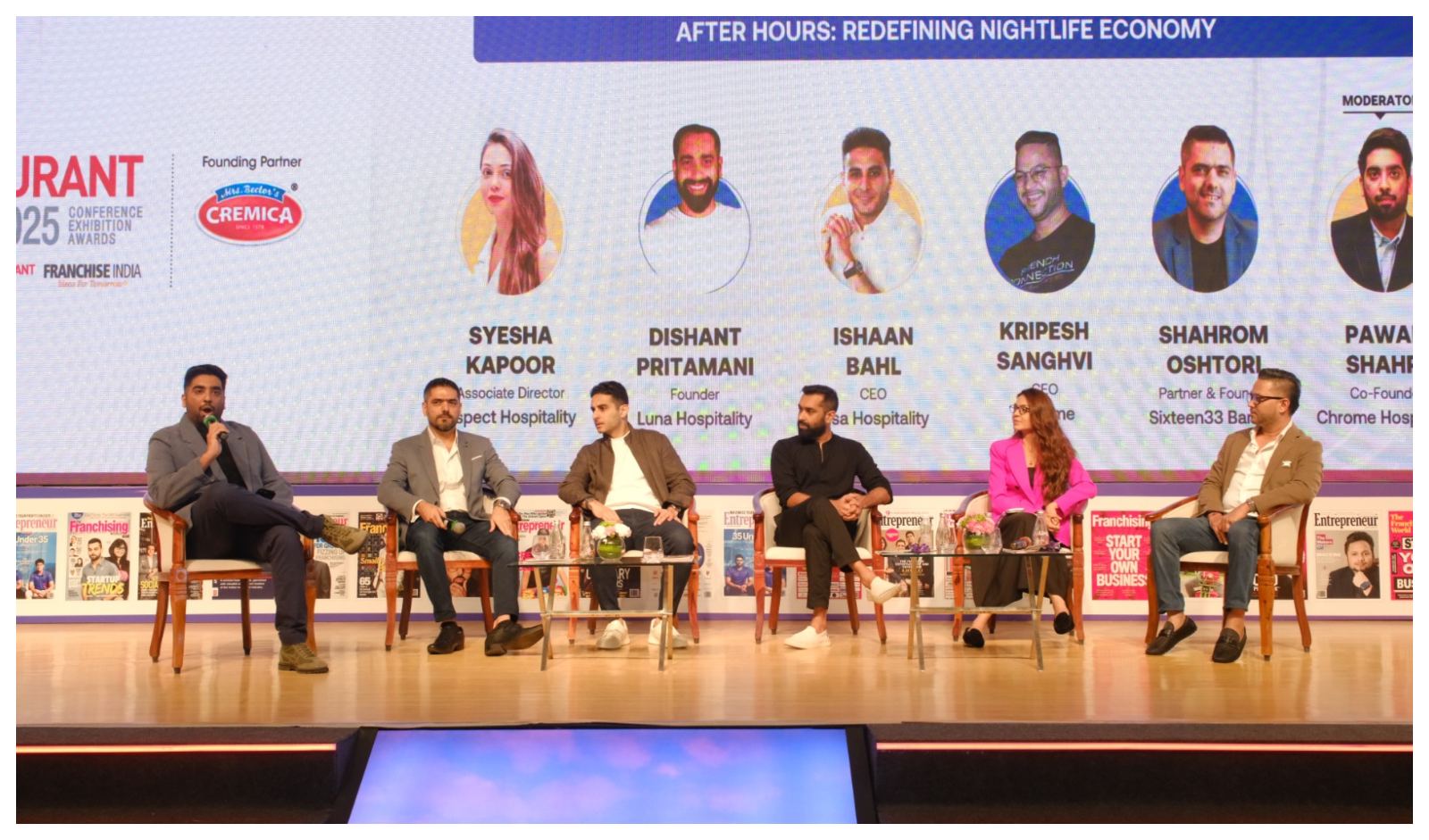
India’s nightlife ecosystem is in the midst of one of its most dynamic transitions. What was once a predictable mix of bar menus, mainstream music, and standardized design has transformed into a sophisticated, hyper-experiential economy driven by evolved consumers, cultural exploration and a new generation of operators redefining what it means to “go out.”
From Mumbai to Goa and beyond, hospitality entrepreneurs are reimagining bars as sensory worlds, community hubs, culinary destinations, and experimental labs each with a distinct identity. This transformation is not just reshaping how India drinks; it’s reshaping how India socializes, connects and celebrates culture. As per the reports, India sees a huge untapped potential, with projections suggesting a market value of around $4.64 billion by 2030.
The Consumer Shift
Today’s nightlife consumer is no longer passive. They are informed, opinionated, and deeply aware of what they want. Syesha Kapoor, Associate Director, Aspect Hospitality is clear about this evolution. “Everyone is going out, but they want intimacy, community, and uniqueness. Consumers have evolved and they know exactly what they want.”
Consumers are Well-travelled, comparing experiences to global cities. They are detail-oriented, noticing lighting, ambience, storytelling and menu design. They are focusing on experience-driven and like choosing places that go beyond food and drink
Captivating New Pockets: Localization as Strategy
When Ishaan Bahl, CEO, Risa Hospitality launched 145 a decade ago, the market was very different. Like freak shakes, for instance was a wild experiment yet they sold 5,000 in the first month. But the real learning came later. “Consumers today are incredibly experienced driven. They’re well-travelled. They notice the small things interiors, lighting, music, ambiance,” he explained.
As 145 expanded, one truth became clear: there is no single Mumbai market. South Bombay wants elegance, heritage and nostalgia. While Andheri wants energy, youthfulness and movement.
Menus, music, and even service styles had to be localized. “Understanding your audience is everything. That defines brand success.”
A New Movement: The Vegetarian Bar
The idea of a fully vegetarian bar would have been unimaginable a decade ago. But today, it’s part of India’s cultural and culinary confidence.
Kripesh Sanghvi, CEO, Epitome is at the forefront of this shift. “Earlier, people thought alcohol must be paired with non-veg. That’s changed. Vegetarian cuisine today offers depth, creativity, and premium experiences.”
By offering high-end, fully vegetarian menus, he taps into growing vegetarian demographic, cultural reinvention of Indian ingredients and a desire for immersive, guilt-free, flavour-forward dining. His vision is clear: vegetarian bars are not a niche as they are an emerging category.
Designing Experiences: From First Step to Final Goodbye
In the new nightlife economy, the product is the experience, not just the drink.
Dishant Pritamani, Founder, Luna Hospitality built his brand around this philosophy. “From the moment you walk in to the minute you leave, you’re paying for everything. I don’t follow trends, I focus on my crowd.” His early case study was Bandra’s Algoroom, where he learned that experiences are built not by avoiding flaws but by balancing them with warmth, purpose, and personality.
Meanwhile, Shahrom Oshtori, Partner & Founder, Sixteen33 Bandra extends this idea: “Bandra is not just a location; it’s a community built with an emotion. Luxury isn’t opulence anymore. It’s comfort, kindness, and getting the basics right.”
Their design philosophy revolves around the five senses: sight with soft lighting, layered design, sound with curated playlists and neighbourhood rhythm, smell with signature aromas and fresh ingredients, taste with ingredient-led cocktails and dependable quality, Touch with materiality, comfort and tactility.
By anchoring their cocktails in Bandra’s cultural history villages, stories, ingredients they create identity-driven bar programs that resonate emotionally.
Brand Loyalty: Built on Community, Not Discounts
In a market overflowing with options, loyalty has become the ultimate differentiator. For Bahl, community managers and a “second home” environment build attachment.
“Goa’s emotional landscape shapes loyalty differently. The Goan community is driven by emotion. You must win them differently,” noted Pritamani.
Emphasizing on the internal culture, Kapoor said, “Nearly 80% of our core team stays with us across brands. That consistency builds trust guests can feel.”
“Connection is everything. The guest journey must be seamless from entry to exit,” shared Sanghvi.
The Cocktail Culture Reset: From Technique to Taste
India’s cocktail scene has exploded with molecular gimmicks, clarified drinks, fat-washed spirits, and fine-dining-style beverage programs. But not everyone is convinced this is the right direction.
Pritamani stated, “We’re obsessing over technique. But are we asking if the guest enjoys the drink? Clarifying everything is not the answer. Charging ₹1,500 for a drink that delivers three sips is unsustainable. To counter this, his Goa lab brings together chefs and bartenders to combine flavour science with culinary intuition. I love technique but the guest must matter first.”
Bahl feels global exposure is widening horizons, while Shahrom takes a more grounded view. “We sell 2,500 picante a month. Ingredient balance matters more than technique.”
Kapoor insists on brand-first cocktail design, while Sanghvi keeps it simple: “We give the customer what they want.” This marks the beginning of a more balanced, flavour-first cocktail culture in India.
AI in Restaurants: A Creative and Strategic Tool
AI has quietly entered the nightlife sector not as a replacement, but as a force multiplier. But there are no restaurants in India which has AI in their design. But Pritamani was the one to set the trend by using AI in his restaurant ‘The Second House Goa.’
He added, “It helped us rebuild interiors and craft immersive visual experiences. Even the lighting at The Second House was custom designed through AI, refined with multiple prompts to achieve the perfect look.”
For Kapoor, AI is a research engine. She said, “It helps us track trends, understand shifts, and stay ahead.” This signals the start of a future where design, menu development, and R&D become more agile, experimental and data informed.
India’s nightlife is not just expanding, it’s evolving. As consumers become more discerning and culture-first, the industry is responding with spaces that feel more personal, thoughtful, and emotionally resonant. This new nightlife economy is built not just on drinks and design, but on community, intent, emotion and identity.
Vijetha Iyer
Content Editor
Working as a Content Editor with Restaurant India. I have worked in various sectors like food and beverage sector, chemicals, pharma, nutraceuticals, now specially focusing on restaurant side. But my core knowledge was always on content. Be it writing poems to verses, I always loved writing and have been exploring my career on the same. In Restaurant India, I deliver insightful stories, take interviews of various brands and update the audiences about the newest happenings in the restaurant industry.









































