
Raising a Glass: How Bars Influence Whisky Brand Growth in India
India’s whisky market is entering a more mature phase. Growth is no longer driven only by volume. It is driven by trading up. Consumers are shifting from regular blends to premium and single malts.

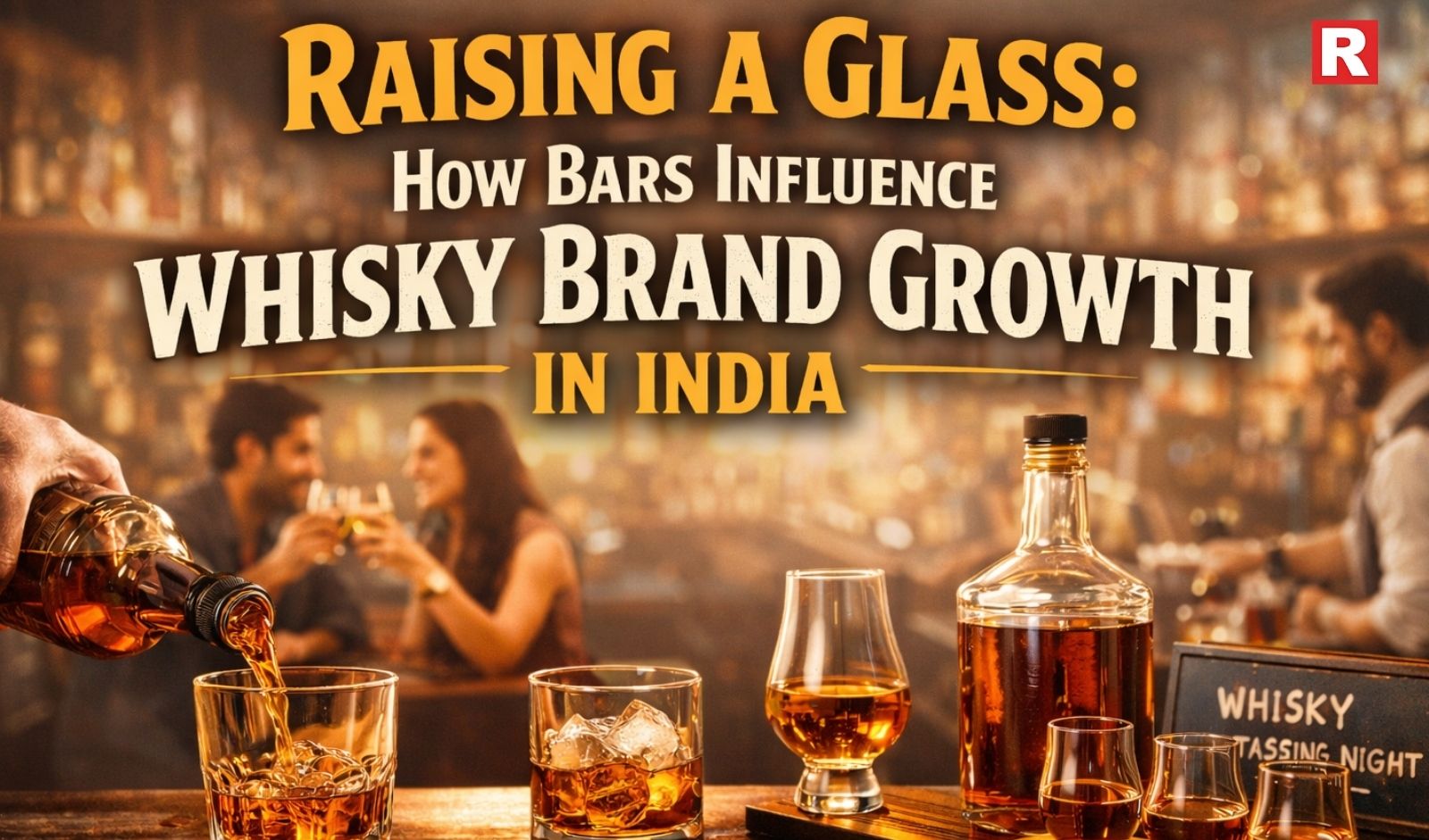
India is one of the largest whisky markets in the world. According to the International Wine and Spirits Research (IWSR), India consistently ranks among the top countries in whisky consumption by volume. But numbers alone do not explain growth. What truly drives whisky brand expansion today is experience. And that experience often begins at the bar. Bars in India are no longer just places to drink. They are discovery hubs. They are tasting classrooms. They are marketing platforms. For whisky brands, they act as growth engines.
India has a long history with whisky. From mass-market blends to premium Indian single malts, the category has evolved rapidly. Companies such as United Spirits and Pernod Ricard India have expanded their portfolios to include premium and super-premium labels. At the same time, Indian single malts like Amrut Distilleries and Radico Khaitan (maker of Rampur) have gained global recognition. Urban consumers are now more curious. They want to know about cask ageing, peat levels, regional character, and tasting notes. This shift toward informed drinking has made bars more important than ever. Retail shelves can display bottles. But bars can tell stories.
Bars as Brand Launchpads
Aspect | Insight |
|---|---|
Market Entry Strategy | When a whisky brand enters India or launches a new expression, premium bars become the first touchpoint. On-premise presence builds early visibility among urban consumers. It places the brand directly in front of trendsetters and informed drinkers. |
Consumer Experience | A single malt served in a curated tasting flight creates immediate engagement. Guests compare flavour notes, aroma, and finish. They ask questions. They build informed opinions. This creates stronger recall than a retail shelf display. |
Trial to Conversion | On-premise sampling improves trial rates. Trial builds familiarity. Familiarity increases repeat purchase. Repeat purchase supports off-premise retail growth. This is measurable and strategic. |
Launch Sequencing | Many premium whiskies now debut in metro bars before wider distribution. This allows controlled positioning and feedback capture. |
Brand Amplification | Bar takeovers, tasting events, and brand weeks generate organic social media visibility. User-generated content lowers acquisition cost and strengthens premium positioning among aspirational consumers. |
Educating the Modern Whisky Drinker
The Indian consumer has matured. Many young professionals in cities like Mumbai, Bengaluru, and Delhi are willing to pay more for quality. But they want clarity. They want to understand what makes a whisky worth its price. Bartenders play a critical role here. They are brand educators. They explain the difference between bourbon cask and sherry cask ageing. They introduce guests to terms like nose, palate, and finish. They recommend serving styles.
This education builds confidence. A confident consumer is more likely to experiment. And experimentation supports premiumisation. Data from industry reports shows that premium and above segments are growing faster than regular segments. This growth is closely linked to experiential environments such as bars and tasting rooms.
Know more: ZYXX Kitchen & Lounge Opens in Gurugram, Targets
Top Flavoured Rum Brands in India to Try This Growing Winter
Driving Premiumisation Through Experience
Premiumisation is not just about higher price. It is about perceived value. Bars create that value. A whisky served in the right glass, paired with food, and introduced with context feels special. The lighting, music, and presentation add to the experience. This environment justifies a higher average selling price.
For example, when a consumer tries a premium Indian single malt at a curated tasting, they understand why it costs more than a regular blend. That understanding reduces price resistance at retail. From a technical standpoint, on-premise sales may represent a smaller share of total volume compared to retail. But they influence brand perception disproportionately. On-premise visibility often determines which brands become aspirational.
Data, Insights, and Consumer Behaviour
Modern bars in India operate like structured data hubs. Digital menus and advanced POS systems record every transaction in real time. They capture SKU-level sales, preferred serve styles, repeat frequency, and price sensitivity. This information helps whisky brands understand what truly works on the floor. If a 12-year-old expression performs strongly among urban professionals aged 25–35, brand teams can refine targeting and communication. If whisky cocktails generate higher rotation than straight pours, innovation can shift toward mixology-led formats. This data-backed collaboration reduces guesswork. It strengthens forecasting accuracy. It also lowers the risk of failed launches in competitive markets. For marketing heads, category managers, and bar owners, this approach creates measurable ROI and sharper positioning.
Key Points:
- Tracks real-time SKU performance
- Identifies consumer age and spending patterns
- Supports demand forecasting
- Guides premiumisation strategy
- Improves launch planning and portfolio expansion
Collaborations That Build Culture
Whisky growth in India is closely tied to culture. Bars are cultural spaces. They host music nights, tasting dinners, and thematic events. When brands collaborate with bars, they integrate into these cultural moments.
A whisky brand that sponsors a curated tasting during a city cocktail festival gains credibility. A limited-edition bottle launched during a festive season event feels relevant. These collaborations create emotional connections. Indian brands have also begun highlighting local identity. Storytelling around Indian barley, Himalayan water sources, or regional heritage resonates strongly with domestic audiences. Bars provide the right setting to communicate these narratives in a relaxed and engaging way.
Influence Beyond Metro Cities
While metro cities lead premium trends, tier-2 cities are catching up. Upscale lounges and hotel bars in cities like Jaipur, Chandigarh, and Indore are introducing curated whisky menus. Consumers in these markets often rely on bartender recommendations. A strong push in such venues can accelerate brand acceptance faster than mass advertising. This creates a multiplier effect. Once a brand becomes the preferred recommendation in key bars, off-trade retail demand often follows.
Also check: Top 20 Trendy Whiskeys You Must Try Once
Top Premium Whisky Brands Under Rs 5000 in India
Social Media Amplification
The Indian nightlife audience is digitally active. A well-presented whisky cocktail or a limited-edition bottle displayed at a bar is likely to appear on Instagram within minutes. This user-generated content works as indirect promotion. Influencers and regular guests alike contribute to brand storytelling. For premium labels, this visibility strengthens aspirational value. From a marketing efficiency perspective, bars act as content studios. They create shareable moments that extend beyond physical walls.
The Bigger Picture
India’s whisky market is entering a more mature phase. Growth is no longer driven only by volume. It is driven by trading up. Consumers are shifting from regular blends to premium and single malts. This shift reflects rising disposable income, exposure to global trends, and a desire for better taste. Bars are central to this transition. They act as testing grounds for new labels and limited editions. Through curated menus and guided tastings, they influence trial and repeat behaviour. In commercial terms, on-premise exposure builds brand equity before retail scale. Perception is shaped at the bar. Purchase often follows in stores. In a country as diverse as India, distribution alone cannot build aspiration. Influence must support availability. For brand owners, category managers, and investors, this means one clear priority. A strong bar strategy is not optional. It is a critical growth lever in a competitive whisky landscape.
Saptopriya Ghosal
Feature Writer
I am a dedicated media professional with a bachelor's degree in mass communication from the State University of Calcutta and a postgraduate degree from Amity University. My academic journey has equipped me with a profound understanding of storytelling and communication. Passionate about the dynamic world of media, I continually strive to explore new ways to engage and inform through compelling narratives.






















































































































































