
Plant-Based Seafood: The Next Big Thing After Vegan Meat
Vegan meat helped consumers accept alternative proteins. Now attention is shifting to seafood. Industry analysts see strong structural drivers behind this shift.

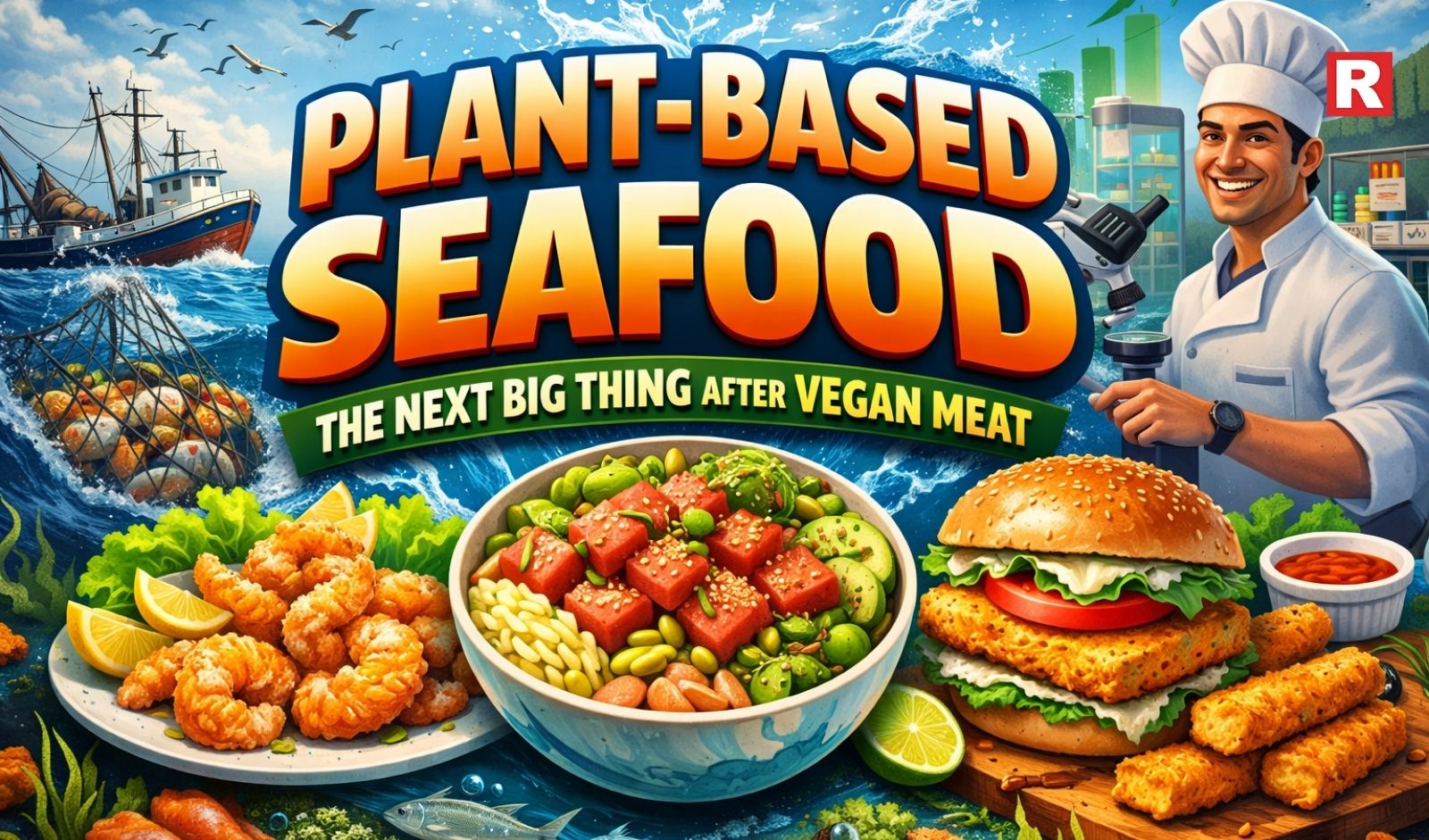
Vegan burgers had their growth cycle. Now attention is turning toward the ocean. Plant-based seafood is moving beyond specialty stores and entering mainstream retail and food service channels. Investors are studying the segment closely. Chefs are running pilot dishes. Retail buyers are reviewing shelf allocation with a long-term strategy in mind. This is no longer a novelty product. It is forming a defined subcategory within alternative proteins. The real driver is not lifestyle positioning. It is structural pressure. Climate change is affecting marine ecosystems. Overfishing is tightening global supply. Fuel costs and fishing regulations are increasing volatility in seafood pricing. At the same time, contamination concerns such as mercury and microplastics are influencing urban purchasing behavior.
Food technology is responding with precision. High-moisture extrusion is improving flaky textures. Seaweed and algae derivatives are refining marine flavor notes. Algal oil is addressing omega-3 expectations. For restaurants and retailers, this creates both differentiation and risk mitigation. For investors, it signals early-stage opportunity in a technically complex category with long-term relevance.
Why Seafood Is a Bigger Sustainability Issue Than Meat
Most people talk about cattle and carbon. Fewer talk about oceans. Yet the pressure on marine ecosystems is severe. Global fisheries assessments show that the majority of fish stocks are either fully exploited or overfished. Industrial fishing removes large volumes from oceans every year. Bycatch remains a major issue. Non-target species get trapped and discarded.
Shrimp farming has also led to mangrove destruction in several coastal regions. Mangroves are natural carbon sinks. When they disappear, both biodiversity and climate resilience suffer. Then there is contamination. Mercury accumulation in large fish species concerns many consumers. Microplastics have entered marine food chains. These concerns are not abstract. Urban buyers read labels. They track sourcing. They question quality. Plant-based seafood enters this gap. It removes pressure from oceans. It avoids mercury. It eliminates bycatch. And it gives brands a strong sustainability narrative.
Why Vegan Meat Slowed, But Seafood Has Room to Grow
Plant-based meat saw rapid expansion. Then growth stabilized. There were reasons. Consumers complained about price. Some questioned ultra-processing. Texture did not always meet expectations. The burger aisle became crowded. Differentiation became difficult. Seafood is different. First, alternatives are limited. Second, seafood prices fluctuate more due to climate shifts, fuel costs, and fishing regulations. Third, contamination fears are stronger in seafood than in poultry or red meat.
This creates white space. When a category has fewer players and stronger environmental urgency, it can scale differently. Seafood is also harder to replicate. That makes technological expertise a competitive barrier. Brands that solve texture and taste can build long-term defensibility.
Read more: What is Kimchi? Top Veg Kimchi You Can Try at Hom
12 Delicious High-Protein Foods to Eat Daily for a Healthier You
The Technology Behind Plant-Based Seafood
Replicating seafood is more complex than replicating beef. Fish muscle has delicate flakes. Shrimp has a springy bite. Tuna has a fibrous yet tender structure. These are not easy to mimic.
Most plant-based seafood products rely on:
- Pea protein
- Soy protein
- Fava bean protein
- Konjac root
- Algae protein
High-moisture extrusion technology is used to create fibrous structures. During extrusion, heat and pressure align plant proteins to form layered textures. This helps replicate the flaky structure of fish fillets. Marine flavor is another challenge. Seafood taste comes from ocean-specific compounds. To recreate this, companies use seaweed extracts and microalgae. These ingredients help build briny and umami notes. Precision fermentation is also emerging. Certain companies are using fermentation to produce fish-like flavor molecules without using fish. This increases authenticity.
Omega-3 content is important. Traditional seafood is valued for omega-3 fatty acids. Many plant-based seafood brands now fortify products using algal oil. Algae is the original source of marine omega-3. Fish accumulate it from consuming algae. This closes the nutritional loop. Some companies are experimenting with 3D food printing to mimic tuna sashimi texture. Others are focusing on ready-to-eat canned formats where texture tolerance is higher. The technology is improving quickly. Early versions lacked authenticity. Newer formulations are more refined.
Market Opportunity and Growth Outlook
The alternative seafood market is still early stage compared to plant-based meat. But projections show strong growth over the next decade. Asia-Pacific is a major region to watch. Seafood consumption is deeply rooted in culture. At the same time, climate vulnerability in coastal areas is rising. This makes sustainable alternatives relevant.
Urban India is also evolving. Flexitarian eating is increasing. Consumers are reducing meat without eliminating it fully. They want variety. They want responsible options. Retail chains are beginning to test plant-based fish fillets and vegan tuna. Quick service restaurants are experimenting with fish-free fingers and shrimp-free tacos. Cloud kitchens can integrate such products with lower risk because they do not depend on daily fish supply. This category is not replacing seafood overnight. But it is carving out a parallel lane.
Know more: 10 Mountain Foods to Keep You Warm While Visiting One
Product Categories Gaining Traction
Some formats scale faster than others.
- Plant-based tuna is gaining traction because it fits into salads, sandwiches, and wraps. Canned formats are convenient.
- Vegan shrimp appeals to restaurants. It is versatile. It works in Asian dishes, pasta, and fusion menus.
- Fish fillets and sticks are suitable for QSR formats. They are easy to integrate into burgers and platters.
- Crab cakes and sushi alternatives target premium segments.
From a business perspective, ready-to-eat formats often scale faster in retail. In food service, operators test products in limited menus before expanding.
Why Restaurants Should Pay Attention
For restaurant owners, seafood has operational challenges.
- Supply is inconsistent.
- Prices fluctuate.
- Storage requires strict cold chain management.
- There is trimming loss and waste.
- Plant-based seafood offers stability.
- Pricing is more predictable.
- There are no bones.
- There is minimal prep waste.
- Food safety risks are lower because there is no risk of parasites or mercury.
It also strengthens brand positioning. Sustainability messaging resonates with younger diners. ESG reporting is becoming important for larger chains. Offering alternative seafood can align with corporate responsibility goals. Menu integration does not require full replacement. A chef can introduce a plant-based prawn taco or a fish-free slider as a limited-time offer. These tests demand without heavy capital risk. Early adopters can differentiate before the category becomes crowded.
Challenges That Still Exist
The category is promising, but not perfect.
- Texture replication is still evolving. Premium seafood eaters are highly sensitive to mouthfeel differences.
- Price parity has not been achieved everywhere. In some markets, plant-based seafood remains more expensive than conventional fish.
- Consumer skepticism around processed foods continues. Brands must improve label transparency.
- Regulatory frameworks vary. Labeling terms such as “vegan tuna” face scrutiny in certain regions.
- Cultural attachment to traditional seafood is strong, especially in coastal communities. Education and sampling will be necessary.
A realistic outlook builds credibility. Growth will be gradual, not explosive.
The Blue Economy and Climate Lens
Oceans absorb a large share of global carbon emissions. Protecting marine ecosystems is critical for climate stability. Reducing industrial fishing pressure can help restore fish populations over time. Alternative seafood contributes indirectly by offering choice. Investors are increasingly evaluating food businesses through ESG metrics. Categories that combine sustainability, innovation, and scalability attract attention. Plant-based seafood sits at the intersection of climate tech and food tech. That positioning gives it strategic weight beyond simple dietary trends.
Also check: 7 Desi Alternatives to Oatmeal for Weight Loss
5 Ways to Use Garden Cress Seeds (Halim) for Stronger Hair and Bones
Top 5 States With the Spiciest Food in India
The Road Ahead!
Vegan meat helped consumers accept alternative proteins. Now attention is shifting to seafood. Industry analysts see strong structural drivers behind this shift. Global fish stocks are under stress. Climate change is disrupting marine ecosystems. Mercury and microplastic concerns are influencing buying decisions. Seafood supply chains remain volatile due to fuel costs, regulation, and seasonality. Urban consumers are asking harder questions about sourcing and safety. At the same time, food technology has advanced. High-moisture extrusion is improving flaky textures. Algal oil is enabling clean omega-3 fortification. Seaweed extracts are refining marine flavor profiles. The market is still early, which gives operators room to experiment. Restaurants can test limited menu integrations with lower supply risk. Retailers can position products within sustainability-led portfolios. Investors see defensible innovation due to technical complexity. Early entrants can shape category standards and brand trust. The next protein shift may not replace seafood entirely. It may redefine how seafood is produced and consumed.
Saptopriya Ghosal
Feature Writer
I am a dedicated media professional with a bachelor's degree in mass communication from the State University of Calcutta and a postgraduate degree from Amity University. My academic journey has equipped me with a profound understanding of storytelling and communication. Passionate about the dynamic world of media, I continually strive to explore new ways to engage and inform through compelling narratives.



































































































































































