
Liquor vs Alcohol: What’s the Real Difference?
People today are trying new cocktails, exploring premium spirits, and reading labels more carefully. Knowing the difference between liquor and alcohol helps them make better choices.

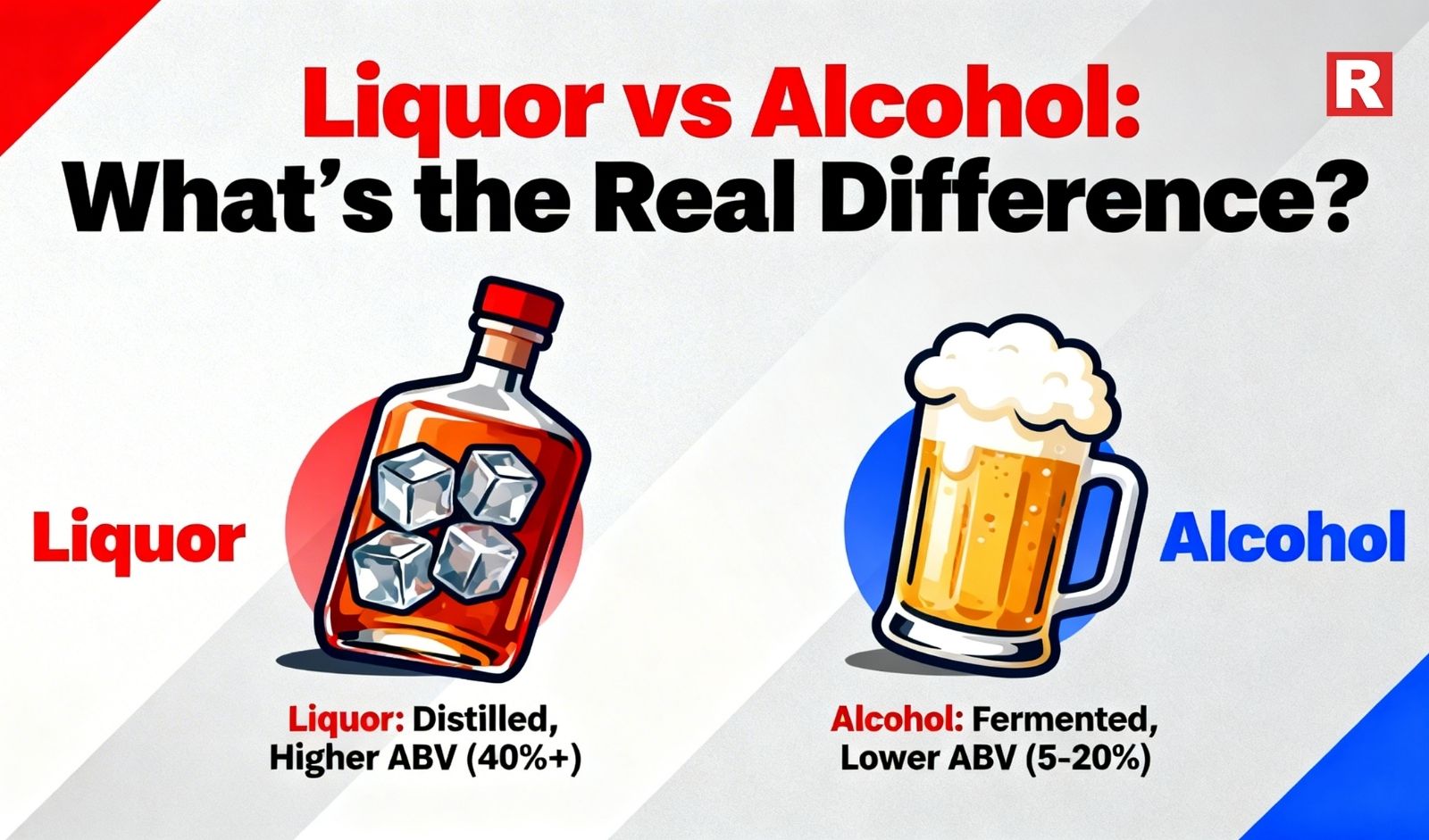
In everyday conversations, people often use the words liquor and alcohol as if they mean the same thing. At a party, someone may say, “Do you drink alcohol?” and mean whisky or vodka. In a store, “alcohol section” usually refers to all kinds of drinks.
But in reality, these two terms are not the same. Understanding the difference is important, especially if you are exploring beverages, working in hospitality, or simply trying to make informed choices. This guide breaks it down in a simple and clear way, with real examples and an Indian context.
Why the Confusion Exists
The confusion exists because people use these words in a casual way. In India, alcohol is often used for all kinds of drinks. Liquor is usually used for stronger options like whisky or rum. This creates a mix-up in understanding. From a scientific and industry view, the difference is clear.
Alcohol is a compound found in all such drinks. Beer contains some carbs and small amounts of B vitamins, but it also has calories. Wine has antioxidants like polyphenols, along with natural sugars. Liquor, on the other hand, has almost no nutrients. It mainly provides high calories from pure alcohol. This is why knowing the basics is useful. It helps people choose better. Some groups should avoid these drinks. Pregnant women, people with liver issues, and those on certain medicines should stay away. Young people should also avoid it. Clear knowledge leads to safer and more mindful consumption.
What is Alcohol?
Alcohol is a chemical compound. The type found in drinks is called ethanol. Ethanol is created when sugar is fermented. This happens when yeast breaks down sugar from fruits, grains, or other natural sources. The result is alcohol. It is important to note that not all alcohol is safe to drink. For example, methanol is a toxic form of alcohol and can be dangerous. Only ethanol is used in beverages. In simple terms, alcohol is the main ingredient that gives drinks their intoxicating effect. This process is used to make all alcoholic drinks, including:
- Beer
- Wine
- Spirits (liquor)
What is Liquor?
Liquor is a type of alcoholic drink. It is also known as spirits. Unlike beer or wine, liquor goes through an additional process called distillation. This process increases the alcohol content, making the drink stronger. In India, you may also hear the term IMFL (Indian Made Foreign Liquor). This refers to locally produced versions of international spirits like whisky and rum. These are widely available across the country and form a large part of the market. Liquor is usually clear or amber in colour and has a higher alcohol percentage compared to other drinks.
Common examples of liquor include:
- Whisky
- Vodka
- Rum
- Gin
- Tequila
Read more: Top Premium Whisky Brands in India: Finest Indian Whiskies Worth Trying
Best Japanese Whisky Brands in India: Where Craft Meets Perfection in Every
Difference Between Liquor and Alcohol
The easiest way to understand the difference is to see how they relate to each other. Alcohol is a broad concept, while liquor is a specific product.
Here is a clear comparison:
Aspect | Alcohol | Liquor |
|---|---|---|
Meaning | A chemical compound (ethanol) | A type of alcoholic beverage |
Scope | Broad category | Specific category |
Production | Made through fermentation | Made through distillation after fermentation |
Strength | Varies depending on drink | Usually strong (high alcohol content) |
Examples | Present in beer, wine, liquor | Whisky, vodka, rum, gin |
In short, all liquor contains alcohol, but not all alcohol is liquor.
Types of Alcoholic Beverages
To understand liquor better, it helps to look at the three main categories of alcoholic drinks.
1. Beer: Beer is made by fermenting grains like barley. It has a low alcohol content, usually between 4% and 8%. It is light, easy to drink, and widely popular in India, especially during summers.
2. Wine: Wine is made by fermenting grapes or other fruits. Its alcohol content is slightly higher than beer, usually between 8% and 15%. Wine is often associated with dining and social occasions.
3. Liquor (Spirits): Liquor is distilled, which makes it stronger. Its alcohol content usually ranges from 20% to 45% or more. It is often consumed in smaller quantities or used in cocktails.
How Liquor is Made
Liquor goes through a more detailed process compared to beer or wine. This is what makes it stronger and more refined.
Step 1: Fermentation: The base ingredient (grain, fruit, or sugar) is fermented to produce alcohol.
Step 2: Distillation: The fermented liquid is heated. Alcohol evaporates at a lower temperature than water, so it is separated and collected. This increases the alcohol concentration.
Step 3: Aging (Optional): Some liquors, like whisky and rum, are aged in wooden barrels. This adds flavour, colour, and depth.
Know more: Top Premium Whisky Brands Under Rs 5000 in India
Alcohol Content (ABV) Comparison
- Beer: 4–8%
- Wine: 8–15%
- Liquor: 20–45%+
This is why liquor tastes stronger and has a more intense effect.
Why This Difference Matters
Understanding the difference is not just about knowledge. It has practical value.
- Better Consumption Choices: Knowing the alcohol content helps you decide how much to drink. A glass of whisky is not the same as a glass of beer.
- Health Awareness: Higher alcohol content means a stronger impact on the body. Being aware of what you are drinking helps in responsible consumption.
- Legal and Market Understanding: In India, alcohol laws vary by state. Taxes and regulations are often different for beer, wine, and liquor. Knowing the categories helps you understand pricing and availability.
- Social and Lifestyle Awareness: As drinking culture evolves in urban India, more people are exploring different beverages. Understanding these basics helps in making informed and confident choices.
Quick Recap
The difference between liquor and alcohol is simple once you break it down.
- Alcohol is a chemical compound (ethanol)
- Liquor is a distilled alcoholic drink
- Alcohol is present in all alcoholic beverages
- Liquor is just one category within that larger group
Also check: Top Scotch Whisky Brands in India: The Ultimate Guide for Whisky Lovers
Top 5 Strong Beer Brands in India: Bold Brews for the Bold Drinker
Top Newly Launched Beer Brands to Replace Your Regular Brew
Final Thoughts!
As India’s beverage culture grows, awareness is becoming essential for consumers. People today are trying new cocktails, exploring premium spirits, and reading labels more carefully. Knowing the difference between liquor and alcohol helps them make better choices. It also builds a clearer understanding of what they are consuming. Different drinks offer different nutritional aspects. Beer contains some carbohydrates and small amounts of B vitamins but also adds extra calories. Wine provides antioxidants like polyphenols, but it still contains sugar and alcohol. Liquor has almost no nutrients. It is mostly pure alcohol with high calories and no vitamins. Because of this, moderation becomes important. Certain groups should avoid or limit these drinks. This includes pregnant women, people with liver or heart conditions, and those on medication. Young individuals should also stay away. Understanding both the content and impact of these beverages helps individuals make informed, responsible, and health-conscious decisions.
Saptopriya Ghosal
Feature Writer
I am a dedicated media professional with a bachelor's degree in mass communication from the State University of Calcutta and a postgraduate degree from Amity University. My academic journey has equipped me with a profound understanding of storytelling and communication. Passionate about the dynamic world of media, I continually strive to explore new ways to engage and inform through compelling narratives.






















































































































































