
How Swiggy Is Surviving India’s Brutal Delivery War
In India’s highly competitive delivery market, companies can no longer rely only on speed. Sustainable growth now depends on balancing convenience, technology, customer loyalty, and profitability together.

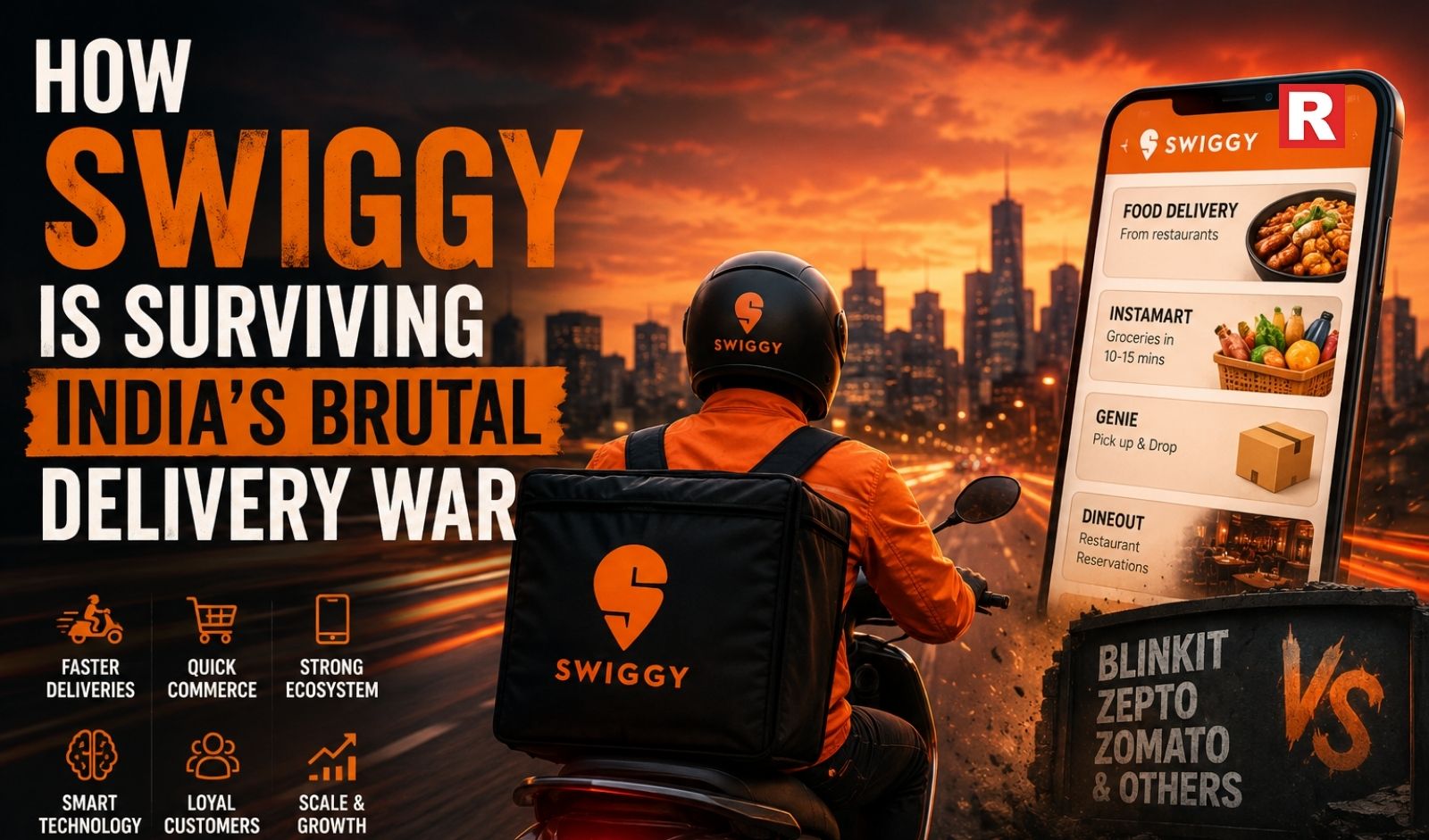
India’s delivery market is no longer just about food. It has become a battle of speed, convenience, technology, and customer loyalty. Every few months, a new platform enters the market with faster delivery promises, deeper discounts, and aggressive expansion plans. In the middle of this intense competition, Swiggy continues to hold its ground.
What makes this interesting is that Swiggy is not surviving because of food delivery alone. The company has slowly transformed itself into a full convenience platform. From groceries and dine-outs to quick deliveries and memberships, Swiggy is trying to become part of people’s everyday routines. This strategy is helping the company stay relevant even as competition from Zomato, Zepto, and Blinkit continues to grow.
Swiggy Is No Longer Just a Food Delivery App
When Swiggy started, its core business was simple. Deliver restaurant food quickly. But consumer habits changed rapidly after the pandemic. People became more comfortable ordering everything online. Convenience became a daily expectation instead of an occasional luxury. Swiggy adapted early.
The company expanded into multiple verticals:
- Instamart for groceries
- Genie for pick-up and drop services
- Dineout for restaurant bookings
- Swiggy One membership programs
- Quick commerce delivery
This diversification became one of Swiggy’s biggest survival strategies. Instead of depending only on restaurant orders, the company built multiple revenue streams. If one segment slows down, another helps maintain growth. Today, Swiggy is positioning itself as a convenience ecosystem rather than just a food app.
Instamart Became Swiggy’s Biggest Growth Engine
One of the biggest reasons Swiggy remains competitive is Instamart. Quick commerce changed consumer expectations completely. People now want groceries, snacks, medicines, and daily essentials delivered within minutes. Swiggy invested heavily in this shift. Instamart expanded aggressively across Indian cities through dark stores and hyperlocal delivery systems. The platform has shown massive growth in order volumes and average order value over the past year. The company reportedly operated more than 1,100 dark stores during FY26 while processing millions of monthly orders. This scale is helping Swiggy stay competitive in India’s quick commerce war.
But there is a catch.
Quick commerce is expensive. Swiggy continues to spend heavily on infrastructure, discounts, warehousing, and rider networks. Instamart alone contributed significantly to the company’s widening losses in recent quarters. Even then, Swiggy continues investing because the company knows the future of consumer internet in India is closely linked to instant delivery.
Technology Is the Real Backbone of Swiggy
Most people see only the delivery rider arriving at their doorstep. But Swiggy’s real strength lies in the technology running behind the scenes. The company uses large-scale data systems and AI-driven operations to manage millions of orders every day.
This includes:
- Demand forecasting
- Delivery route optimization
- Real-time rider tracking
- Smart order batching
- Personalized restaurant recommendations
- Inventory planning
These systems help reduce delays and improve delivery efficiency. For example, during peak dinner hours or weekends, Swiggy’s algorithms predict demand spikes and adjust delivery operations accordingly. This reduces waiting time and improves customer experience. The company also uses location intelligence to identify areas where new dark stores should be opened. This helps reduce last-mile delivery costs. In many ways, Swiggy operates more like a logistics and technology company than a food platform. Its backend infrastructure has become one of its strongest competitive advantages.
Swiggy One Is Helping Retain Customers
Acquiring customers is expensive in India’s delivery market. Keeping them loyal is even harder. This is where Swiggy One plays a major role.
The subscription model gives users:
- Free deliveries
- Discounted pricing
- Exclusive restaurant offers
- Cross-platform benefits
The strategy is simple. The more services a customer uses inside the Swiggy ecosystem, the less likely they are to switch apps. This increases order frequency and improves customer retention. Swiggy management has repeatedly highlighted how membership programs are driving stronger engagement across food delivery and quick commerce. The approach is similar to how global tech platforms build ecosystem dependency. Once convenience becomes habitual, customers continue ordering without thinking twice.
The Dark Store Strategy Is Critical
Dark stores are now at the center of India’s quick commerce economy. These are small warehouses located inside dense residential areas. They are designed purely for delivery operations and are not open to walk-in customers. Swiggy has aggressively expanded its dark store network to compete with Blinkit and Zepto.
This strategy offers multiple benefits:
- Faster deliveries
- Better inventory control
- Reduced travel distance
- Improved operational efficiency
The closer the products are to customers, the faster the company can fulfill orders. However, maintaining dark stores is costly. Rent, electricity, staffing, and inventory management create huge operational expenses. This is one reason Swiggy’s profitability continues to remain under pressure despite strong growth. Still, Swiggy sees dark stores as long-term infrastructure investments rather than short-term expenses.
Swiggy Is Building Multiple Revenue Streams
One reason Swiggy continues surviving in a highly competitive market is because it earns money from several sources.
Its revenue streams include:
- Delivery fees
- Platform charges
- Restaurant commissions
- Advertising and sponsored listings
- Instamart margins
- Subscription memberships
This diversified model reduces dependency on one business category. Advertising, in particular, has become increasingly important. Restaurants now pay platforms like Swiggy for better visibility and customer reach. This creates an additional income source beyond delivery operations.
Competition Is Becoming More Aggressive
India’s quick commerce race is becoming one of the toughest startup battles in the country. Blinkit, Zepto, and Instamart are all spending aggressively to capture market share. Industry experts believe the market could grow rapidly over the next few years, which is why companies continue prioritizing expansion over short-term profits. At the same time, investors are becoming more cautious. Profitability is now under constant scrutiny. Swiggy’s losses widened in recent quarters mainly because of quick commerce investments. Online discussions across Indian startup and finance communities also reflect growing concerns around sustainability and cash burn in quick commerce.
The company now faces a difficult balancing act: Grow aggressively while improving margins at the same time.
Consumer Habits Are Also Helping Swiggy
Modern urban lifestyles are playing a major role in the growth of platforms like Swiggy. Long working hours, traffic congestion, hybrid work culture, and busy schedules have reduced the time people spend on cooking or visiting physical stores. As a result, consumers are increasingly depending on food delivery and quick commerce apps for everyday needs. Late-night meal ordering, instant grocery purchases, and app-based convenience shopping have become common habits, especially among young professionals and students in metro cities. Instead of planning weekly grocery runs, many users now prefer ordering smaller quantities multiple times a week through quick delivery platforms. Industry reports also show that convenience-driven spending has increased sharply in urban India, with consumers prioritizing speed and ease over traditional shopping methods. This shift in consumer behavior has created a strong long-term opportunity for Swiggy and other delivery-based platforms.
The Bigger Picture
Swiggy has built a strong presence in India’s delivery market through rapid expansion, brand visibility, and high customer engagement. However, profitability continues to remain one of its biggest challenges. The company is investing heavily in dark stores, delivery networks, technology systems, customer offers, and expansion into newer cities to compete with rivals like Blinkit and Zepto. These investments are helping Swiggy increase order volumes and strengthen its quick commerce business, but they are also raising operational costs significantly. Recent financial results have shown steady revenue growth, especially from Instamart, but losses have widened due to aggressive spending on infrastructure and faster deliveries. Industry experts believe Swiggy’s long-term success will depend on improving unit economics, reducing delivery costs, and increasing order efficiency. In India’s highly competitive delivery market, companies can no longer rely only on speed. Sustainable growth now depends on balancing convenience, technology, customer loyalty, and profitability together.
Saptopriya Ghosal
Feature Writer
I am a dedicated media professional with a bachelor's degree in mass communication from the State University of Calcutta and a postgraduate degree from Amity University. My academic journey has equipped me with a profound understanding of storytelling and communication. Passionate about the dynamic world of media, I continually strive to explore new ways to engage and inform through compelling narratives.



































































































































































