
How Restaurants Are Predicting What Diners Want Next
With India's restaurant industry expected to grow from $85 billion in 2025 to nearly $140 billion by 2030, and Gen Z projected to drive almost 40% of restaurant spending, anticipating consumer trends has become critical for sustained growth and success.

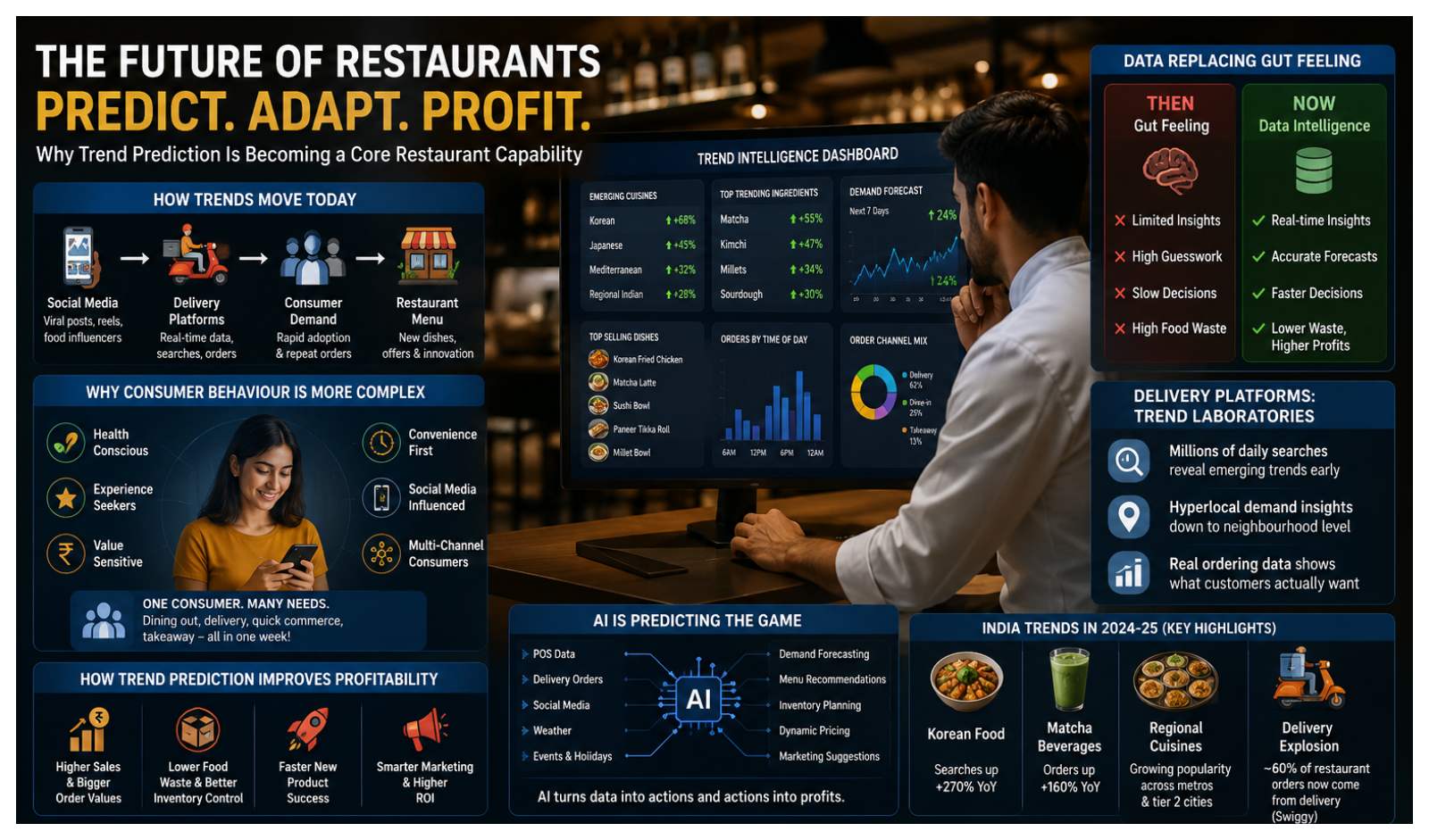
For years, restaurant operators relied on intuition and experience to shape menus and predict customer preferences. Today, however, instinct alone is no longer enough. With India's restaurant industry expected to grow from $85 billion in 2025 to nearly $140 billion by 2030, and Gen Z projected to drive almost 40% of restaurant spending, anticipating consumer trends has become critical for sustained growth and success.
Trends are Moving Faster Than Ever
Restaurant trends no longer take years to evolve—they can go mainstream within months. A viral reel, influencer review, celebrity endorsement, or delivery-platform recommendation can rapidly drive demand, while social media, digital ordering, instant feedback, and Gen Z's appetite for experimentation continue to accelerate trend cycles.
“One of the biggest trends shaping restaurants today isn't a dish or an ingredient. It's the way people live. The traditional idea of breakfast, lunch and dinner is becoming increasingly fluid. Someone might have eggs at 4 PM, a coffee meeting at 11 AM, or brunch on a weekday. Dining is adapting to lifestyles rather than the other way around,” shared Deepa Baliga, Co-Founder, Benedict's.
For restaurants, waiting until a trend becomes mainstream often means missing the opportunity. The focus today is on spotting emerging trends early and acting before competitors do.
“We're seeing diners become far more adventurous. They're looking for flavours that feel globally inspired but still have a sense of familiarity. Some of the most exciting conversations in food today are happening at the intersection of international techniques and local ingredients,” said Rahul Lunawat, Co-Founder, PHURR.
Data is Replacing Gut Feeling
Restaurant decisions were once driven largely by intuition and experience. Today, data from POS systems, online reviews, reservations, delivery platforms, loyalty programmes, and social media is helping operators identify emerging menu trends, changing dining habits, seasonal demand, and regional preferences.
“Data can tell you what people are ordering, but it can also reveal when they're choosing to dine and how their routines are changing. That's where trend prediction becomes valuable,” added Baliga.
The focus has shifted from understanding what customers want today to anticipating what they will want tomorrow. By using predictive analytics, restaurants can optimize inventory, reduce waste, improve operational efficiency, and respond more quickly to evolving consumer preferences.
The growing importance of trend prediction is also being driven by a major demographic shift.With more than 250 million Gen Z consumers in India, dining preferences are increasingly influenced by discovery, convenience, value, wellness, social media, and unique experiences. At the same time, differing generational preferences have made consumer behaviour more fragmented and complex.
“For us, trend prediction isn't about chasing every fad; it's about identifying which trends align with our brand and turning them into experiences our guests genuinely want,” said Gaurav Kanwar, CEO of Harajuku Café.
Delivery Platforms Have Become Trend Laboratories
With India's online food delivery market expected to surpass $15 billion by 2030, platforms like Swiggy and Zomato generate millions of monthly orders, creating valuable consumer insights. This data helps restaurants track emerging cuisines, trending ingredients, local preferences, repeat-order patterns, and evolving dining habits.
“Delivery platforms offer valuable insights into consumer demand, regional preferences, and emerging food categories. They allow brands to test new products, identify growth opportunities, and reach customers beyond their physical locations,” said Aanal Kotak.
Trends such as Korean food, Asian food, protein-focused meals, matcha beverages, and regional Indian cuisines often gain momentum on delivery apps months before they become widespread restaurant offerings.
Kanwar shared, “Consumers today are far more dynamic than they were even a few years ago. The same guest might crave familiar comfort food during the week but actively seek bold, experimental flavours over the weekend. They also expect healthier options without compromising on indulgence, convenience alongside experience, and consistency with constant novelty.”
Trend forecasting is no longer just an innovation tool—it has become a key driver of profitability. By accurately predicting demand, restaurants can optimize menus, manage inventory more efficiently, reduce food waste, and improve overall operations.
“Accurate trend forecasting helps restaurants optimize menus, manage inventory efficiently, reduce wastage, improve customer satisfaction, and maximize revenue by offering products customers are actively seeking,” added Kotak.
As consumer preferences evolve faster than ever, the real opportunity lies not in chasing every new trend, but in identifying lasting shifts in behaviour and building meaningful dining experiences around them. For restaurants, the future will belong to those who can anticipate change before it arrives.
Vijetha Iyer
Content Editor
Working as a Content Editor with Restaurant India. I have worked in various sectors like food and beverage sector, chemicals, pharma, nutraceuticals, now specially focusing on restaurant side. But my core knowledge was always on content. Be it writing poems to verses, I always loved writing and have been exploring my career on the same. In Restaurant India, I deliver insightful stories, take interviews of various brands and update the audiences about the newest happenings in the restaurant industry.









































