
How Design is Transforming India's Bar Industry
The Indian PBCL (Pub, Bar, Cafe & Lounge) market was valued at $3.0 billion in 2025 and is expected to grow to $5.9 billion by 2034, registering a CAGR of 7.31%.

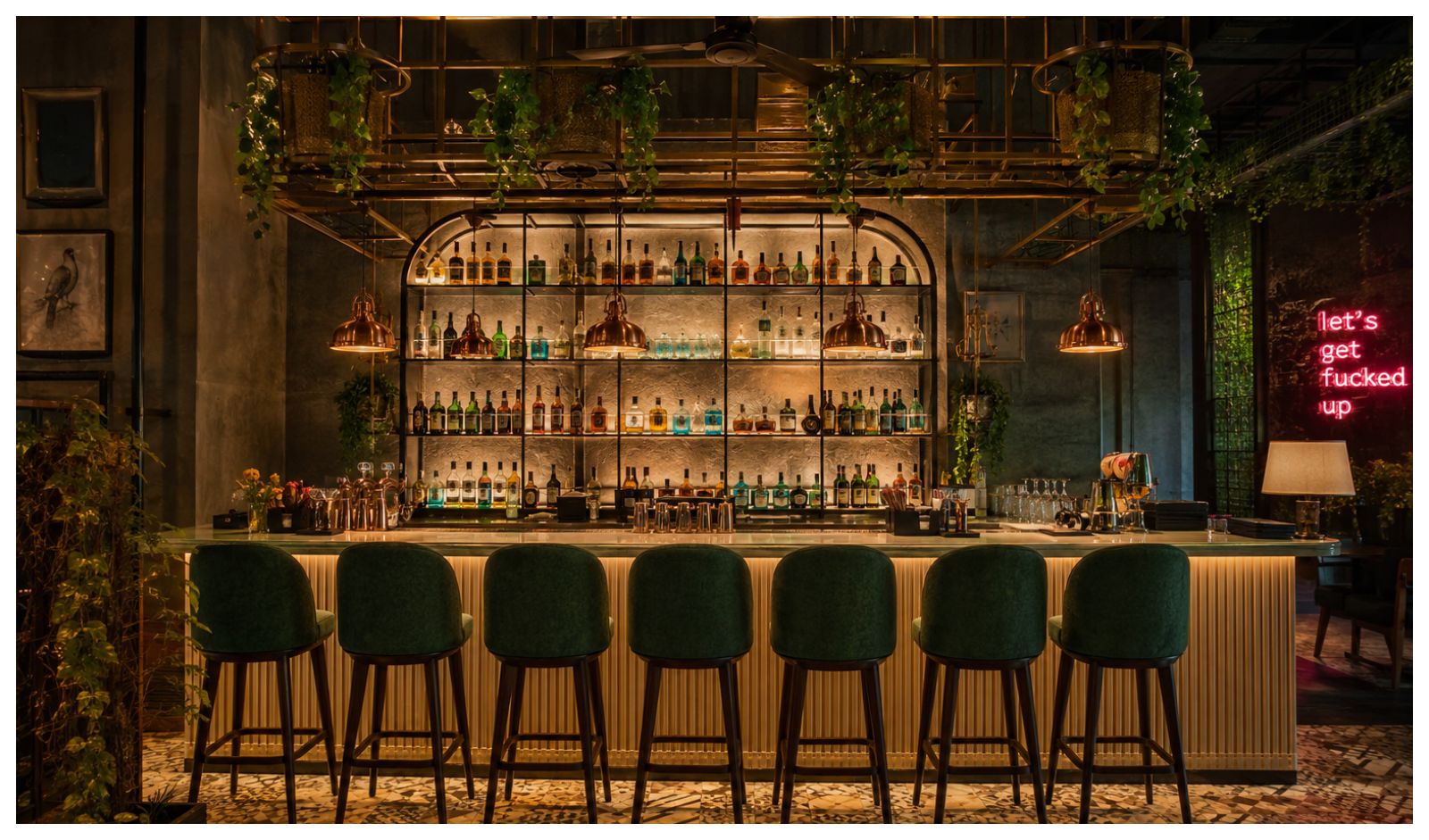
India's bar industry is moving beyond drinks to design-led experiences. Today, interiors are as important as the menu, shaping a bar's identity, attracting customers, supporting premium pricing, and encouraging repeat visits. Driven by premiumization, social media, and experience-first consumers, design has become a core business strategy rather than just an aesthetic choice.
According to NIQ, nearly seven in ten Indian consumers visit restaurants, cafés, or bars at least once every quarter, making these spaces a crucial touchpoint for premium brand discovery and customer engagement. The Indian PBCL (Pub, Bar, Cafe & Lounge) market was valued at $3.0 billion in 2025 and is expected to grow to $5.9 billion by 2034, registering a CAGR of 7.31%.
Bar Design is the New Brand Language
Indian bar design has moved beyond standard interiors to a brand identity. Today's bars are built around a clear theme or story with every element from the entrance and lighting to the bar counter, music, furniture, and staff uniforms shaping the guest experience.
“Indian bars are moving beyond conventional luxury aesthetics and embracing immersive, story driven spaces. A well-defined design story gives guests something to remember and talk about, creating an emotional connection, strengthening word of mouth and establishing a brand identity that is difficult to replicate,” shared Aman Dua, Founder, 403 Forbidden Bar.
India is shifting from decor towards intentional, narrative-driven spaces. Today's bars are investing in acoustics, craftsmanship, installations and thoughtful spatial design to create immersive experiences. “Mezcalita is part of this evolution, where design is a strategic expression of the brand, not just an aesthetic choice or ornamentation as narrative creates emotional meaning,” added Rizwan Amlani, Head of Brand, Mezcalita and La Taqueria by Mezcalita.
Highlighting this, Somshekhar Mirpuri, Co-Founder, Barnhouse said, "Our approach to beverage and bar design is rooted in the same principles that shape our kitchen: seasonality, hydroponic produce, fermentation, sustainability and minimal waste. The space reflects these values by bringing together ingredients, craftsmanship and storytelling. Every detail from materials and lighting to service rituals and guest interactions is thoughtfully designed to create a deeper connection with the experience."
The New Age Business Asset
Social media has transformed the economics of bar interiors, making design a powerful marketing tool. While customers once discovered bars through word-of-mouth, today they drive visibility by sharing photos and videos online.
Adding to this, Ranbir Nagpal, CEO, Yazu mentioned, “Social media has further transformed bar interiors into powerful marketing assets where visually striking spaces drive organic visibility and brand recall. The modern bar counter has also become the center stage of the experience, bringing together craftsmanship, creativity and hospitality.”
AD Singh, Founder & MD of The Olive Group of restaurants said, “The biggest evolution has been the role of the bar itself. It is no longer simply a service station hidden within the restaurant; it has become the social and visual heart of the space. Guests increasingly want to watch cocktails being crafted, interact with bartenders and feel part of the energy of the room. A well-designed bar creates theatre, sparks conversation and sets the pace for the entire dining experience, whether someone is there for a quick drink or a long evening with friends.”
Dua noted, “Social media has undoubtedly increased the importance of visual appeal. However, successful bars are not designed purely for photographs. The best spaces feel authentic, offer a strong sense of experience, and naturally encourage guests to share their visits.”
Experts also believed that 60% of customer engagement is influenced by visually appealing interiors backed by effective marketing, making design a key driver of brand growth.
Great Design Supports Premium Pricing
Customers no longer judge a cocktail only by its ingredients, they value the overall experience. A drink priced at ₹700 may seem expensive in a plain setting but feel worthwhile in a stylish, well-designed bar.
“At Mezcalita, the bar counter is the performance zone. It's where guests witness movement, craftsmanship and interaction in real time. That energy naturally becomes the heartbeat of the room and shapes the overall atmosphere,” commented Amlani.
As premiumization continues to grow in India's hospitality sector, ambience, storytelling and distinctive design have become key factors that justify higher pricing.
Singh stated that thoughtful design also has a tangible business impact. "The challenge for operators today is balancing aesthetics with functionality while resisting short-lived trends."
Not just this, modern bars are designed to serve different purposes throughout the day, helping operators maximize revenue. A space that functions as a café or meeting spot during the day can easily transform into a cocktail lounge or party destination at night. In this way, bars are generating extra revenue and are operating in different models while attracting diverse diners. As per experts, around 50% of bars in India are operating in this model and are gaining profits.
Nagpal noted, "Thoughtful bar design reinforces premium positioning, encourages longer guest stays, strengthens brand recall and supports repeat visits. We believe successful bar design comes from seamlessly combining aesthetics with practicality to create experiences guests remember.”
“Strong design is not an expense; it’s a long-term business investment. It strengthens brand identity, improves guest retention, supports premium pricing, and drives organic visibility through recommendations and social sharing,” pointed Dua.
And, as competition continues to grow, bar design is becoming a key differentiator. The most successful venues will go beyond serving great food and cocktails by creating immersive spaces that tell a compelling story and reflect a distinct brand identity from the moment guests walk in.
Vijetha Iyer
Content Editor
Working as a Content Editor with Restaurant India. I have worked in various sectors like food and beverage sector, chemicals, pharma, nutraceuticals, now specially focusing on restaurant side. But my core knowledge was always on content. Be it writing poems to verses, I always loved writing and have been exploring my career on the same. In Restaurant India, I deliver insightful stories, take interviews of various brands and update the audiences about the newest happenings in the restaurant industry.









































