
Experience Over Discounts: Why India's Leading Restaurateurs Believe Loyalty Can't Be Bought
While discounts remain one of the fastest ways to attract attention, several leading restaurateurs believe they are no longer a sustainable strategy for building profitable businesses.

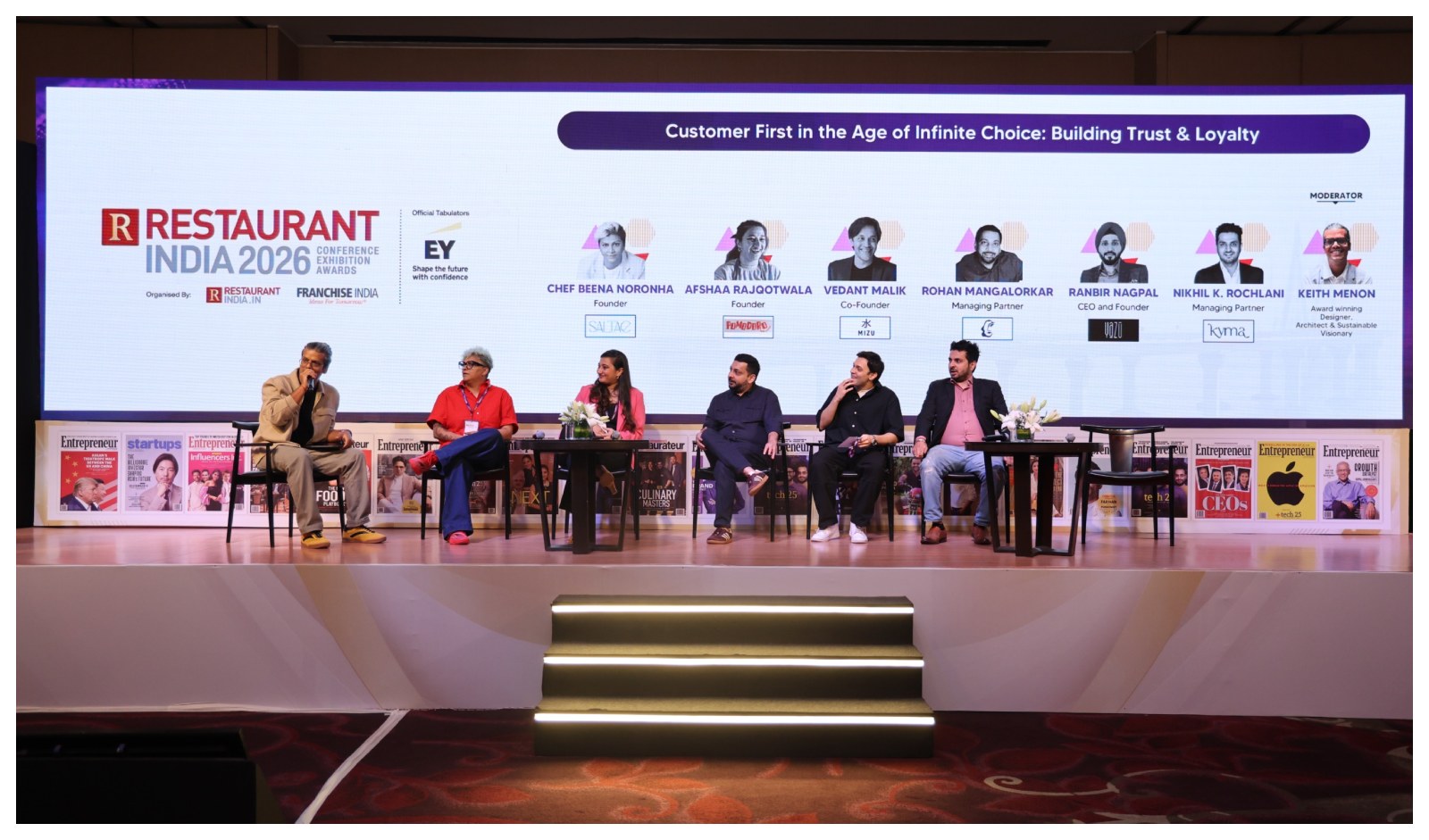
India's restaurant industry has become increasingly competitive as consumers are presented with countless dining and delivery choices every day. While discounts remain one of the fastest ways to attract attention, several leading restaurateurs believe that they are no longer a sustainable strategy for building profitable businesses. Instead, memorable experiences, quality food, genuine hospitality and customer trust are emerging as stronger differentiators.
The Discount Culture Has Changed
Discounts were once reserved for loyal guests as a gesture of appreciation, today, they have become an expectation, largely fueled by restaurant discovery and delivery platforms. Customers now compare restaurants based not only on cuisine or ratings but also on platform discounts, cashback offers and promotional deals before making a purchase decision. This has created significant pricing pressure across the industry.
Ranbir Nagpal, Founder & CEO, Yazu Hospitality observed that discounting has evolved dramatically over the past few years. "Earlier, discounts were a form of recognition for loyal customers. Today, they've become an expectation, largely driven by aggregator platforms. India has increasingly become a discount-driven market."
He added that while discounts may help generate traffic, they also place considerable pressure on restaurant profitability, particularly when commissions and promotional costs are combined.
Discovery Shouldn't Come at the Cost of Profitability
Restaurant operators acknowledged that aggregators have transformed customer discovery and delivery convenience. However, many argued that restaurants often participate in discount campaigns simply to remain visible.
Nikhil Rochlani, Managing Partner, Butterfly High, Kyma and Big Small Café & Bar explained that while his brands do not build their business around discounts, market realities sometimes make limited participation unavoidable. "None of my restaurants are planned with discounting in mind. But if every competing restaurant in a market is offering discounts, you sometimes have to participate to remain competitive. We restrict it to customer trials, not as an ongoing strategy."
He believes that the first visit may be driven by an offer, but repeat business depends entirely on the quality of the experience.
Great Experiences Create Repeat Customers
Discounts may attract first-time visitors, but they rarely create loyal customers. "People don't come to us for 10 or 20 percent off. They come to celebrate and have a great experience and that’s what we do. We are not on any food delivery platforms and don't plan to; but we do many unique things to attract more customers. Other important thing is that we have different set of customers every day to cater to,” added Rohan Mangalorkar, Co-Founder, Gaijin.
Once diners experience excellent food, attentive service, memorable ambience and consistent hospitality, price becomes significantly less important.
Adding to this, Afshaa Rajqotwala, Co-Founder, Pomodoro said, “We have decided not to be on any delivery platforms. As the food cost has increased, we ensured that pricing and quality remains same."
Hospitality is Built on Small Moments
Rather than offering price reductions, restaurants are increasingly investing in thoughtful guest experiences that surprise and delight customers. Chef Beena Noronha, Executive Chef & Co-Founder of Saltae Hospitality shared how simple gestures often leave a bigger impression than expensive promotions. "We don't offer discounts, but we focus on creating experiences. We give every guest a small nostalgic treat with the bill and encourage them to enjoy our retro candy machine. These little moments create happiness and that's what people remember."
She explained that such experiences cost very little but generate lasting emotional value, encouraging repeat visits and positive word-of-mouth.
Premium Restaurants Face a Different Challenge
Customers often associate higher prices with better ingredients and superior quality. Restaurants introducing heavy discounts risk weakening that perception.
Vedant Malik, Co-founder, Mizu Bombay & Goa, highlighted this dilemma. "If customers develop a relationship with your restaurant, then loyalty programs can work. But if discounts become the first thing they experience, it's extremely difficult to reverse that expectation later."
He also noted that premium restaurants already operate with high food costs, making continuous discounting financially unsustainable.
Delivery Platforms Offer Reach—but at a Cost
"Delivery platforms solve a huge customer problem. My issue isn't delivery, it's when dining discounts become the expectation,” shared Nagpal. However, commissions combined with discounts leave restaurants with shrinking margins.
Many brands now carefully evaluate which menu items travel well and selectively list products that maintain quality during delivery. Many brands have chosen to avoid delivery platforms entirely to protect both profitability and guest experience.
Pricing isn’t Always about Being Cheap
One misconception discussed extensively was the belief that lower prices automatically indicate lower quality. Many restaurants intentionally price themselves competitively while using premium ingredients and fresh produce. However, customer psychology often assumes expensive food must be better. Chefs, therefore, face the difficult task of balancing affordability without compromising brand positioning.
Reviews Can Make or Break Restaurants
Another important concern raised during the discussion was the growing influence of online reviews. Restaurants may serve thousands of satisfied guests every month, yet a handful of negative reviews can significantly impact their overall ratings.
"We may receive thousands of orders, but it's often the few unhappy customers who leave reviews. The satisfied ones rarely do,” added Nagpal.
Mangalorkar said, “We have celebrities walking-in and do share complimentary to them. We don’t like to entertain influencer’s as we believe that food quality and service play a major role in attracting the market rather than influencers and marketing.”
Operators urged diners to distinguish between isolated operational issues particularly delivery delays and the overall dining experience before posting poor ratings. Malik pointed, “Influencers have reached out who has fewer followers than us. I believe that reach for a restaurant can happen eventually when service and food is food.”
Many restaurants now proactively resolve complaints by replacing orders immediately rather than debating responsibility. This customer-first approach helps preserve long-term trust.
Convenience Still Matters
Despite concerns over commissions, restaurateurs acknowledged that customers increasingly value convenience.
Ordering from a single app offering hundreds of restaurant choices is far easier than calling individual outlets.
"We give every guest something with the bill. It costs very little, but people smile, become nostalgic and remember the experience. Experience matters more than discounts. Small gestures create happiness, and that's what customers remember,” added Noronha.
Rajqotwala stated, “We don’t call influencers for paid collab. When pr recommends us, we do see if we can look at things to work out.”
“If we look at any audience, they are following the influencers to understand what’s going on in the city and they do not just focus in one space,” noted Rochlani.
Some operators therefore view delivery platforms as essential business partners while adjusting menu prices slightly to offset platform costs. Others continue investing in direct ordering channels and loyalty programs to strengthen first-party customer relationships. It was concluded that discounts may remain a part of restaurant marketing; they cannot become the foundation of a business.
Vijetha Iyer
Content Editor
Working as a Content Editor with Restaurant India. I have worked in various sectors like food and beverage sector, chemicals, pharma, nutraceuticals, now specially focusing on restaurant side. But my core knowledge was always on content. Be it writing poems to verses, I always loved writing and have been exploring my career on the same. In Restaurant India, I deliver insightful stories, take interviews of various brands and update the audiences about the newest happenings in the restaurant industry.









































