
Designing Experiences: Plating, Space, Storytelling
While good plating and interiors can attract the customers through social media platforms and drive them to the restaurants by 60%.

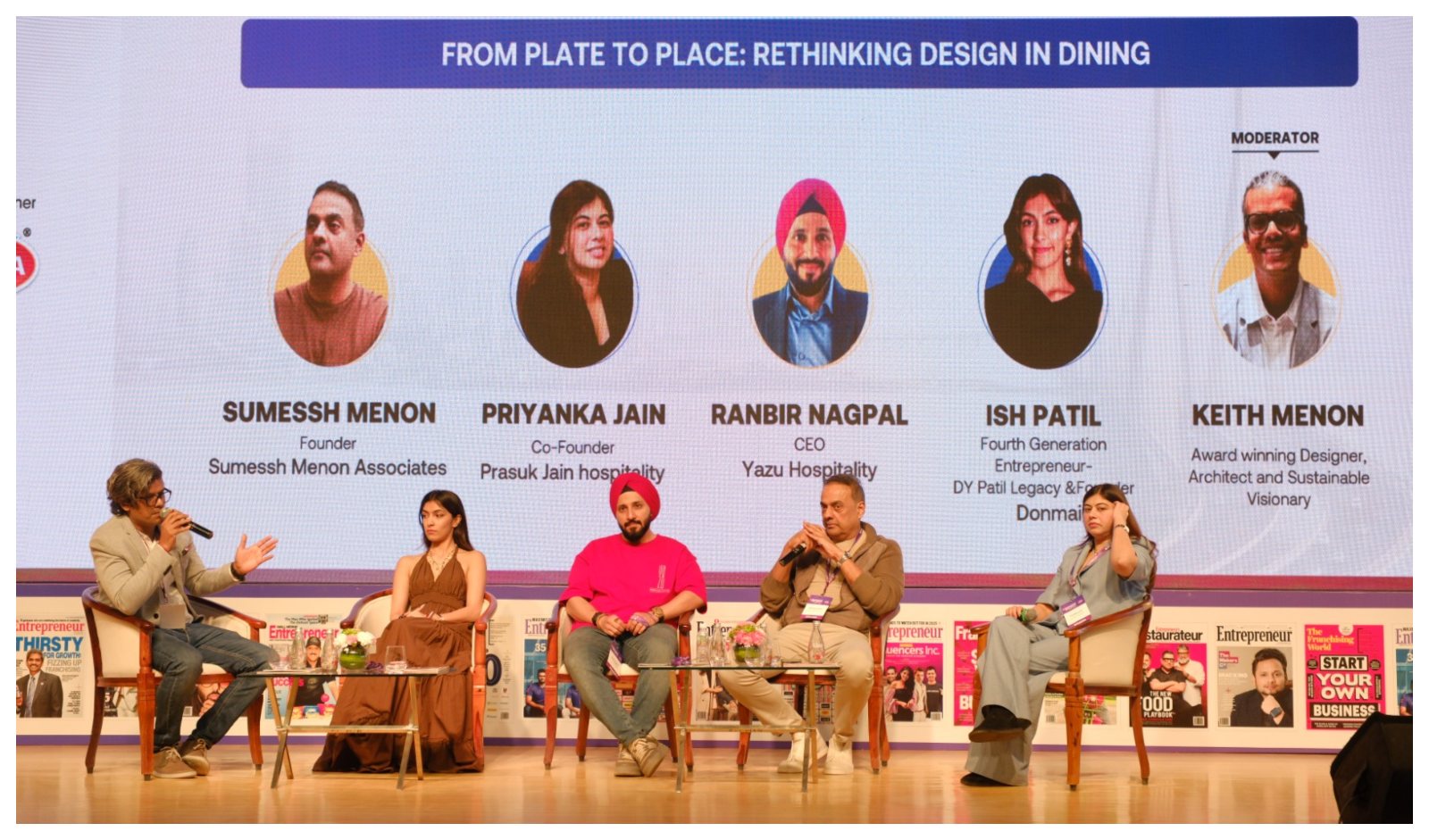
In today’s dining landscape, the success of a restaurant is no longer defined by food alone. It is shaped by space, story and sensory theatre, a layered ecosystem where design, plating, and storytelling come together to create an experience. Modern restaurateurs, designers, and chefs now understand that a restaurant is not merely a place to eat; it is a stage, a story and a shared memory. According to experts, the right ambience of restaurant can contribute around 40-50% of the business. While good plating and interiors can attract the customers through social media platforms and drive them to the restaurants by 60%.
Design to Scale
Rising real estate costs have pushed owners to rethink scale. Sumessh Menon, Founder & Architect of Sumessh Menon Associates said, “We’ve been downsizing. The real estate is crazy. People now want smaller, nicer places rather than massive ones that tank.”
But evolution is not just about size it’s now deeply location-driven, he expressed by adding that designing a Yazu in Chandigarh is nothing like building the same brand in Andheri, Goa or Colombo. All the Yazu’s look different, but they share a design sensibility.
For Ranbir Nagpal, CEO, Yazu who had opened his first Yazu eight years ago, designing the same brand repeatedly comes with its own strategy.
“There’s an idea of a Yazu in my head, like the idea to present, and how to be perceived. But each micro-market decides how that idea takes shape. A CBD outlet in Bengaluru cannot look like one in Belandur. A beachfront outlet in Sri Lanka cannot behave like a corporate-park outlet. You don’t want to make the place so beautiful that people feel intimidated to walk in,” he said.
Adding further, he pointed, “In Colombo, for instance, nobody wants to sit indoors so it has to be open, breezy, casual. Seasonality, too, alters design. Chandigarh’s Yazu features two giant, air-conditioned umbrellas that collapse in winter—allowing diners to sit under the stars when temperatures drop to 2–3°C. Design has to help you run through seasons.”
Plating Isn’t One-Size-Fits-All
Running restaurants in both Mumbai and Delhi has taught Priyanka Jain, Co-Founder of Prasuk Jain Hospitality that plating is storytelling and that the story must be consistent but not identical.
“The idea was always to bring novelty experiences to India, something people has not seen here. It has to be untapped and unseen. Everything from the interiors to food to the cocktails depict a story. It must be a feast for the eyes before the soul before you take a bite,” she said.
On the other hand, for the first-time restaurateur, Ish Patil, 4th Generation Entrepreneur of DY Patil Legacy and Founder of Donmai, it is an art-led project inspired by Japanese culture and anime for her.
“Donmai is a passion project rooted in my love for Japanese culture, craft and cuisine. I have woven parts of myself into the space through handcrafted pieces and layered details that make it feel intimately personal. Hospitality is the perfect space where all my passions could come together.”
Built for the Feed
A decade ago, Instagram didn’t exist in Indian restaurant design. Today, it’s non-negotiable.
“Every restaurateur says, I want an Instagrammable place,” Menon admitted.
Commenting on the same, Nagpal, pointed, “The best kind of marketing is one where people share. Imagine how much we would spend on Instagram ads. This is organic marketing when people reshare the photos or videos you post on your page. When people see that 50 other people post about the same dish then that’s validation. Desserts like Yazu’s “Chef’s Mess” is designed for camera lenses as much as palates.”
Every brand should have their own unique identity. “Food-driven spaces don’t exceed 4,000 sq. ft for us. The bigger 15,000–20,000 sq. ft spaces are entertainment-driven like Game Palacio or Snow World. The seating has to be minimal and large size place then it has to be a club,” shared Jain.
Nagpal added a clever workaround: splitting a 10,000 sq. ft space into two restaurants with a shared backend, “It’s all about top line and bottom line.”
The Rise of Chefs and Bartenders as Co-Designers
One of the most notable shifts in hospitality is the growing influence of chefs and bartenders in design meetings.
“Sixteen years ago, chefs had no say. Today, they tell me which lights affect plating, which chairs affect service flow, which bar heights fit their workflow,” addressed Menon.
Nagpal shared, “The first step of designing the space is allocating the space for kitchen, once that is sorted everything fall in place.”
“It’s important to evolve the team and giving your team a platform will be fruitful. It’s not just about instagram. Involve your team from behind the scenes; they are ones who are doing the work unseen. Design, plates everything has to be consistent,” noted Patil.
The Future: Story-Led, Experience-First
Despite the pressure to repeat what already works, Sumessh insists on staying true to bespoke design. “The restaurant business has very real limits if owners overspend, the venture tanks. Designs must meet deadlines, and the facelift period has to be efficient."
It’s also important to educate owners about automation and mood lighting. Priyanka believes India is moving toward storytelling as the core of hospitality. The goal, she says, is to build spaces that feel beautiful and intentional. “Sustainability shows up in many small ways people shifting from tissues to cloth napkins, for instance. All of these choices matter.”
For Ish, dining is evolving into an immersive ecosystem shaped by personal passions. Every art piece in her space is crafted from recycled textiles scrap material personally sourced from factories. “This kind of work collaborating with artisans and finding new uses for waste will only grow in importance.”
Hospitality today is about orchestrating moments. It’s about creating memories that travel through conversations, through experiences, and inevitably, through Instagram.
Vijetha Iyer
Content Editor
Working as a Content Editor with Restaurant India. I have worked in various sectors like food and beverage sector, chemicals, pharma, nutraceuticals, now specially focusing on restaurant side. But my core knowledge was always on content. Be it writing poems to verses, I always loved writing and have been exploring my career on the same. In Restaurant India, I deliver insightful stories, take interviews of various brands and update the audiences about the newest happenings in the restaurant industry.









































