Commercial LPG Disruptions Rattle Restaurants; Industry Seeks Clarity
Cities such as Mumbai, Pune, Aurangabad and Nagpur are already witnessing severe shortages, while disruptions are also being reported across Delhi, Karnataka, Telangana and Andhra Pradesh.

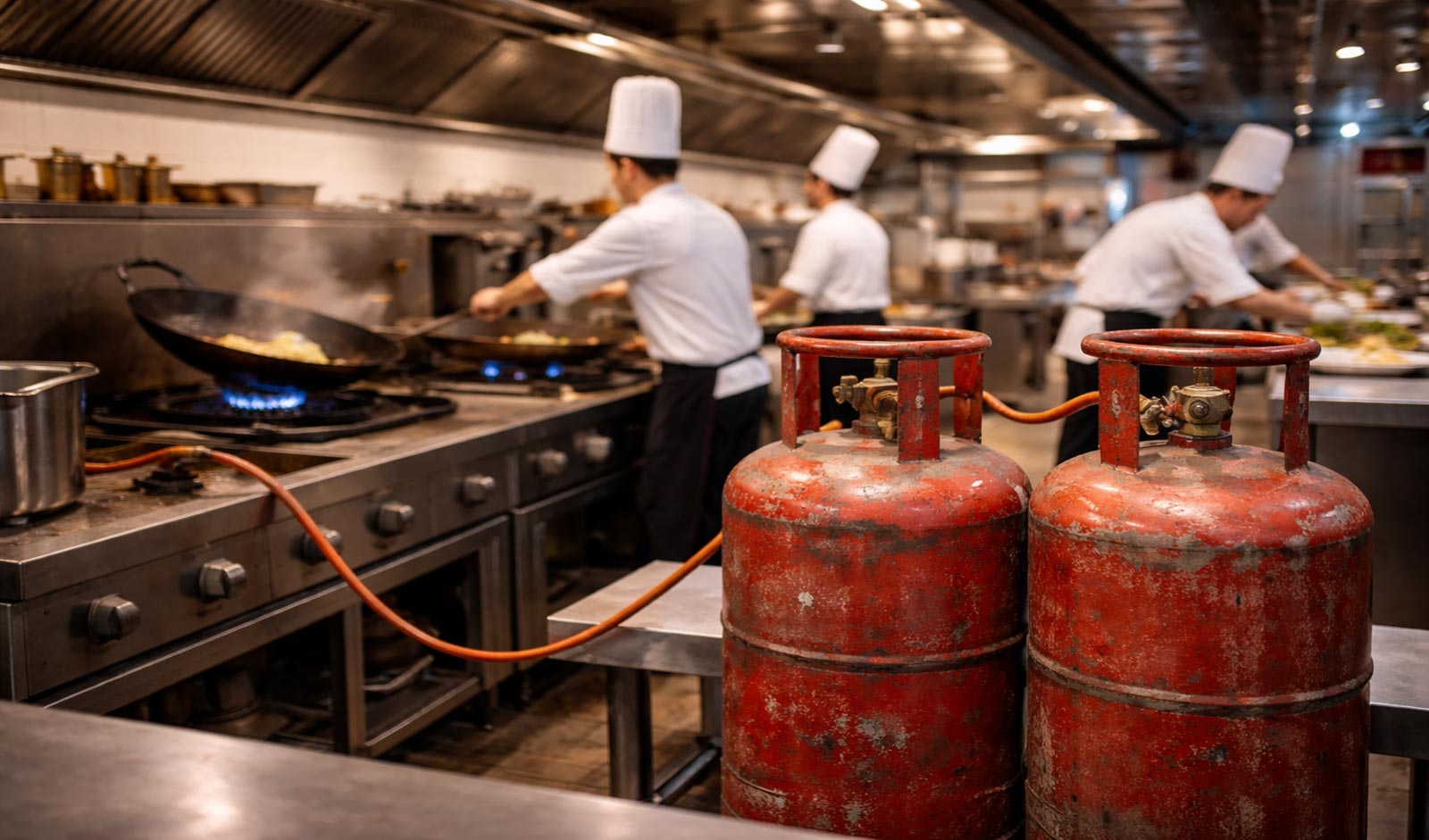
India’s restaurant industry is facing growing uncertainty as disruptions in the supply of commercial LPG cylinders begin to affect kitchens across multiple cities. What started as intermittent supply delays has now escalated into a larger concern for hospitality businesses that rely heavily on LPG for day-to-day cooking operations.
Industry leaders warn that confusion around recent policy notifications, combined with panic buying and hoarding of cylinders, could further strain an already fragile supply chain — potentially forcing restaurants to rethink menus, alter kitchen operations, or even temporarily shut down in some markets.
Supply Confusion Begins to Hit Restaurant Kitchens
According to industry bodies, the situation intensified following a notification issued by the Ministry of Petroleum and Natural Gas on March 5, which has led to confusion among suppliers and distributors. In several regions, distributors have reportedly slowed down or halted commercial LPG supply to restaurants and hotels.
“The shortage of commercial LPG has become extremely serious over the past week, with intermittent disruptions escalating into a near complete halt in supply in several regions,” said Pradeep Shetty, Vice President of FHRAI and Spokesperson for the Hotel and Restaurant Association (Western India).
Cities such as Mumbai, Pune, Aurangabad and Nagpur are already witnessing severe shortages, while disruptions are also being reported across Delhi, Karnataka, Telangana and Andhra Pradesh. If the situation continues, industry representatives warn that nearly 50 percent of restaurants in Mumbai could face temporary shutdowns depending on how much LPG stock they currently have.
The impact is expected to be most severe for small and mid-sized eateries, which typically operate with limited reserve cylinders and smaller storage capacities.
Operators Preparing for Contingency Plans
Restaurant groups operating across multiple cities have already begun internal discussions to prepare for possible escalation.
“Yes, the situation appears to be worsening in outstation markets,” shared Debaditya Chaudhury, Managing Director of Chowman, Oudh 1590, Chapter 2, and Chaudhury & Company. “Across our pan-India markets, we are beginning to feel the pressure of inconsistent commercial gas supply. If the situation escalates further, we may have to consider temporary measures such as restricting menus to manage kitchen operations efficiently.”
Chaudhury added that the group has already conducted internal meetings to plan precautionary steps, especially in markets where supply disruptions are being reported.
Despite the uncertainty, operators say their focus remains on keeping kitchens operational and supporting staff. “Even during COVID, when many businesses were shutting down, we expanded nationally and ensured full salaries and bonuses for our team.
The approach remains the same this time — adapt quickly, support our teams, and keep the kitchens running,” he said.
Panic Hoarding Adding to the Problem
In some markets, operators believe the problem is being worsened by panic buying.
Tejasvi Suresh Bala, CEO and Co-Founder of The Mayflower in Chennai, said many businesses are stockpiling cylinders in anticipation of a shortage.
“More than an actual shortage, what is worrying everyone right now is the hoarding of LPG cylinders,” he explained. “From what we hear from our vendors, almost all of them are extremely busy because many large restaurants and businesses are stocking up out of fear.”
According to Bala, LPG suppliers across the city are reporting a sudden surge in demand driven by panic rather than actual supply gaps. “This artificial demand could create a much bigger problem than the shortage itself.”
Industry Begins Exploring Alternatives
The crisis has also accelerated conversations around energy diversification in restaurant kitchens, though most operators say alternatives remain limited for now.
“At The Mayflower, we have already begun taking steps to reduce our dependence on LPG by incorporating electric pizza ovens and electric fryers,” Bala said.
However, the broader industry says large-scale transition to electric or induction systems remains challenging. Indian commercial kitchens typically rely on high-intensity flame cooking, which is difficult to replicate with electric infrastructure without significant investment.
“Alternatives such as electric or induction-based cooking are gradually emerging, but they are not yet viable for most commercial kitchens that rely on fast-paced cooking methods typical of Indian cuisine,” said Shetty.
Transitioning would also require major infrastructure upgrades, increased electricity capacity, and substantial capital investment — something smaller restaurants may not be able to afford.
“We are actively trying to transition towards induction and other electric-based equipment to reduce our dependence on LPG.
Fortunately, our wood-fired ovens are still operational, but gas ovens remain a challenge at the moment. At the same time, we are exploring electric alternatives such as induction cooktops and electric ovens while also optimising our menu to focus on high-moving items that use gas more efficiently,” added Amrut Mehta, Director, The Little Italy Group.
A Critical Service Under Pressure
The hospitality sector plays a crucial role in urban food supply, serving millions of working professionals, students and travellers daily, while supporting a large ecosystem that includes cloud kitchens, industrial kitchens and catering operations.
During the COVID-19 pandemic, restaurants and food service establishments were recognized as essential services, and industry leaders say ensuring uninterrupted LPG supply remains equally critical today.
“Ironhill was built on the philosophy of being ‘United By Craft,’” said Vidhatha Annamaneni, Co-Founder of Ironhill India. “In times of uncertainty, we stand with our community and trust the government’s vision to balance domestic stability with business continuity.”
“In a situation like this, the priority has to be on essentials and keeping operations functional. Offering wide variety and quantity to customers becomes secondary when the focus is on ensuring the kitchen continues to run smoothly. The current scenario is quite challenging, and in many ways, we are beginning to feel the larger impact of global disruptions and supply chain pressures,” added Mehta.
And, as the situation evolves, restaurant operators are urging the government and LPG associations to clarify guidelines, stabilize supply chains and prevent panic hoarding.
Without timely intervention, industry leaders warn that the LPG disruption could quickly snowball into a larger operational crisis for restaurants across India. For now, most operators remain hopeful that the issue will be resolved quickly — but kitchens across the country are watching the situation closely, preparing contingency plans while trying to keep the burners on.
Nusra
Consultant Associate Editor
A seasoned journalist with more than a decade experience in restaurant and retail business. I eat, drink, breathe and sense food as a source of my living and lifestyle. A foodie by birth and a journalist by choice. I started my career with Hindustan Times doing hard news, moving into features and finally landing myself in a food coma. Love to talk, hear and publish all food stories that makes anyone happy and hearty for more than a decade now. Apart from food, I love reading fiction, helping others and finding joy in little things...