
Commercial LPG Back to Normal: Will Diners See Lower Menu Prices?
Alongside the improved supply, the price of a 19-kg commercial LPG cylinder has been reduced by Rs. 183.50 across major cities, effective July 1, easing a key operating cost for the foodservice industry. The price of the 14.2-kg domestic LPG cylinder, however, remains unchanged.

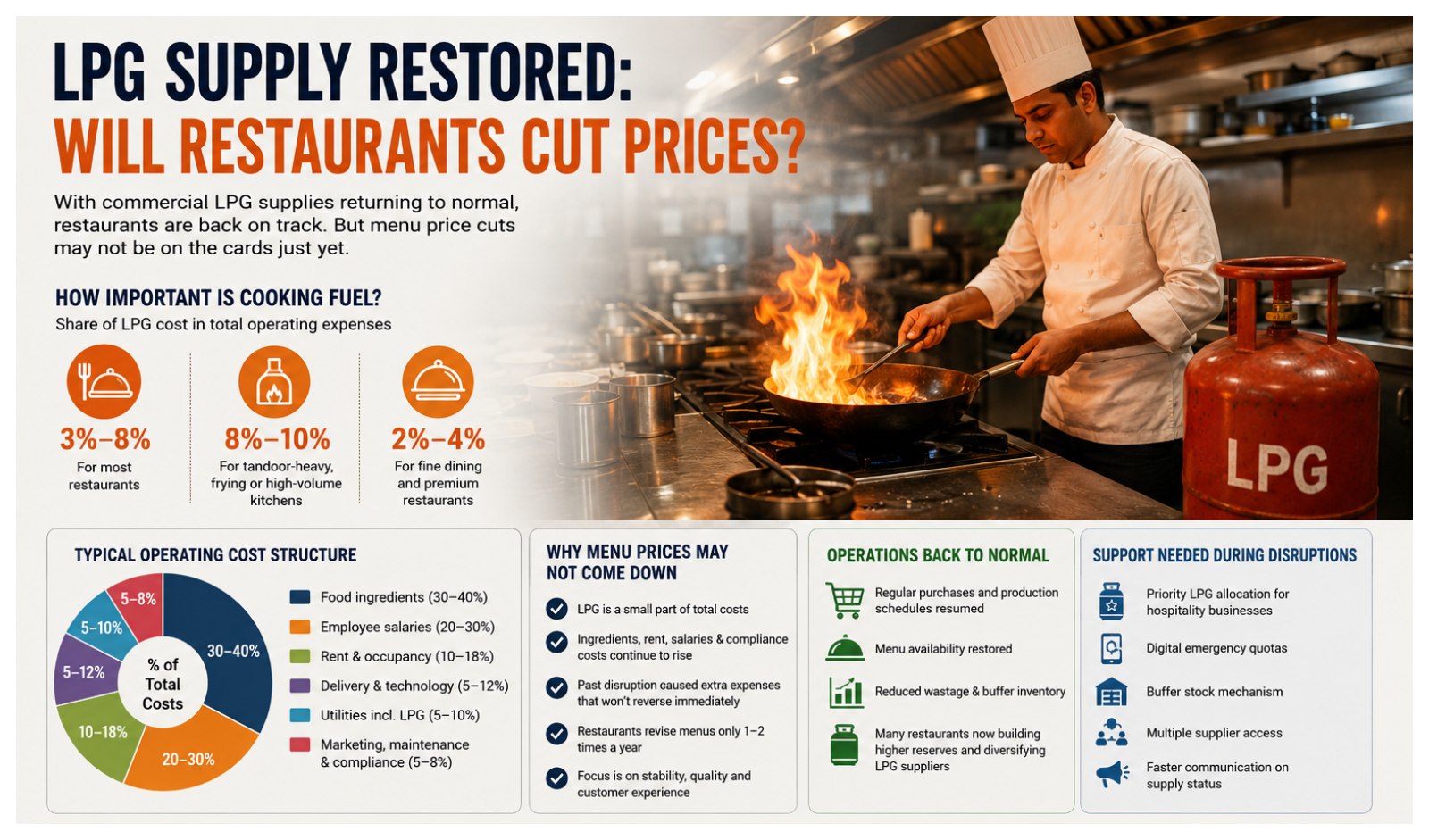
After weeks of commercial LPG supply disruptions, the government has restored normal availability, bringing much-needed relief to restaurants, hotels, cloud kitchens, caterers, and bakeries. Alongside the improved supply, the price of a 19-kg commercial LPG cylinder has been reduced by Rs. 183.50 across major cities, effective July 1, easing a key operating cost for the foodservice industry. The price of the 14.2-kg domestic LPG cylinder, however, remains unchanged.
With supplies stabilising and fuel costs easing, the focus now shifts to whether restaurants will pass on the benefits to consumers through lower menu prices or use the savings to offset months of inflationary pressures and rising input costs. For an industry grappling with higher food, labour, and rental expenses, the reduction offers welcome breathing room, though whether diners will see cheaper bills remains an open question.
Unlike energy-intensive industries, restaurants operate with a far more diversified cost structure, where cooking fuel constitutes only a small portion of overall expenses. LPG typically accounts for 2–5% of operating costs for most restaurants, increasing to 5–8% for high-volume kitchens and an even larger share in banquet facilities and hotel kitchens. With food inflation, labour, rentals, logistics, and utilities continuing to exert pressure, industry players say the recent cut in commercial LPG prices is unlikely to translate into immediate reductions in menu prices.
“While LPG prices have stabilized, they have not returned to previous levels. Additionally, rising fuel, transportation, and logistics costs have offset any savings, leaving our overall operating costs largely unchanged. As a result, we do not anticipate reducing menu prices and remain focused on maintaining the quality and service standards our customers expect,” said Chef Harsh Shodhan, Founder & Chef, The Gourmet Kitchen Studio.
Sharing a similar sentiment, Chef Pranav Vijay Sawaant, Founder, Nuèe, Pune, added, “The restoration of LPG supply is undoubtedly a welcome relief for the hospitality fraternity. That said, at Nuèe, we have never believed in allowing short-term operational fluctuations to dictate the value of the experience we curate. Menu pricing reflects craftsmanship, culinary research, exceptional sourcing, skilled talent, and the pursuit of excellence and not merely the cost of a single utility.”
Supply Stability Matters More Than Price Cuts
For the hospitality industry, uninterrupted LPG availability is often more valuable than marginal price reductions. Fuel shortages can disrupt kitchen operations, delay service, increase procurement costs, restrict menu offerings, and even force temporary production cuts—operational setbacks that often-cost businesses far more than higher fuel prices.
“Transportation and delivery costs have risen significantly, effectively negating any savings from changes in cooking fuel prices. As a result, our overall cost structure continues to remain under pressure,” added Shodhan. “During future supply disruptions, support from the government in ensuring uninterrupted access to cooking fuel, along with timely communication and clear guidelines, would help businesses plan more effectively.”
With commercial LPG supplies restored, restaurants across segments have resumed normal procurement schedules, reinstated full menus, accepted larger catering and banquet orders, and returned to regular inventory planning. Industry stakeholders note that reliable fuel availability not only improves operational efficiency but also helps maintain consistent food quality, service standards, and guest experience. More importantly, uninterrupted LPG supply ensures safe and uninterrupted kitchen operations, making it essential not just for business continuity but also for food safety and public health.
Restaurateurs also believe that a dedicated fuel allocation policy during emergencies could benefit essential food and hospitality services as such proactive policy measures would empower responsible hospitality businesses to continue operating with dignity and consistency, ensuring that operational challenges never become the guest's burden.
Vijetha Iyer
Content Editor
Working as a Content Editor with Restaurant India. I have worked in various sectors like food and beverage sector, chemicals, pharma, nutraceuticals, now specially focusing on restaurant side. But my core knowledge was always on content. Be it writing poems to verses, I always loved writing and have been exploring my career on the same. In Restaurant India, I deliver insightful stories, take interviews of various brands and update the audiences about the newest happenings in the restaurant industry.









































