
Biryani vs Pulao: What's the Difference?
Whether you choose the comforting elegance of a pulao or the grand flavours of a slow-cooked biryani, both continue to showcase the richness of India's culinary heritage—one fragrant grain of rice at a time.

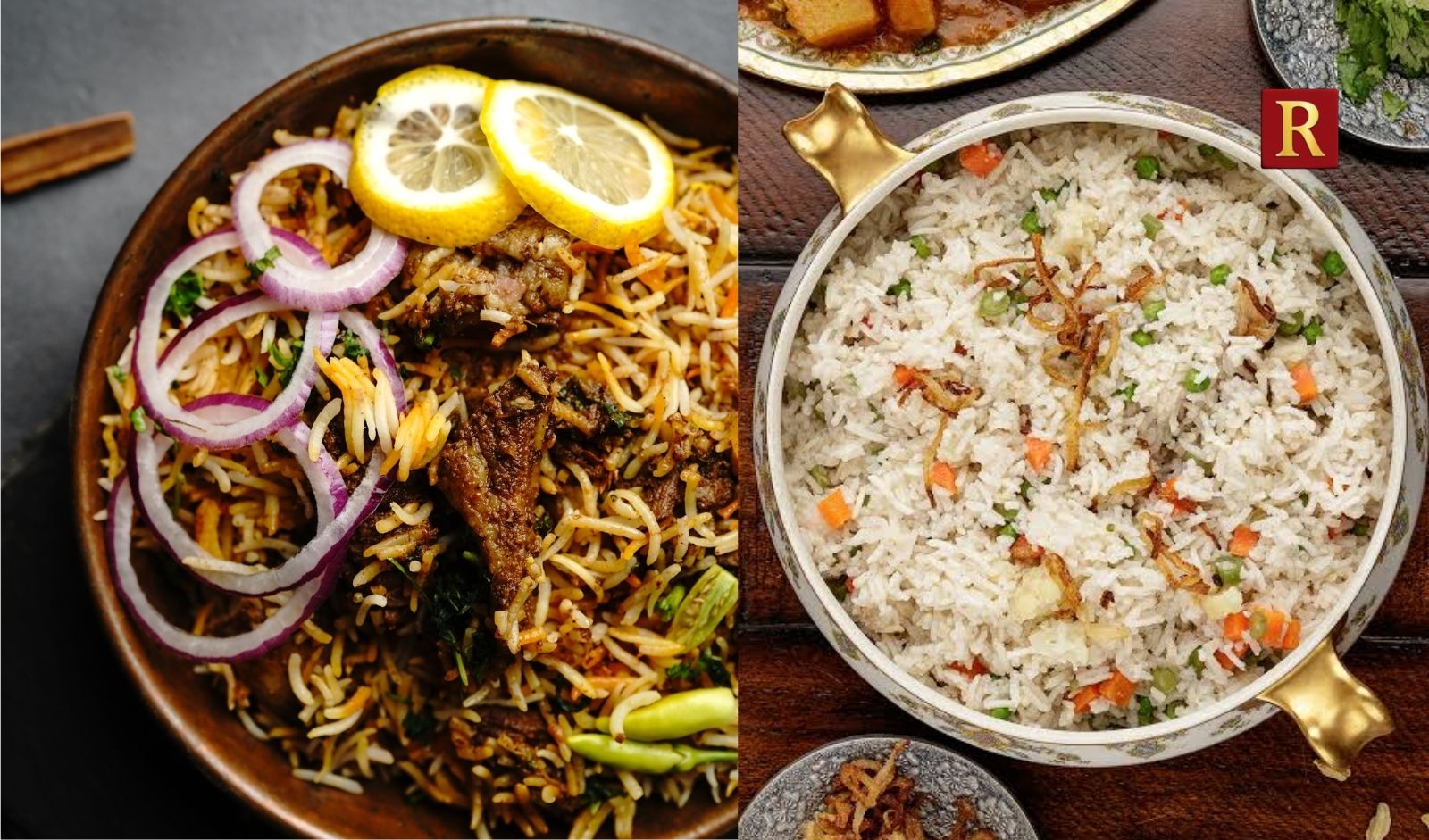
Few food debates in India are as common as biryani vs pulao. At first glance, both dishes seem almost identical. They are made with fragrant rice, aromatic spices, vegetables or meat, and are served at homes, restaurants, and celebrations across the country. Yet, ask any experienced chef, and they will tell you that biryani and pulao are two entirely different culinary creations.
The confusion often begins because many restaurants use the names interchangeably. Some dishes labelled as biryani are actually richly spiced pulao, while some pulaos borrow techniques from biryani. The real difference, however, lies in the cooking process, flavour development, and the philosophy behind each dish. India consumes millions of tonnes of rice every year, making it the world's second-largest producer after China. Rice-based dishes have evolved differently across regions, giving rise to hundreds of variations of biryani and pulao. Understanding these dishes means understanding centuries of history, trade, and culinary innovation.
Why Are Biryani and Pulao Often Confused?
Both dishes begin with similar ingredients. Long-grain basmati rice, whole spices, onions, vegetables or meat, and herbs appear in almost every recipe. They also share similar serving styles, making them difficult to distinguish for someone unfamiliar with traditional cooking. The biggest difference is not what goes into the pot but how everything is cooked. Pulao is designed as a one-pot meal where rice absorbs flavours as it cooks. Biryani, on the other hand, is built layer by layer through a slow cooking technique that creates distinct textures and aromas. This difference may seem simple, but it completely changes the final dish.
A Journey Through History
The story of pulao is older than biryani. Historians believe it evolved from the Persian dish called pilaf, which travelled through Central Asia before reaching the Indian subcontinent. Over time, Indian cooks adapted it using local spices, vegetables, and regional ingredients. Biryani arrived much later during the Mughal era. The Persian word biryan means "to roast before cooking," referring to one of the traditional methods of preparing meat before combining it with rice. Royal kitchens refined the dish using expensive ingredients such as saffron, dried fruits, kewra water, and slow-cooking techniques. Today, India has dozens of regional biryanis, each reflecting local tastes and traditions.
Biryani vs Pulao at a Glance
Feature | Biryani | Pulao |
|---|---|---|
Cooking style | Layered dum cooking | One-pot cooking |
Rice | Cooked separately first | Cooked together with ingredients |
Flavour | Rich and layered | Mild and balanced |
Cooking time | 1.5–3 hours | 30–45 minutes |
Texture | Separate rice grains | Evenly flavoured rice |
Spices | Complex spice blend | Mostly whole spices |
Occasion | Festivals and celebrations | Everyday meals |
The Cooking Method Makes All the Difference
The defining characteristic of pulao is its simplicity. Rice, vegetables or meat, spices, and stock are added to the same pot. As the liquid cooks away, every grain absorbs the flavours equally. The result is a soft, aromatic, and evenly seasoned dish that is quick to prepare.
Biryani follows a far more elaborate process.
First, the rice is partially cooked until it is about 70 percent done. Meanwhile, meat or vegetables are prepared separately using spices, yogurt, onions, and herbs. The two components are then layered in a heavy-bottomed vessel.
The pot is sealed and cooked over low heat using the famous dum method. This traps steam inside, allowing the aromas to circulate without escaping. The rice finishes cooking slowly while absorbing flavours from below.
Because of this technique, every spoonful offers slightly different flavours and textures.
The Science Behind the Perfect Rice
Food science explains why biryani and pulao feel so different.
During pulao preparation, rice absorbs the cooking liquid directly. The starch released by the rice mixes with the broth, creating a softer texture and a uniform flavour throughout the dish.
Biryani behaves differently because the rice is already partially cooked before layering. Less starch is released during the final cooking stage, allowing each grain to remain long, separate, and fluffy.
Professional chefs also prefer aged basmati rice for biryani because it contains less moisture. This helps the grains stay firm during slow cooking without becoming sticky. This small technical detail is one reason restaurant-quality biryani has beautifully separated grains.
Ingredients That Define Each Dish
Although both dishes use similar pantry staples, the supporting ingredients are quite different.
A traditional biryani often includes yogurt, fried onions known as birista, mint leaves, coriander, saffron-infused milk, ghee, kewra water, and sometimes rose water. These ingredients build layers of aroma and richness.
Pulao keeps things lighter. Whole spices such as cinnamon, cloves, bay leaves, cardamom, and cumin provide fragrance without overpowering the rice. Fresh vegetables, peas, carrots, beans, mushrooms, or paneer are commonly used in vegetarian versions, while chicken and mutton remain popular choices for non-vegetarian pulao.
Does Biryani Always Use More Spices?
Not necessarily.
Many people assume biryani contains significantly more spices than pulao, but the difference lies in complexity rather than quantity. Pulao relies mainly on whole spices that gently flavour the rice.
Biryani combines whole spices with ground masalas, marinated ingredients, herbs, caramelised onions, and slow cooking. These layers create deeper aromas and a more intense taste without always making the dish spicier. Some regional biryanis, such as Awadhi biryani, are surprisingly mild despite their rich flavour.
India's Incredible Variety of Biryani
India's regional diversity has produced some of the world's most famous biryanis.
Hyderabadi Biryani is known for its spicy flavours and the traditional kacchi method, where raw marinated meat cooks with partially cooked rice.
Lucknowi (Awadhi) Biryani focuses on subtle spices and delicate aromas developed through slow dum cooking.
Kolkata Biryani became famous for adding potatoes and boiled eggs, creating a lighter yet distinctive version.
Malabar Biryani from Kerala uses short-grain Jeerakasala rice instead of basmati and includes generous amounts of ghee, raisins, and cashews.
Dindigul Biryani from Tamil Nadu is recognised for its tangy flavour, thanks to the use of curd and lemon.
Each region reflects local ingredients, climate, and cooking traditions.
Popular Types of Pulao Across India
Pulao is equally diverse.
Yakhni Pulao uses a flavourful meat broth to cook the rice.
Kashmiri Pulao combines fruits, nuts, and saffron for a mildly sweet flavour.
Vegetable Pulao remains one of India's most popular everyday meals.
Peas Pulao, Paneer Pulao, Mushroom Pulao, and Coconut Pulao are widely prepared in households because they are quick, nutritious, and easy to customise.
Unlike biryani, most pulao recipes can be completed in under 45 minutes.
Which One Is Healthier?
The healthier choice depends more on preparation than the name of the dish.
Pulao generally contains less oil, fewer rich ingredients, and a higher proportion of vegetables. This often makes it lower in calories and easier to digest.
Biryani usually contains more ghee, fried onions, yogurt, and meat, increasing both calories and protein. A serving of vegetable pulao typically ranges between 250 and 350 calories, while chicken biryani can contain 450 to over 700 calories, depending on the recipe and portion size.
Using lean meat, brown rice, and controlled amounts of oil can make either dish healthier.
Why Do Restaurants Sometimes Label Pulao as Biryani?
Authentic biryani requires time, skill, and careful attention. Preparing separate layers, marinating ingredients, and slow cooking can take several hours. For busy restaurants, this process is expensive and labour-intensive. As a result, some establishments prepare a richly spiced pulao and market it as biryani because the name attracts more customers. While the flavours may be enjoyable, the traditional cooking method is often missing. Knowing the difference helps diners appreciate the craftsmanship behind a true biryani.
Happy Eating!
Biryani and pulao may begin with similar ingredients, but they represent two distinct styles of cooking. Pulao celebrates simplicity, balance, and everyday comfort. It is quick to prepare, lightly spiced, and allows the natural flavours of rice and vegetables or meat to shine. Biryani is a celebration of patience and technique. Layering, marination, dum cooking, and carefully balanced aromatics transform ordinary ingredients into a dish with remarkable depth and complexity. Neither dish is better than the other. They simply serve different purposes. Whether you choose the comforting elegance of a pulao or the grand flavours of a slow-cooked biryani, both continue to showcase the richness of India's culinary heritage—one fragrant grain of rice at a time.
Saptopriya Ghosal
Feature Writer
I am a dedicated media professional with a bachelor's degree in mass communication from the State University of Calcutta and a postgraduate degree from Amity University. My academic journey has equipped me with a profound understanding of storytelling and communication. Passionate about the dynamic world of media, I continually strive to explore new ways to engage and inform through compelling narratives.



































































































































































