Best Type of Ice Machine for Coffee Shop: A Practical Buying Guide
It is the machine that can produce the right type and quantity of ice, at the right time, without creating unnecessary energy, water, space or maintenance costs. For café owners, that is the more useful way to approach an ice-machine purchase.

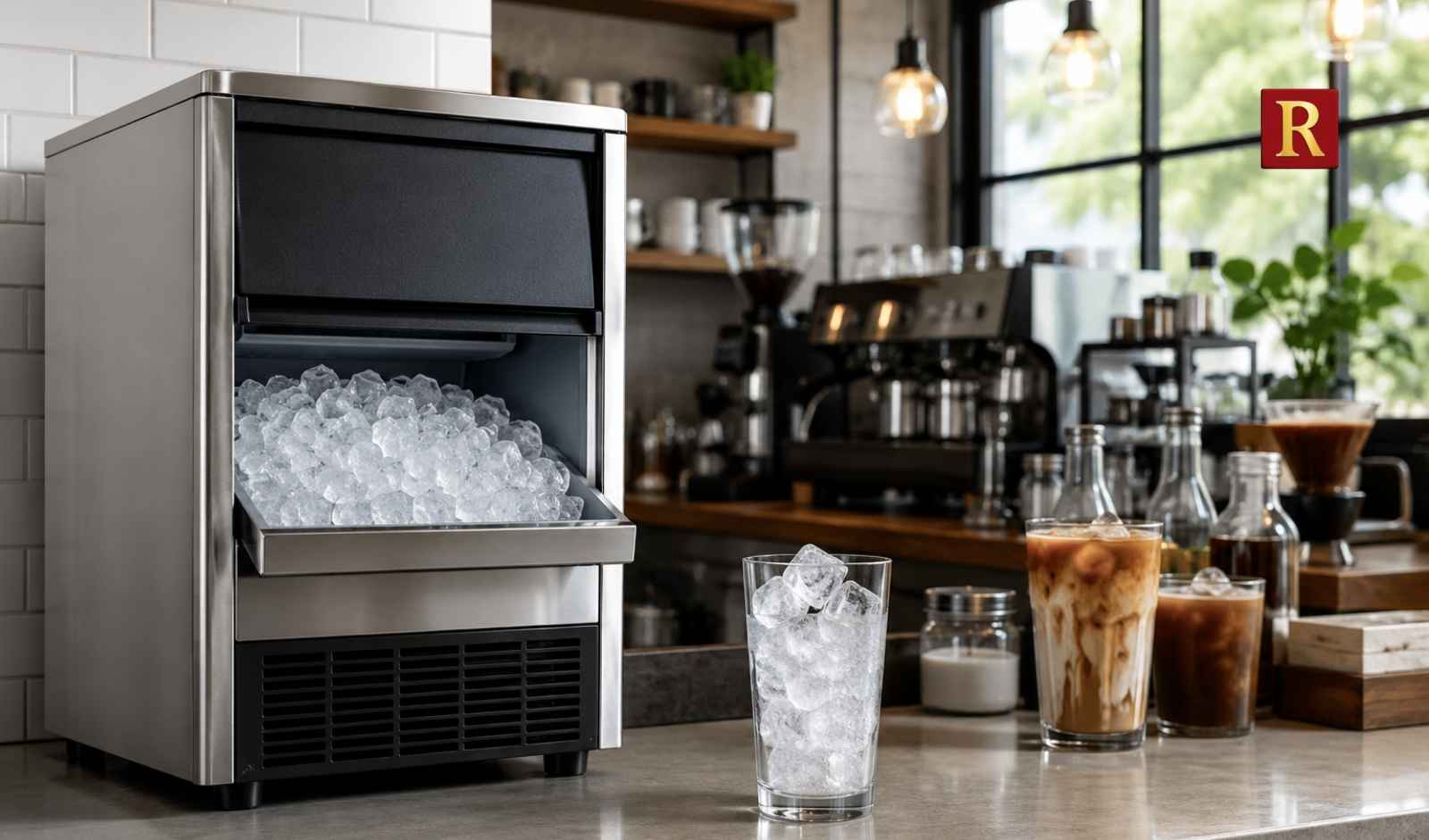
For most coffee shops, a commercial cube ice machine is the safest all-round choice. It works well for iced coffee, cold brew, iced tea, lemonade, and other chilled drinks. But it is not automatically the right machine for every café. The best choice depends on your menu, daily ice demand, peak-hour sales, available space, water quality, and operating conditions. A small neighbourhood café may need an undercounter machine, while a high-volume coffee chain may need a modular ice maker with a separate storage bin. Here is how to choose the right one.
Why Ice Machine Selection Matters in a Coffee Shop
Ice is part of the recipe in many café drinks. Too little ice can change the drink's temperature and consistency. The wrong ice can melt quickly and increase dilution. Capacity matters too. A machine may produce enough ice over 24 hours but still run short during a busy evening if its storage bin is too small. Commercial ice makers are generally divided into batch-type ice machines, which commonly produce cube ice, and continuous-type machines, which include nugget and flake ice makers. ENERGY STAR notes that cube ice is widely used for beverages, while nugget ice is also primarily used in drinks and flake ice is more common in food-display applications.
Cube, Nugget or Flake: Which Ice Is Best?
1. Cube Ice: Best Overall Choice
For a typical coffee shop, cube ice is the strongest starting point.
It works across a broad menu. It can be used for:
- Iced coffee
- Cold brew
- Iced tea
- Lemonades
- Soft drinks
- Mocktails
- Chilled water
Cube ice also offers good resistance to melting compared with smaller pieces. This can help control dilution in drinks that are meant to remain cold for longer. For a café that wants one machine to handle most beverage requirements, cube ice offers the best balance of versatility and practicality.
2. Nugget Ice: Best for Beverage-Focused Cafés
Nugget ice has a softer, chewable texture. It is popular in beverage applications where the ice itself is part of the drinking experience. It can be a good fit for cafés selling large volumes of:
- Iced speciality drinks
- Fruit-based beverages
- Refreshers
- Frozen-style beverages
- Soft drinks
However, nugget ice should not be selected simply because it is popular. The machine needs to match the café's menu and volume. As one example, Scotsman's UN1215 undercounter nugget machine is rated for up to 59 kg of ice per day under specified test conditions, with 16 kg of storage. Its published production falls to about 41 kg per day under hotter test conditions, showing why environmental conditions matter when sizing equipment.
3. Flake Ice: Usually Not the First Choice
Flake ice is soft and has a high surface area. It is useful for applications such as seafood and salad displays. For a coffee shop focused mainly on beverages, it usually does not offer enough benefit to justify choosing it over cube or nugget ice. ENERGY STAR also identifies flake ice primarily with food-display applications.
5 Commercial Ice Machine Brands
1. Hoshizaki
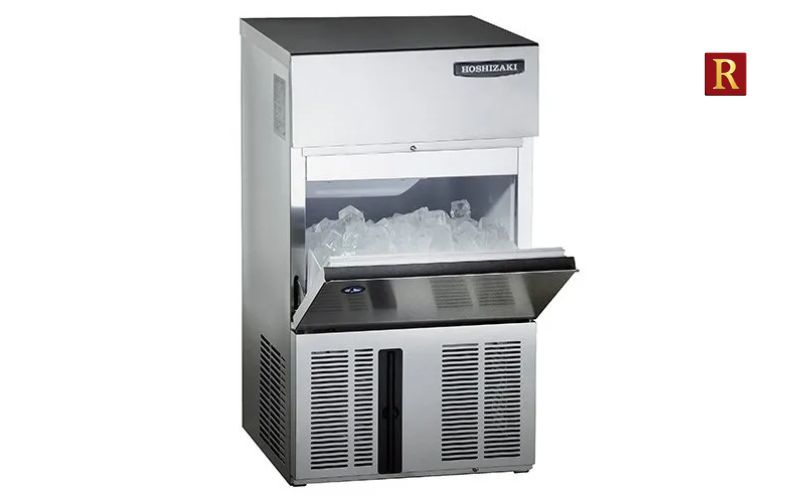
Hoshizaki is a strong option for cafés that prioritise long-term equipment performance and consistent ice quality. Its range includes crescent ice makers and cubelet ice systems, with models designed for small kitchens through large-volume operations. Hoshizaki says its crescent machines use a double-sided evaporator designed to improve ice output while reducing water and energy use. Hoshizaki has also been moving its cube-ice range toward natural refrigerants, with a 2025 upgrade covering models producing 20–115 kg of ice per day.
- Best suited for: Premium cafés, hotels, restaurants and high-uptime operations.
- What to look for: Crescent or cubelet ice, machine capacity, cooling type and local service support.
2. Blue Star
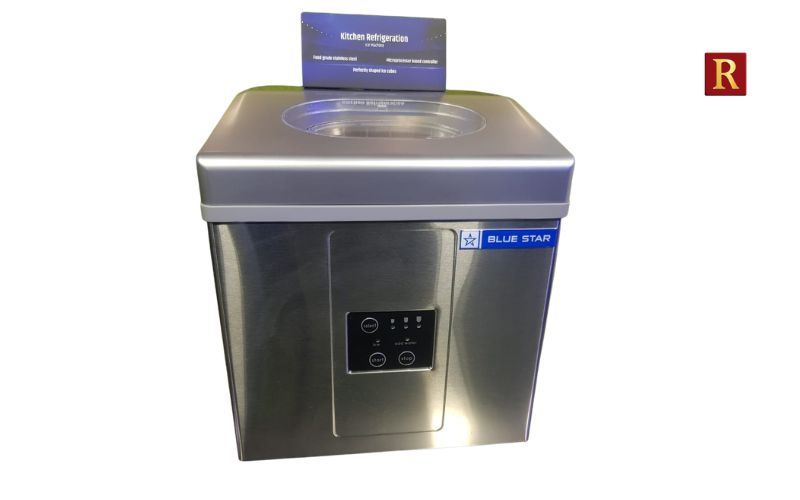
Blue Star is particularly relevant for Indian cafés because it offers commercial ice machines across several formats. Its range includes gourmet cube, bullet and square cube, and flake machines. Blue Star highlights features such as stainless-steel construction, automatic start and stop, water-content control and compact designs. For a café primarily selling iced coffee and cold beverages, its cube machines are more relevant than its flake models.
- Best suited for: Small and mid-sized cafés, restaurants, beverage counters and foodservice businesses in India.
- What to look for: Cube format, production capacity, footprint and after-sales support in your city.
3. Manitowoc Ice
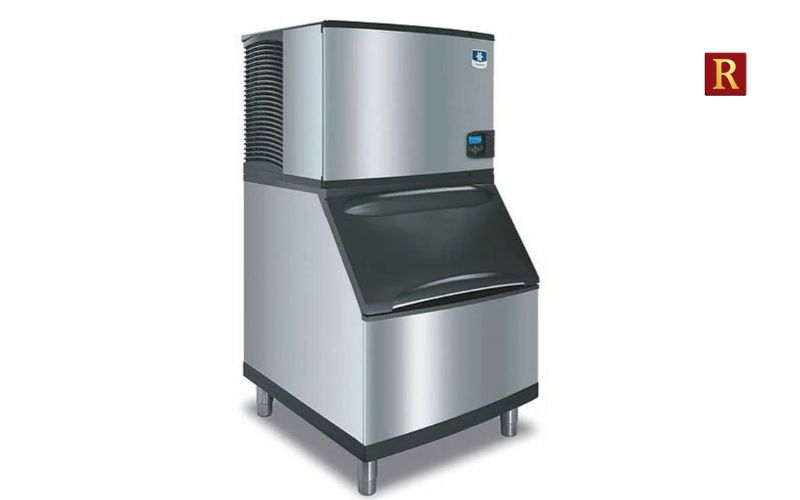
Manitowoc Ice is worth considering for larger foodservice operations that need scalable ice production. Its machines are available in different configurations, making the brand more relevant when a café is moving beyond a compact undercounter setup and needs higher production and separate ice storage. Manitowoc's own foodservice guidance is also useful when calculating ice requirements. Its sizing material uses beverage volume and ice usage to help operators estimate demand rather than simply buying a machine based on its headline production number.
- Best suited for: High-volume cafés, restaurant chains, hotels and larger QSR operations.
- What to look for: Modular production systems, storage-bin compatibility, energy consumption and service availability.
4. Scotsman
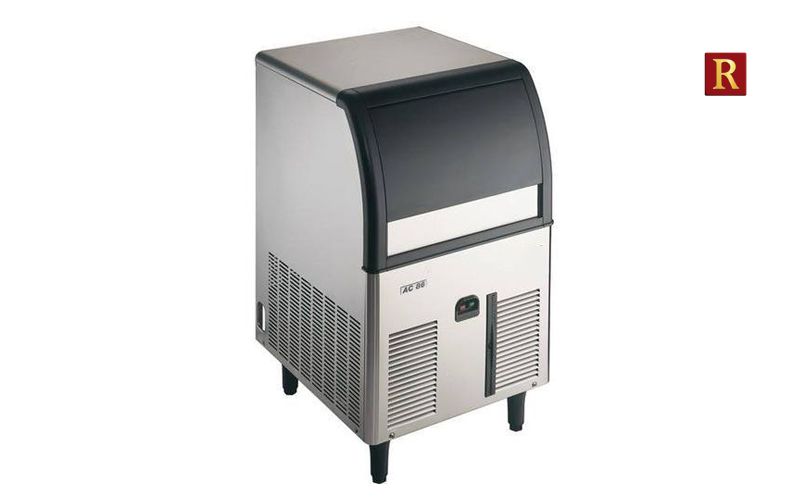
Scotsman Ice is especially interesting for cafés that want to go beyond conventional cube ice. The brand has commercial machines producing nugget, flake and other ice formats, making it useful for beverage concepts where ice texture is part of the product experience. For example, the Scotsman UN1215 undercounter nugget machine is rated for up to 59 kg of production per day and 16 kg of storage under specified conditions. Its published production also changes with ambient conditions, which reinforces the importance of checking real-world capacity before purchase.
- Best suited for: Specialty cafés, beverage-led concepts and businesses interested in nugget ice.
- What to look for: Nugget production, storage capacity, ambient-temperature performance and cleaning requirements.
5. Elanpro
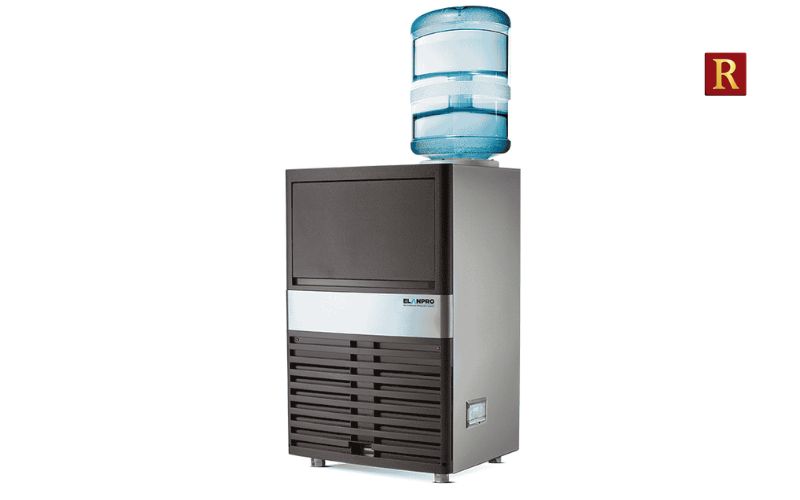
Elanpro can be considered by cafés looking for commercial refrigeration and foodservice equipment with an India-focused operating context. It is particularly relevant for small and mid-sized foodservice businesses where space, operating cost and service support are important purchasing factors.
- Best suited for: Cafés, bakeries, cloud kitchens and mid-sized foodservice operations.
- What to look for: Production capacity, machine dimensions, electrical requirements, water requirements and service coverage.
Which Brand Should a Coffee Shop Choose?
There should be no single winner, because the right brand depends on the café's operating model.
Coffee shop requirement | Brands worth researching |
Premium, long-term operation | Hoshizaki |
Indian café and restaurant applications | Blue Star |
High-volume, scalable operation | Manitowoc |
Nugget or specialty ice | Scotsman |
Small and mid-sized foodservice operation | Elanpro |
The important point is to compare specific machines, not just brands. A 60 kg/day undercounter machine from one manufacturer cannot be fairly compared with a 200 kg/day modular system from another simply because both are marketed as commercial ice makers. Before purchasing, compare production at realistic temperatures, storage capacity, ice format, energy and water consumption, footprint, cleaning requirements, warranty and local service availability. These factors will have a much bigger effect on day-to-day café operations than the brand name alone.
How Much Ice Does a Coffee Shop Need?
This is where many equipment purchases go wrong. Do not select a machine only because its advertised production figure looks impressive. First estimate actual beverage demand. Manitowoc's commercial ice-use guide suggests using 40% ice per drink multiplied by the number of drinks served on a peak day for beverage-service sizing. Its guide also gives examples of approximately 148 ml of ice for a 7–10 oz drink, 237 ml for a 12–16 oz drink and 355 ml for an 18–24 oz drink. For example, suppose a café sells 250 iced drinks on its busiest day.
- If each drink uses an estimated 150 ml of ice: 250 × 150 ml = 37.5 litres of ice volume
That is only a starting estimate. The café should also consider wastage, other ice uses and the concentration of demand during peak hours. The important point is to size the machine using peak demand, not just average daily sales.
Production Capacity Is Not Storage Capacity
These two numbers are easy to confuse. Production capacity tells you how much ice a machine can make over a specified period, commonly 24 hours. Storage capacity tells you how much finished ice the bin can hold. A machine could produce 100 kg in a day but have much less than 100 kg available at one time. This matters when a café has a strong evening rush. If 50 kg of ice is needed between 5 PM and 8 PM, the machine's daily production figure alone does not tell you whether the operation can handle that rush. For smaller cafés, a self-contained undercounter unit can save space. For larger operations, a modular ice-making head with a separate storage bin provides more flexibility.
Air-Cooled vs Water-Cooled Machines
For many cafés, an air-cooled machine is the practical starting point. It does not need continuous condenser water to reject heat. But it does release heat into the surrounding area. That means ventilation becomes important. A water-cooled machine can be useful in certain high-temperature or difficult ventilation environments, but water consumption must be considered carefully. ENERGY STAR's current commercial ice-machine program covers air-cooled machines and excludes water-cooled machines. For an Indian café, this decision deserves extra attention. A machine operating in a hot kitchen may not deliver the same output shown on its specification sheet under cooler test conditions. Always ask the supplier for production figures at realistic air and water temperatures.
Water Quality Is Part of the Equipment Decision
Ice goes directly into the customer's drink. That makes water quality and machine hygiene operational issues, not just maintenance details. FSSAI's hygiene requirements state that ice and steam used in direct contact with food should be made from potable water and handled and stored in a way that prevents contamination.
Hard water can also create mineral scale inside equipment. Depending on the local water supply, a café may therefore need suitable filtration and a planned descaling schedule. FSSAI also requires food businesses to implement an effective Food Safety Management System and comply with applicable Schedule 4 hygiene requirements.
Look Beyond the Purchase Price
The cheapest machine is not always the cheapest machine to operate.
When comparing models, check:
- Ice production per day
- Storage capacity
- Energy use
- Water consumption
- Condenser type
- Electrical requirements
- Drain requirements
- Required ventilation
- Filter and cleaning needs
- Warranty
- Local service availability
- Spare-part availability
ENERGY STAR uses kWh per 100 lb of ice and potable-water use per 100 lb as standard performance measures. This makes those figures more useful for comparing machines than simply looking at wattage. ENERGY STAR also reports that certified batch-type commercial ice makers are about 10% more energy efficient and 20% more water efficient than standard models, while certified continuous-type machines are about 16% more energy efficient under its program comparisons.
A Simple Buying Guide for Different Cafés
- Small coffee shop: Choose a compact undercounter cube machine if most drinks use conventional ice.
- Specialty coffee shop: Cube ice is usually the better default, particularly when cold brew and iced coffee dominate.
- Iced-drink-focused café: Consider nugget ice if its texture fits the menu and customer experience.
- High-volume café: Look at modular equipment with adequate storage rather than relying only on a high daily production figure.
- Café with food-display requirements: A separate flake-ice solution may make sense if there is a genuine food-display need.
The Bottom Line
For most coffee shops, a commercial cube ice machine is the best starting point. It is versatile and suits a wide range of café beverages. Nugget ice becomes more attractive when the business is built around cold beverages where texture is part of the experience. Flake ice is generally better suited to food-display applications. The bigger decision, however, is capacity. A café should calculate its peak ice demand, check storage requirements and examine production figures under realistic operating temperatures. The best machine is not necessarily the biggest or cheapest one. It is the machine that can produce the right type and quantity of ice, at the right time, without creating unnecessary energy, water, space or maintenance costs. For café owners, that is the more useful way to approach an ice-machine purchase.
Saptopriya Ghosal
Feature Writer
I am a dedicated media professional with a bachelor's degree in mass communication from the State University of Calcutta and a postgraduate degree from Amity University. My academic journey has equipped me with a profound understanding of storytelling and communication. Passionate about the dynamic world of media, I continually strive to explore new ways to engage and inform through compelling narratives.