8 Alcohol Brands That Turned Their Bottles Into Collectors' Items
They are finding different reasons for consumers to look at a bottle twice, display it at home and remember it after the final pour.


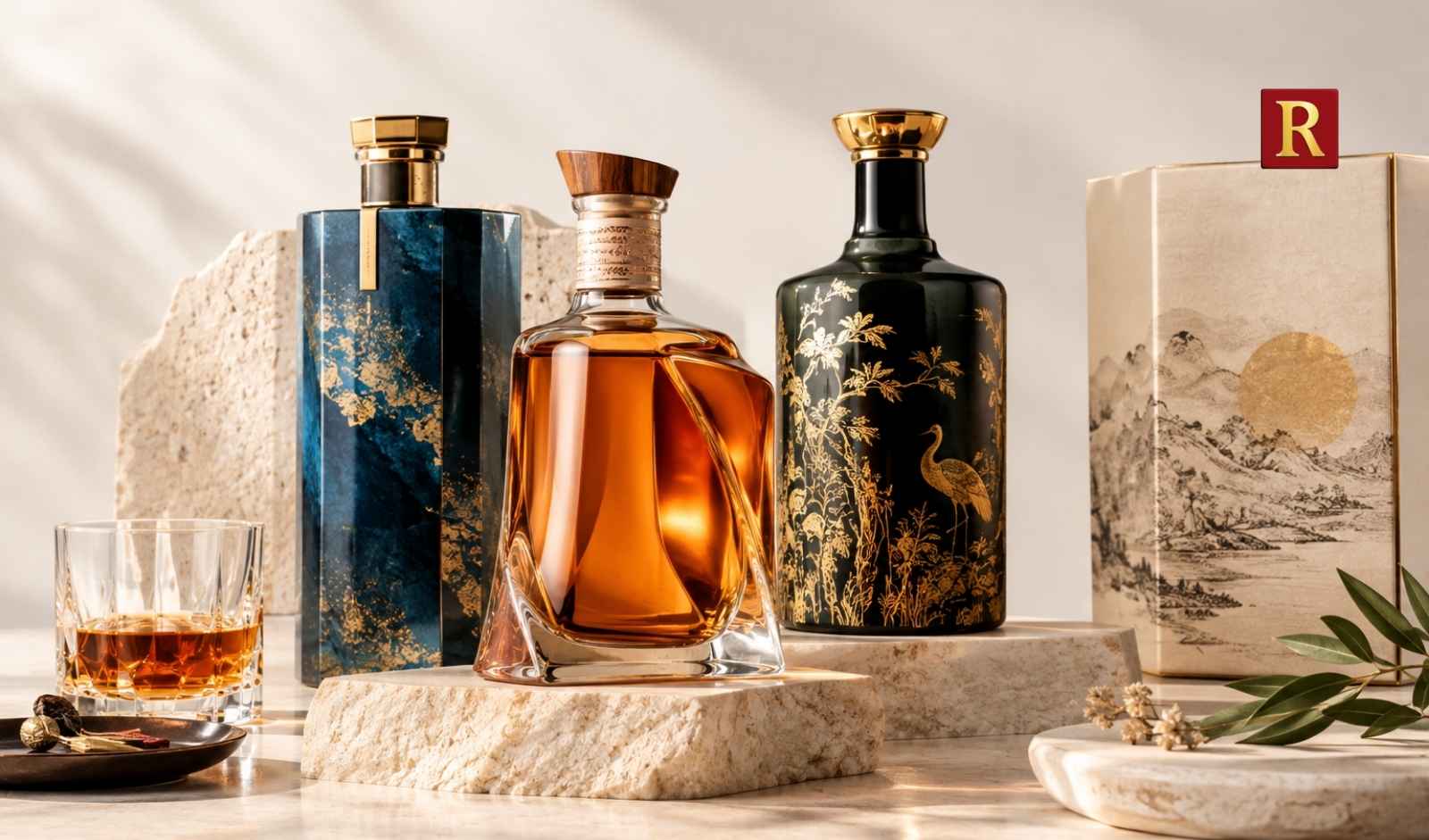
An alcohol bottle does not always end up in the recycling bin. Some become display pieces, conversation starters and, for collectors, objects worth preserving. Spirits brands are increasingly using artists, fashion designers, crystal makers and new technology to make their bottles stand out.
The approach is not the same for every brand. Absolut used controlled randomness to make millions of bottles different. The Macallan worked with Lalique to create numbered crystal decanters. Hennessy brought architecture and generative art into its packaging. In India, brands such as Johnnie Walker and Chivas Regal have collaborated with designers Rahul Mishra and Gaurav Gupta. These examples show how a bottle can become part of the product experience. Here are eight alcohol brands that have taken that idea seriously.
1. Absolut: When 4 Million Bottles Became Different

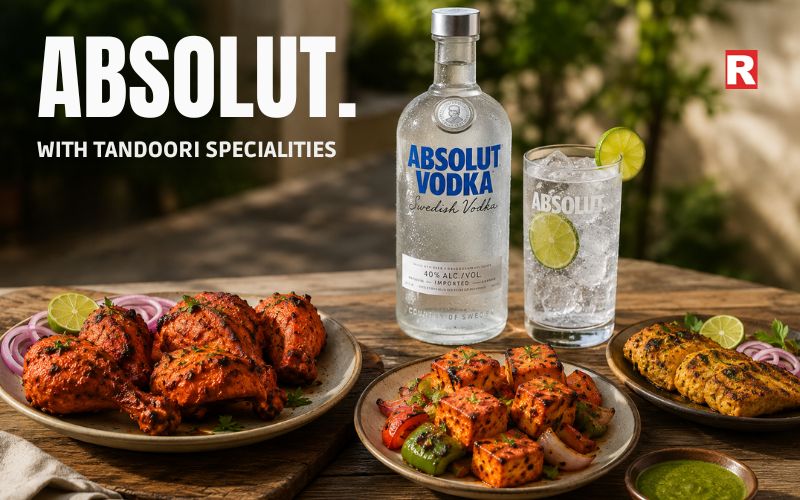
Absolut found an unusual way to create a collectible. Instead of producing a tiny batch, it created millions of different bottles. For its Absolut Unique edition in 2012, the brand produced 4 million bottles. It used 35 colours and 51 pattern types, with algorithms controlling the coating, pattern and placement. Each bottle was given its own number. The company says the production process was designed so that no two bottles would look alike.
The idea was important because it challenged the usual definition of a limited edition. Collectability did not come only from scarcity. It came from individuality. Absolut continued the experiment in 2013 with Absolut Originality. A drop of blue pigment was introduced into each bottle, creating a different pattern as the pigment moved through the glass. Again, four million unique designs were produced.
2. Johnnie Walker: Rahul Mishra Brings Indian Design to Blue Label

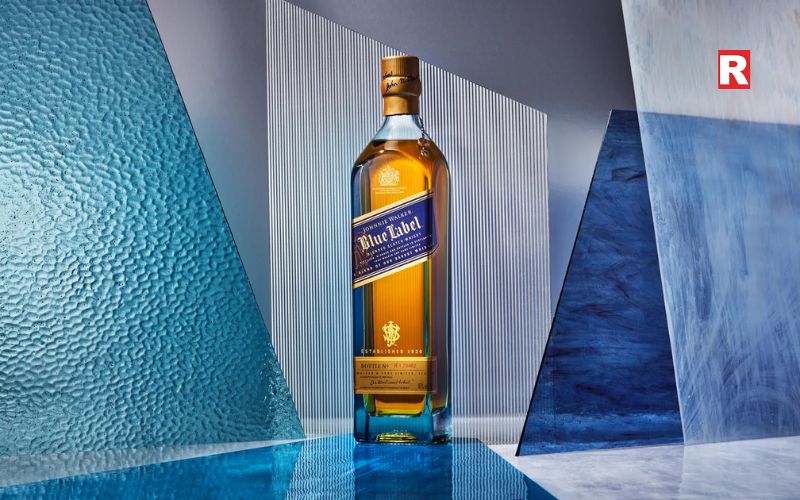
Johnnie Walker Blue Label has also used design to make its bottle more distinctive. Its limited-edition collaboration with Indian couturier Rahul Mishra brings fashion into the world of Scotch whisky. The bottle and packaging feature flowers and animals and draw on India's cultural traditions, rituals and festive spirit. Mishra's work is known for embroidery, colour and craftsmanship, making the collaboration feel closer to a fashion object than standard whisky packaging. There is also a technical detail behind the whisky itself. Johnnie Walker says only one in 10,000 casks is selected for Blue Label, including whisky from some long-closed "ghost" distilleries. The collaboration shows how a spirits bottle can carry two stories at once: the story of the liquid and the story of its visual design.
3. The Macallan: Turning Whisky Into a Crystal Collectible

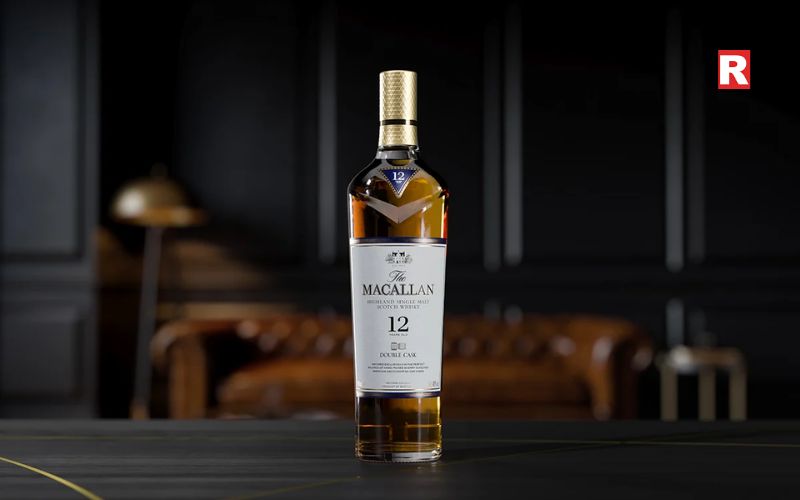
The Macallan's relationship with French crystal maker Lalique is one of the clearest examples of a bottle becoming an object in its own right. The first release in The Macallan in Lalique Six Pillars Collection arrived in 2005. The 50 Years Old edition was limited to 470 individually numbered decanters worldwide. Lalique's craftsmen created intricate etched details inspired by the oak casks used to mature the whisky, while drawing on the Art Nouveau style associated with the crystal house.
Here, the packaging does more than protect the spirit. The decanter becomes part of the collecting experience. Numbering also gives each piece an identity. A collector can identify a specific object rather than simply owning another bottle of an expensive whisky.
4. Hennessy: From Frank Gehry to Generative Art

Hennessy has taken collectible bottle design in several directions. In 2020, architect Frank Gehry created a special Hennessy X.O decanter for the 150th anniversary of X.O. Only 150 numbered decanters were produced, each bearing Gehry's signature. The design combined gold, bronze and glass and took inspiration from the movement of the Charente River near the Hennessy Maison.
The brand later moved into digital design with French artist Florian Zumbrunn. His Hennessy X.O collection contains 40 numbered carafes, each featuring a unique design generated through bespoke algorithms. Customers can select a colour palette, while a robotic arm paints the resulting design onto a "second skin" around the carafe. It is an unusual combination of code, robotics and traditional spirits packaging.
5. Bombay Sapphire: When a Gin Bottle Became an Art Object

Bombay Sapphire has used its bottle as a platform for contemporary art. Its Jean-Michel Basquiat Special Edition features Untitled (L.A. Painting), a work connected to the artist's time in Los Angeles. The design includes several motifs associated with Basquiat, including a crown, bird, coin and skull.
What makes this edition interesting is the shift in context. A work of contemporary art has been transferred onto an everyday consumer object. The bottle therefore sits somewhere between spirits packaging and art merchandise. It also gives the brand a way to reach consumers who may be interested in design and art as much as gin.
6. Chivas Regal: Gaurav Gupta Turns Whisky Packaging Into Couture

Chivas Regal took a similar route with Indian couturier Gaurav Gupta. For its Chivas Regal XV limited edition, Gupta created a surreal visual world featuring characters including The Winged Panther, The Serpent and the Third Eye Sun. The bottle and presentation box use rich gold tones and Indian-inspired elements with Gupta's contemporary design language.
This is more than putting a designer's name on a label. The collaboration changes the visual identity of the bottle itself. For luxury spirits, this can be particularly useful. The bottle becomes something that can be displayed during a celebration or kept after the whisky has been consumed.
7. Clase Azul: Collectability Through Handmade Craft

Clase Azul takes a different approach. Its bottles are closely linked to Mexican craftsmanship. The brand's Mezcal San Luis Potosí uses a handmade decanter whose cap features coloured-yarn appliqué. The design depicts a desert landscape with mountains, valleys and red finches. Clase Azul says each cap requires more than three hours of detailed craftsmanship from its artisans.
That makes the bottle interesting for a different reason. There is no need for a famous painter or fashion designer to make the object distinctive. The craftsmanship itself becomes the story. It also gives the bottle a stronger connection with the place and culture represented by the spirit.
8. Rémy Martin: Making Provenance Part of the Collectible

Rémy Martin shows another important side of collecting: documentation. Its limited-release collection includes the Year of the Horse collector's set, designed with artist Xue Song. The set features an etched bottle and a hand-numbered provenance card. The brand's XO Collector's Choice also includes a wooden box, proof of provenance and a hand-numbered card.
For collectors, this information matters. A numbered bottle tells you that it belongs to a defined edition. Provenance provides another layer of information about where that object came from. It is a simple but important idea: the story of a collectible does not stop with the design. Its identity and documentation can become part of the object too.
Why Are Alcohol Bottles Becoming Collectibles?
These eight brands use very different methods, but the strategy has a common foundation.
- Scarcity can create interest. Numbered bottles give collectors a defined edition.
- Design can give packaging a life beyond the drink. Crystal, engraving, artwork and handcrafted details can make a bottle suitable for display.
- Collaboration brings new audiences into spirits. A fashion designer or artist can make a bottle relevant to people who may not normally follow packaging or whisky releases.
- Technology is also creating new possibilities. Absolut used algorithms to create variation at scale, while Hennessy has used generative art and robotics to create personalised designs.
But collectible does not automatically mean investment. A limited bottle may have artistic, cultural or sentimental value without gaining monetary value over time. That distinction is important as more spirits brands enter the collectible packaging space.
The Bottle Is Becoming Part of the Experience
For decades, the main focus of an alcohol bottle was what was inside it. Today, the outside is increasingly part of the story. Absolut made variation its selling point. The Macallan used crystal craftsmanship. Hennessy brought architecture and algorithms into the process. Bombay Sapphire used fine art, while Johnnie Walker and Chivas Regal turned to Indian fashion designers. The most interesting part is that these brands are not following one formula. They are finding different reasons for consumers to look at a bottle twice, display it at home and remember it after the final pour. In that sense, the bottle is no longer just packaging. For some spirits brands, it has become another way to tell the story of the drink.
Saptopriya Ghosal
Feature Writer
I am a dedicated media professional with a bachelor's degree in mass communication from the State University of Calcutta and a postgraduate degree from Amity University. My academic journey has equipped me with a profound understanding of storytelling and communication. Passionate about the dynamic world of media, I continually strive to explore new ways to engage and inform through compelling narratives.