7 Bulletproof Ideas to Scale Without Losing Consistency
With labour costs accounting for 18–25% of revenue and food costs ranging from 28–40%, even small operational inefficiencies can significantly impact profitability. For large chains, a 1% improvement in efficiency can add crores to the bottom line.

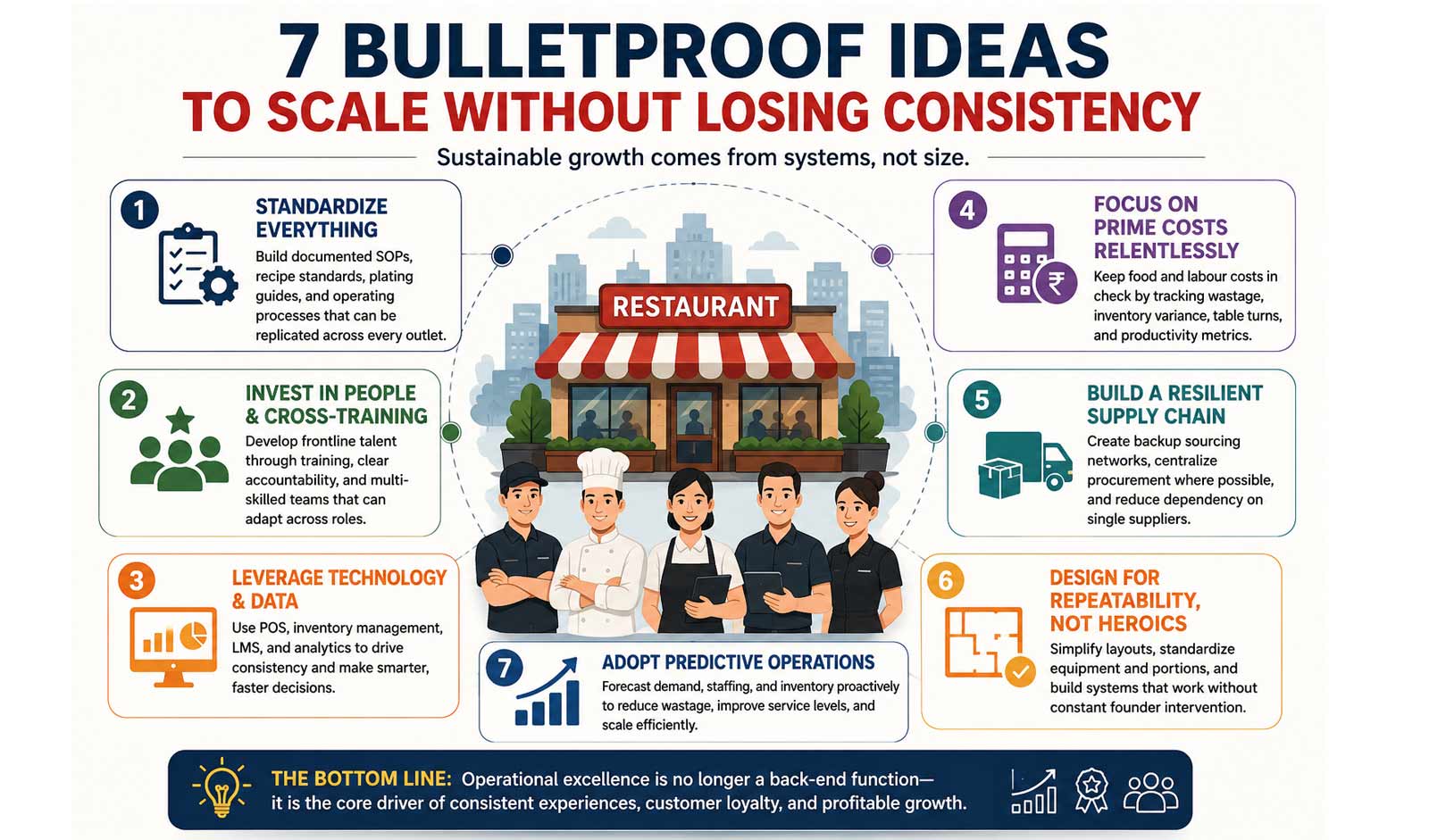
As restaurant brands scale rapidly, operational excellence not just menu innovation or brand strength is becoming the key differentiator. Whether it is a QSR chain with 1,000+ outlets, a café brand expanding across cities or a cloud kitchen entering Tier-II markets, sustainable growth depends on one critical factor: the ability to scale operations without increasing complexity.
The industry’s biggest players understand that growth is no longer just a real estate game, it’s an operating systems game.
Creating Resilient Restaurant Systems
Smooth operations don't happen in the dining room, they are engineered in the back-office weeks before a guest arrives.
“At Mirah Hospitality, our foundation rests on three non-negotiables: documented SOPs, standardized kitchen equipment, and a culture of decentralized ownership where managers own outcomes, not just shifts,” said Amit Jambhotkar, COO, Mirah Hospitality.
For him, the most underrated lever is cross-training. Team members who float between stations or line cooks trained across multiple brands.
And, yes the biggest idea is simple: define what "good" looks like before you scale.
Rohit Tokhi, COO, Toscano stated that building a "delicate dance" between culinary artistry and structured execution is important.
Standardisation is Key
While founder involvement can bridge gaps in a 10-store business, scaling to 100 or 500 outlets demand robust system. At that stage, not processes but people drive consistency and performance.
With labour costs accounting for 18–25% of revenue and food costs ranging from 28–40%, even small operational inefficiencies can significantly impact profitability. For large chains, a 1% improvement in efficiency can add crores to the bottom line.
Explaining this, Dhruv Jindal, Director, The Yellow Chilli said, “For restaurant chains, operational consistency is what separates sustainable growth from operational complexity. As brands expand across multiple locations, the focus must be on building systems that are simple, measurable, and easy to replicate without compromising guest experience.”
Successful restaurant brands prioritize consistency before expansion with a simple goal to deliver the same guest experience across locations.
“We build consistency in layers. First, we enforce visual, non-negotiable SOPs—exact recipe weights and plating photographs. Second, we deploy a centralized learning management system that delivers identical training to our first unit and our fiftieth,” pointed Jambhotkar.
Managing Workforce Excellence
With frontline attrition often touching 60–100% a year, restaurant brands are increasingly prioritising employee development and retention as critical business imperatives.
According to Jindal, empowering employees with clear ownership, effective training, and the right tools helps transform frontline teams into a competitive advantage, directly influencing customer experience and business performance.
Scaling Without Losing Speed
Scaling without losing speed requires simplification at every stage.
“While technology supports this process, operational discipline remains the real driver of consistency,” commented Jindal who also shared that smoother and faster operations lead to better table turnover, stronger guest loyalty, higher team productivity, and healthier revenue growth.
Tokhi added, “By optimizing outlet layout designs and standardizing portions, we eliminate bottlenecks and control costs. This ensures that our recipes maintain total flavor harmony, even during peak hours.”
The COO’s Essential Dashboard
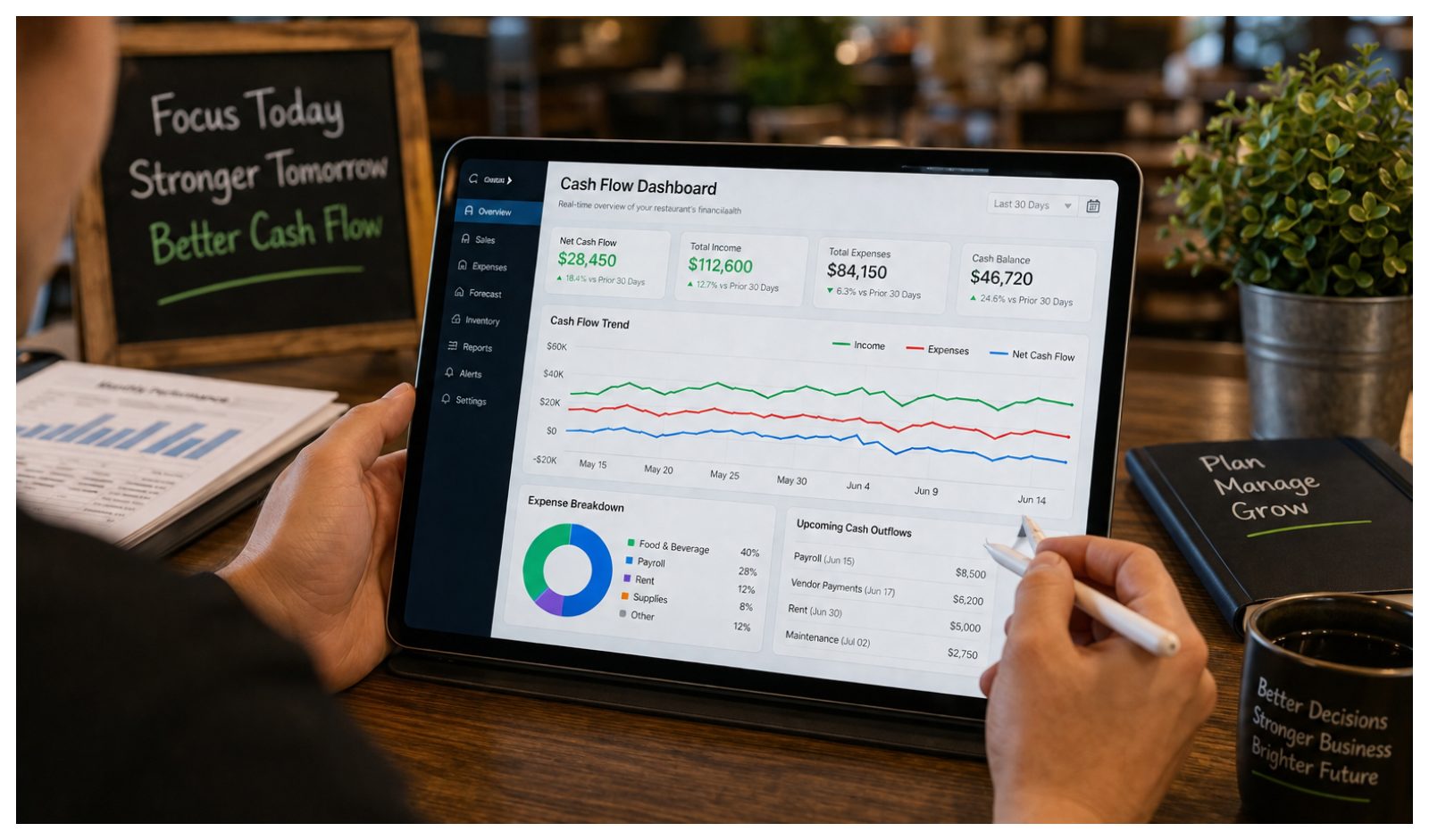
Average operators track revenue while durable businesses track margins.
Jambhotkar stressed that controlling food and labour costs is critical to restaurant profitability. “The combined prime cost ratio should ideally remain below 60% for a unit to be viable. Food wastage can erode 4–10% of revenue, while labour typically accounts for 25–35%. That’s why we closely track metrics such as table-turn times, inventory variance, and online reputation scores on a daily basis,” he said.
A dipping digital rating is an early warning sign of a kitchen or service breakdown weeks before it impacts revenue.
He added, “Monthly, I analyze staff attrition by location. High turnover is rarely a market problem—it's a management problem.”
Building a Resilient Supply Chain
The industry learned an expensive lesson recently: efficiency without resilience is a massive liability.
“Today, we use a "primary-plus-backup" procurement model. We leverage our multi-unit portfolio across Bayroute, Hitchki, and Rajdhani to centralize purchasing, securing 10–35% cost reductions. However, we pre-qualify backup vendors for every critical ingredient category. The time to find an alternative supply line is not during a peak-season shortage,” stressed Jambhotkar.
Resilience also means blending sharp tech with regional agility. Sourcing closer to regional hubs reduces logistics exposure while keeping ingredients fresh. For a multi-brand operator, a shared supply backbone is a structural shield. Demand volatility in one brand is naturally balanced across the portfolio. That is resilience by design, not accident.
Predictive Operations is the Next Frontier
As restaurant chains scale, predictive operations are becoming a key competitive advantage. Data-driven forecasting enables brands to optimise staffing, streamline inventory management, reduce wastage, and anticipate demand shifts before they affect service quality. According to Jindal, this proactive approach enhances both operational efficiency and guest experience.
Echoing the sentiment, Tokhi said that leveraging advanced inventory management and POS systems helps Toscano forecast demand more accurately, ensuring consistent product quality, freshness, and operational efficiency as the brand expands.
In an increasingly competitive restaurant market, operational excellence has evolved from a back-end function into a core driver of sustainable growth and profitability.
Vijetha Iyer
Content Editor
Working as a Content Editor with Restaurant India. I have worked in various sectors like food and beverage sector, chemicals, pharma, nutraceuticals, now specially focusing on restaurant side. But my core knowledge was always on content. Be it writing poems to verses, I always loved writing and have been exploring my career on the same. In Restaurant India, I deliver insightful stories, take interviews of various brands and update the audiences about the newest happenings in the restaurant industry.