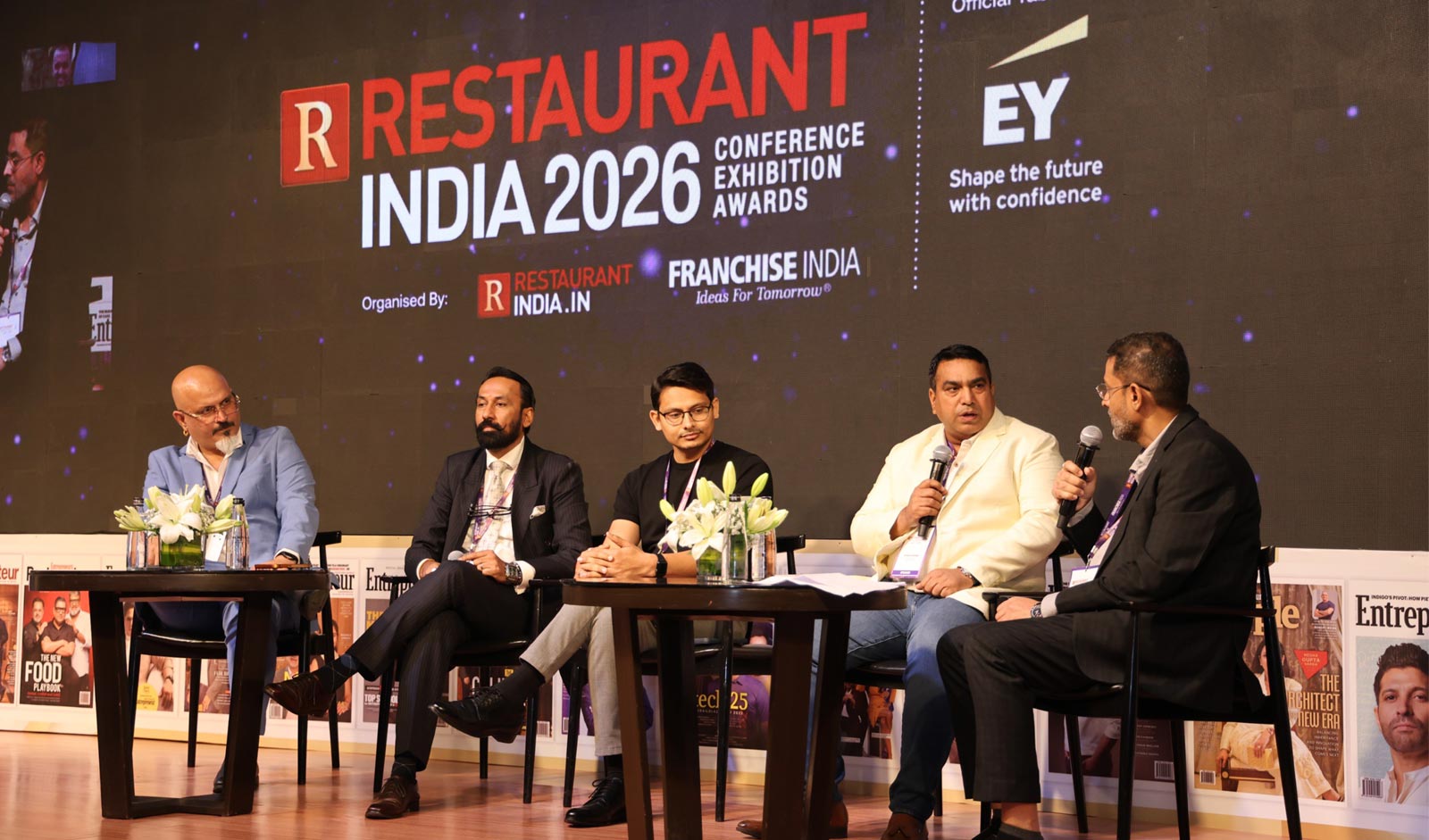
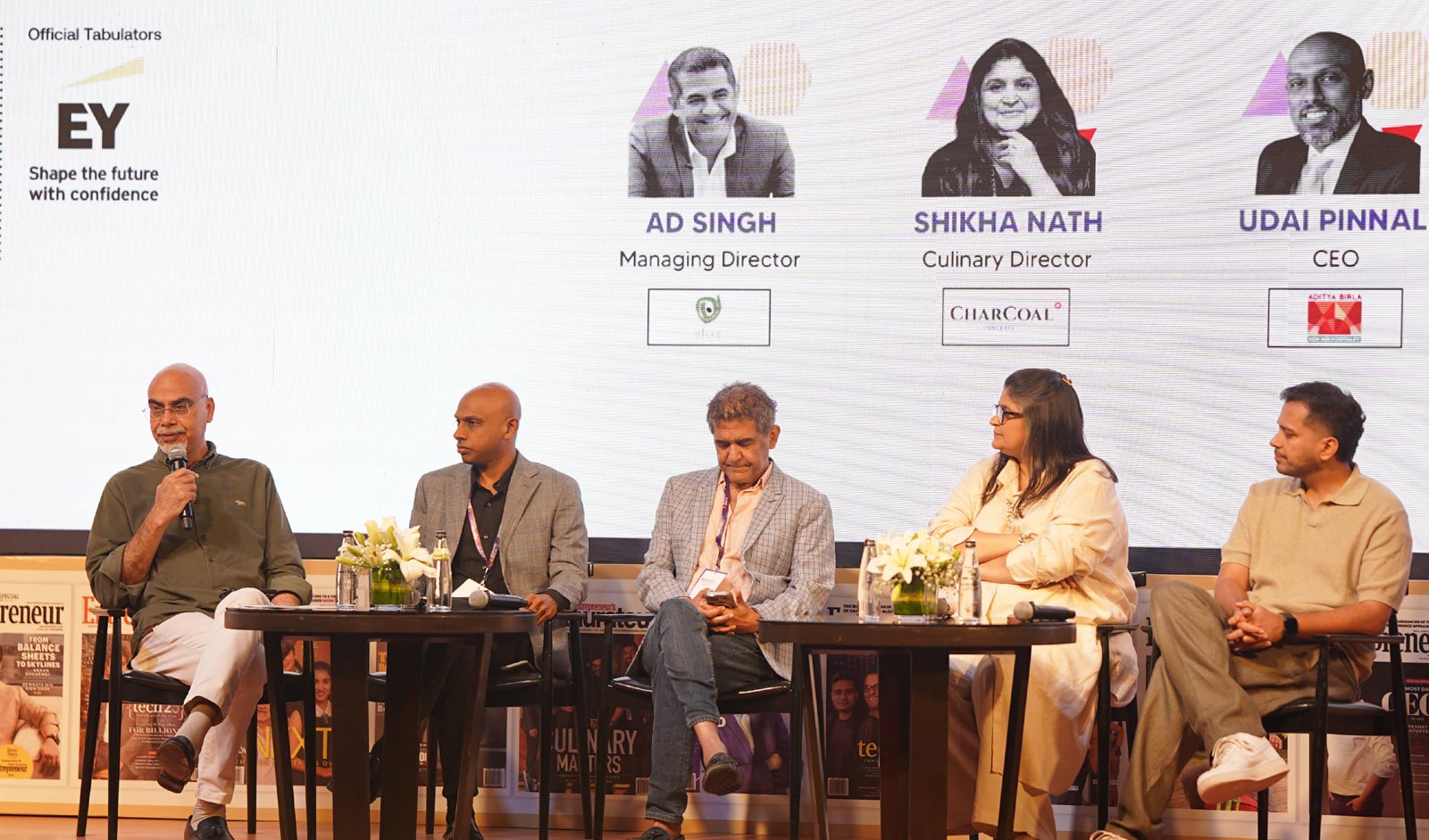
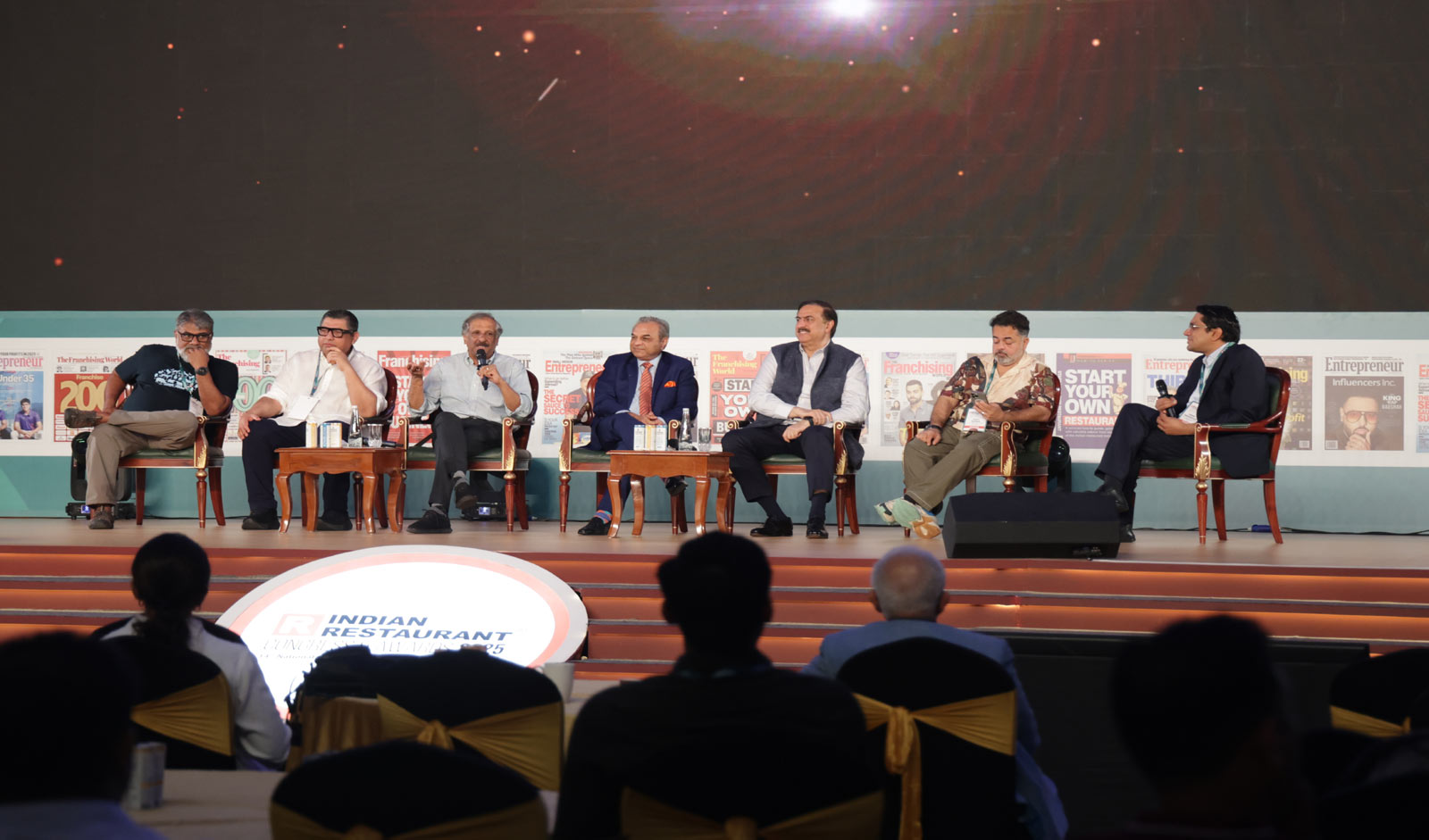
The food service industry today stands at an exciting crossroads—growing at an unprecedented pace, driven by shifting consumer behaviour, evolving consumption patterns, and relentless innovation. With diners becoming more discerning, seeking not just meals but meaningful experiences, the sector is witnessing a wave of creativity in formats, menus, and delivery models. This dynamic shift presents a remarkable opportunity for all of us—not only to tap into the immense growth potential but also to learn from the wealth of expertise shaping this evolution.
Against this backdrop, our panel discussion focuses on one central theme: how the food service opportunity is transforming, and how industry leaders are innovating to meet these emerging needs. From reimagining customer journeys to harnessing technology, from curating hyper-local experiences to scaling global partnerships, the discussion aims to unpack the strategies that define success in this fast-changing space. It is, without doubt, one of the most vibrant sectors to be part of today. The speed of growth, the depth of innovation, and the shift in consumer expectations are not just trends—they’re signals of a new era in food service.
Adapting to Change
Standalone restaurants embody agility and resilience. They are no longer just about food; they are about creating scalable experiences that can quickly adapt to consumer behaviour, technology, and market realities.
Known for creating standalone restaurants that lead the way for the food revolution in India, Anjan Chatterjee started way back in the 90s when nothing was happening in India. “I mean, even the fast food chains like McDonald's, Pizza Hut, Domino's, or KFC, none of them were there. So, there was nothing happening in the food scenario, except the legendary hotels like ITC that were building to do some great food work,” shared Chatterjee by pointing that that’s how they found an opportunity that standalone restaurants will be, one day or the other, leading the way for food revolution.
“When we began, our focus was largely on fine dining with a bit of takeaway. Delivery was never our model; frankly, we didn’t fully understand it. The pandemic, however, changed everything. It forced us to rethink our approach, and today, delivery accounts for nearly 28% of our sales. This shift has also transformed the way we look at space and investment. Restaurants that once operated in sprawling 5,000 sq. ft. spaces are now thriving in compact 2,000–2,200 sq. ft. formats—leaner, smarter, and more efficient,” he added.
Tier-2 Market has a lot of Appetite
The pandemic has given an increased consumption in Tier-2 cities making them an emerging growth spot for the restaurant sector. These cities benefit from lower real estate and setup costs, enabling outlets to recover investment 20–25% faster than in metros. Not just that, according to reports, annual spending on fast food in Tier-2 and 3 cities has jumped from ₹2,500 to ₹5,200—a 108% increase, making them a high investment market.
“Today, when we open a tier-2 town, the results are actually surprising. I mean, astounding, to be honest. For eg; our highest revenue kitchen in India is the one in Banaras,” shared Kallol Banerjee, Co-Founder, Rebel Foods by adding that the key moment was COVID, where online ordering really took off with work from home culture, where a lot of people actually went back to their primary towns. And, that’s how they took the brands to these cities and the online ordering habit back to smaller towns.
Showcasing Indian Cuisine on a World Canvas
Indian cuisine has always been a celebration of diversity—spices, traditions, and recipes that change every few miles. Today, this culinary richness is finding its place on the global stage. From London and New York to Dubai and Singapore, standalone Indian restaurants are not only attracting diaspora communities but also introducing global audiences to authentic, contemporary Indian flavours.
“I'm sitting in front of you all because I started in a very small way, from a small town near Coimbatore, with nothing more than a vision and a desire to do something different. Innovation has been my constant companion, and it is this spirit that has carried Indian food to 16 countries across the world,” mentioned M Mahadevan, Chairman, Advantage Foods Pvt Ltd who has took brands like Saravana Bhavan, Sangeetha, Hot Breads amongst other to over 16 countries, globally, all celebrating Indian cuisine.
“The pandemic reminded us that nothing is permanent, but today, we are rebuilding with over 100 outlets across these markets and nearly 50 units in Chennai alone,” he added by pointing as turning point happened in 1989, when he chose to think differently. At a time when bakeries sold factory-made bread, he built a glass wall and baked hot, fresh bread in front of customers. It was unconventional, and even his partners doubted the idea, dismissing bread as “a sick man’s food.” Yet, it was innovation that set him apart—and continues to drive the growth.
The “curry fever” continues to spread, and restaurants are opening at a rapid pace. What Mahadevan set with just 10–20 people working out of a small hut in Chennai. Today, that seed has grown into a team of over 1,000 in the city alone, with international expansion spanning nine brands across 16 countries. “We identified niches early—introducing Chettinad cuisine abroad, and taking brands like Kailash Parbat to New York, Chad, and Hong Kong, where strong Sindhi and Gujarati communities embraced them wholeheartedly,” he pointed.
The lesson is simple: find your market, position yourself smartly, and price right.
Where Tradition Meets Innovation
It's not easy at all. And I can tell you that having spent 30-plus years in the industry, it's a work of art. And these are entrepreneurs who have the courage, you know, who can take risks, who can move very fast and, you know, take this entire movement forward.
“Few years back on a panel, somebody asked me that what will be the scenario for five-star hotel restaurants versus standalone? And my answer was very simple, nothing will happen to us, all right? Because we did not see this entire movement coming. There's some amazing work which has been done and some great brands that have been built and in front of us. But I think if you look at the post-COVID era, has been something very, very different,” said Anil Chadha, MD, ITC Hotels that has given India celebrated restaurants like Avartana, Bukhara and Dum Pukht.
“The consumption has certainly exploded in all forms. And, you know, one reason we attribute is to high disposable incomes, a growing middle class, rapid urbanisation,” he added by pointing that while the food and beverage scene in the standalone world has done extremely well, but I think that competition helped the five-star hotels also to up their game and start looking at things a little differently.”
Building Brands, not just Biz
As someone who has had the privilege of observing and supporting the growth of restaurant chains, I can say with certainty that success in this industry is never short-term. It’s not about building a brand for a year or two—it’s about creating legacies. There is much to learn from the journeys around us, and today’s panel is a wonderful example of that collective wisdom,” pointed Akshay Bector, Chairman and MD, Cremica Food Industries Ltd.
He also added that we can consider Bukhara which has stood strong for 50 years, or other brands that have expanded dramatically over the past two to three decades. Their stories are not just about growth, but about resilience, consistency, and customer connection. Food businesses, more than most, touch customers on an emotional level. The principles that sustain these brands—authenticity, trust, and long-term vision—are what set them apart. Ultimately, building a restaurant brand is about more than serving food; it’s about creating enduring experiences.
Customer is the King
Today’s restaurant customer is far more informed and engaged than ever before. Long before they step into a dining space, they’ve already begun their journey. They browse the menu online, look up reviews, and sometimes even know the chef by name. They discuss signature dishes with friends, ask, “How’s that new item on the menu?”—all without ever having visited the restaurant.
“People today are not only conscious but also conscientious about what they eat. There’s a strong desire to see Indian food shine globally, standing shoulder to shoulder with Western cuisines. Gone are the days when Indian food abroad was dismissed as a quick, five-pound hangover fix. Today, it is celebrated for its depth, diversity, and sophistication,” shared celebrity Chef Vicky Ratnani proudly by adding that food, in many ways, has become global—techniques, presentation, and formats travel seamlessly across borders.
“What must remain intact is the DNA of the cuisine. That authenticity, rooted in culture and tradition, is what makes Indian food unique. The challenge is to balance modernity with heritage—using global methods while keeping the soul truly Indian,” he explained further.
Hence, there’s no denying that the future lies in making India proud, showcasing our culture on every plate, ensuring traceability of ingredients, and embracing technology as an enabler. That combination will define the next era of Indian cuisine worldwide.