
10 Smart & Sustainable Ways for Restaurants to Use Leftover Cooking Oil
When reused or recycled the right way, it can help the environment. It can also cut down on waste costs.

In most restaurant kitchens, used cooking oil builds up quickly. After hours of frying and cooking, the leftover oil is often seen as waste. Many restaurants simply throw it away. But this oil can be turned into something useful. Sustainability is now a key part of running a modern restaurant. Customers are more aware of how businesses treat the environment. They prefer brands that care about waste and reuse. At the same time, food businesses are under pressure to cut costs and act responsibly.
Used cooking oil is one of the most overlooked items in the kitchen. It can cause harm if poured down the drain or dumped carelessly. But with a smart approach, it can be reused or recycled in many ways. It can be turned into biodiesel, soap, candles, or even used for compost. Some restaurants are already doing this. They are finding new ways to reduce waste and tell a better story. For these brands, oil is not just waste — it’s an opportunity. It can save money, support the planet, and build a stronger brand image.
Read more: 12 Delicious High-Protein Foods to Eat Daily for a Healthier You
Top 7 Food Safety Practices Every Restaurant Should Follow
Tips to Handle Used Oil Safely
Before you reuse or donate oil, store it safely:
- Let it cool completely
- Strain it to remove food bits
- Store in a clean, airtight container
- Label the container with the date and type of oil
- Avoid mixing oils of different types
Only reuse oil if it’s not too degraded or burnt. Dark color, foul smell, or thick texture means it should not be reused in cooking.
Know more: Top 10 Health Benefits of Eating Dry Fruits Daily
The Ultimate Guide to Getting Your Cloud Kitchen on Zomato
Here are 10 simple and smart ways to reuse leftover cooking oil in your restaurant.
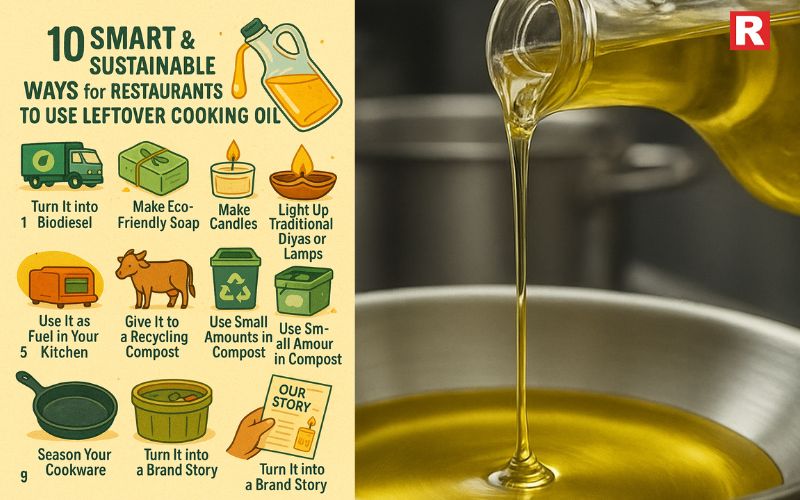
- Turn It into Biodiesel: One of the most effective uses of used cooking oil is converting it into biodiesel. Biodiesel is a clean-burning fuel that works in diesel engines. In fact, many companies in India and abroad now collect used oil from restaurants to make this fuel. For example, McDonald’s in India has tied up with partners to turn oil into biodiesel. The fuel is then used to run delivery trucks. Your restaurant can do this too. Tie up with a local biodiesel conversion firm. They will collect your filtered oil and take care of the process. This reduces your carbon footprint and supports green energy.
- Make Eco-Friendly Soap: Yes, soap! Used cooking oil can be cleaned, filtered, and turned into soap bars. Some local startups already use waste oil to make home cleaning products or handwash. This is a great option for sustainable restaurants. You can use this soap in your restrooms or kitchen. Or you can collaborate with a local brand to create a custom soap line with your name on it. It’s a great way to reduce waste and promote your brand’s green side.
- Use It as Fuel in Your Kitchen: Filtered cooking oil can be used to power certain kitchen appliances that run on oil-based fuels. While this may not work for every kitchen setup, some restaurants with advanced systems are switching to oil burners for heating purposes. If your restaurant uses oil heaters or burners, this can help lower your fuel costs. It also cuts down on waste disposal.
- Donate It for Animal Feed (With Safety Checks): In small, controlled quantities, used vegetable oil can be added to animal feed. It adds fat and energy to the feed mixture. However, this must be done with proper testing and only through approved channels. You can tie up with a licensed animal feed producer or NGO that knows how to process and use it safely. Never try this on your own without professional help. But when done right, it’s a great way to avoid dumping oil and support the local farming community.
- Make Candles: Used oil can also be turned into candles. When cleaned and mixed with wax, it makes a stable burning fuel for decorative or scented candles. This is a fun and creative way to repurpose waste. Many boutique restaurants in India use custom candles to decorate tables. Why not make your own? You can also partner with local artists or brands to create sustainable candles for sale. It adds to your brand identity and helps reduce waste.
- Light Up Traditional Diyas or Lamps: During Diwali or other festive seasons, restaurants often use diyas for decoration. Instead of buying new oil, you can reuse filtered cooking oil to light them. This is especially useful for Indian restaurants that want to stick to traditional decor. It saves money and makes use of something that would otherwise go to waste. Just make sure the oil is clean and stored properly.
- Give It to a Recycling Company: Many Indian cities now have oil recycling services. These companies collect used cooking oil from restaurants, filter it, and process it for various uses like soap, lubricant, or biodiesel. Some of them even pay you for it. You can check with your local municipal office or search for licensed waste oil collection agencies. This is one of the easiest and safest ways to dispose of used oil responsibly.
- Use Small Amounts in Compost: This one needs to be done carefully. In very small quantities, used vegetable oil can be added to your compost. It provides a source of fat and helps break down certain organic matter. But too much oil can cause bad smells or attract pests. So if your restaurant has a compost bin or garden, consult with a waste management expert before trying this. Done right, this method adds nutrients to the soil and helps with waste reduction.
- Season Your Cookware: Seasoning cast iron pans helps prevent rust and adds a natural non-stick layer. You don’t need fresh oil for this. Used cooking oil, once filtered, works just fine. Restaurants with cast iron cookware can use leftover oil for regular seasoning. It’s a small step, but when done consistently, it cuts down on oil use and makes your cookware last longer. Just make sure the oil is not burnt and has been strained well.
- Turn It into a Brand Story: This might be the most powerful idea on the list. Today’s customers care about where their food comes from and how businesses treat the planet. If your restaurant uses old oil to make soap or candles or donates it for a cause, tell that story. Share it on your website, Instagram, or in a small note on your menu. It becomes a part of your brand’s identity. For example, “Our kitchen oil lights up 100 lamps during Diwali—sustainably.” That’s something people will remember. You can also host small workshops or partner with NGOs to build community awareness.
Interested in starting an oil recycling program for your restaurant?
Restaurants should first check the local FSSAI rules for handling used cooking oil. It is also important to follow pollution board guidelines. These rules help ensure safe and legal disposal. Next, they should look for trusted vendors who collect and recycle used oil. Many companies offer regular pickup services. These vendors often turn the oil into biodiesel or other useful products. By choosing the right partners, restaurants can avoid fines and protect the environment. It also helps build a responsible image in front of customers. Sustainability should not be a side activity. It must be a part of everyday kitchen work. Staff should be trained to store and handle used oil safely. Letting the oil sit in drums for days is wasteful. It can also lead to bad smells and safety issues. With a smart system in place, the same oil can do much more. It can support green goals and reduce kitchen waste.
Also check: 5 Ways to Use Garden Cress Seeds (Halim) for Stronger Hair and Bones
6 Common Ingredients Used in South Indian Cuisines
Functional Mushrooms: The Next Big Trend in Beverages and Food Innovation
Final Thoughts
Every restaurant deals with waste. But not all know how to make something good out of it. Used cooking oil is one of the biggest kitchen waste items. If not handled properly, it can clog drains and pollute water. It can also harm the restaurant’s image. Customers today care about how food places manage their waste. But this oil can do more than just sit in a bin. When reused or recycled the right way, it can help the environment. It can also cut down on waste costs. Many restaurants are now turning to smarter waste methods. They are using oil to make biodiesel, soap, or even candles. Some team up with local recycling firms. Others use it to support small businesses. It does not matter if the place is a small café or a big food chain. These steps work for all. Turning oil waste into value is simple, smart, and good for the planet.
Saptopriya Ghosal
Feature Writer
I am a dedicated media professional with a bachelor's degree in mass communication from the State University of Calcutta and a postgraduate degree from Amity University. My academic journey has equipped me with a profound understanding of storytelling and communication. Passionate about the dynamic world of media, I continually strive to explore new ways to engage and inform through compelling narratives.



































































































































































